Dinosaur Encyclopedia
By Category
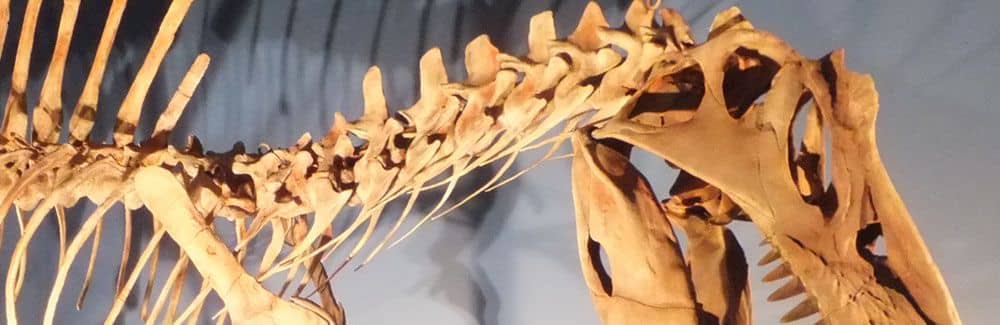
Dinosaurs are classified into two major groups based on the structure of their pelvis (the direction of the pubis): "Saurischia" (lizard-hipped) and "Ornithischia" (bird-hipped). From there, they branched off into five major groups according to skeletal characteristics and diet: "Theropoda", "Sauropodomorpha", "Marginocephalia", "Thyreophora", and "Ornithopoda".
On this page, over 110 genera of dinosaurs featured on this site are introduced in a list by these five taxonomic groups. (*For a more detailed explanation of the classification system, please also see "Dinosaur Study: Types & Classification".)
Saurischia, Theropoda Theropoda, Saurischia
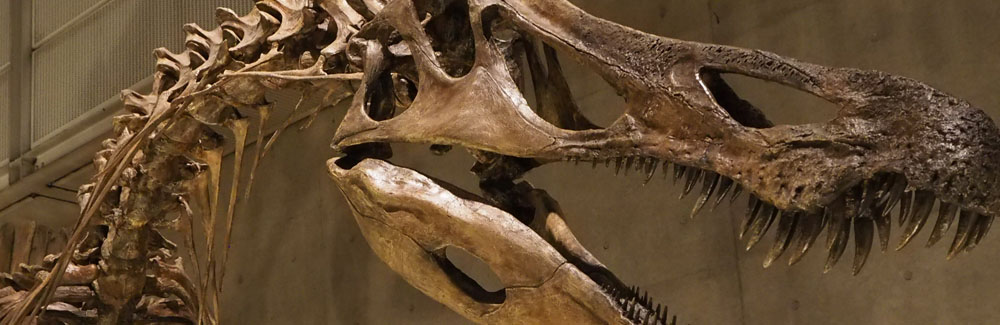
Theropods are a group of Saurischians that includes all carnivorous dinosaurs. They basically had sharp claws and teeth, and walked on two powerful hind legs. This group includes not only large apex predators like Tyrannosaurus, Allosaurus, and Spinosaurus, but also unique species like Deinocheirus and Therizinosaurus, which acquired feathers and adapted to an herbivorous or omnivorous diet during their evolution. It is also an established theory in modern paleontology that modern "birds" evolved from a group of theropods.
- Acrocanthosaurus
- Afrovenator
- Alioramus
- Albertosaurus
- Allosaurus
- Anchiornis
- Archaeopteryx
- Archaeornithomimus
- Yi
- Eodromaeus
- Oviraptor
- Caudipteryx
- Carnotaurus
- Gallimimus
- Giganotosaurus
- Guanlong
- Ceratosaurus
- Coelophysis
- Gorgosaurus
- Concavenator
- Compsognathus
- Sinosauropteryx
- Scipionyx
- Suchomimus
- Spinosaurus
- Tarbosaurus
- Daspletosaurus
- Chilesaurus
- Deinocheirus
- Deinonychus
- Tyrannosaurus
- Dilophosaurus
- Dilong
- Therizinosaurus
- Dromaeosaurus
- Nanotyrannus
- Baryonyx
- Fukuiraptor
- Herrerasaurus
- Heyuannia (formerly: Ajancingenia)
- Velociraptor
- Microraptor
- Megalosaurus
- Mononykus
- Yangchuanosaurus
- Utahraptor
- Yutyrannus
- Lythronax
- Rajasaurus
Saurischia, Sauropodomorpha Sauropodomorpha, Saurischia
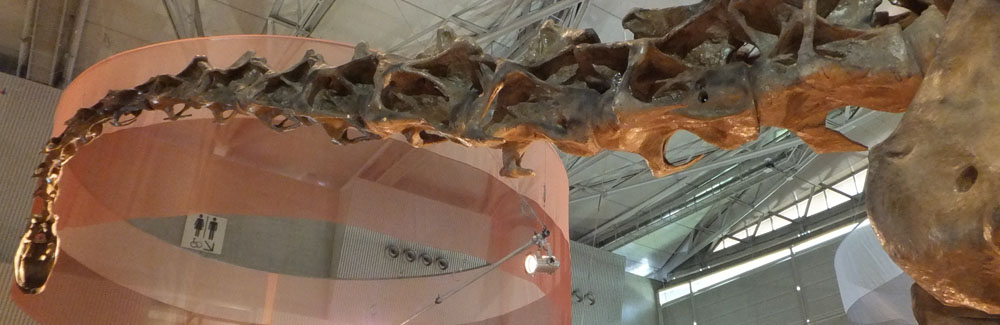
Sauropodomorphs belong to the same Saurischian group as theropods, but they evolved into herbivores and acquired the largest body sizes on land (also known as "thunder lizards"). Early groups that appeared in the Triassic, such as Eoraptor and Plateosaurus, were capable of walking on two legs, but as they grew in size from the Jurassic onwards, they shifted to walking on four pillar-like legs. Their most prominent features are a small head and an extremely long neck and tail, as seen in Brachiosaurus, Diplodocus, and Argentinosaurus.
Ornithischia, Marginocephalia Marginocephalia, Ornithischia
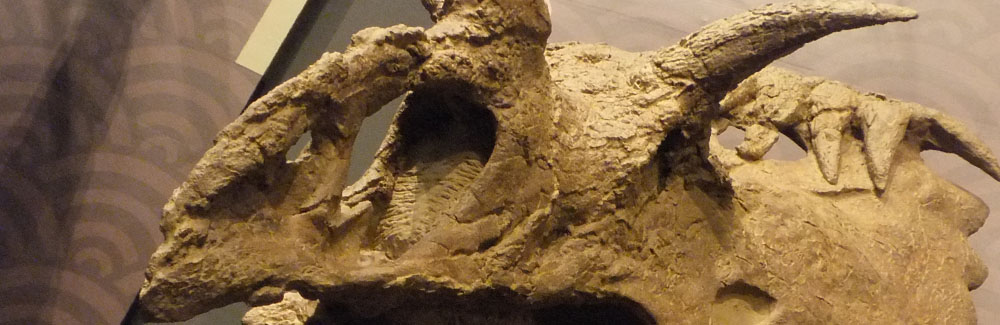
Marginocephalians are a group of ornithischian herbivorous dinosaurs that had a frill extending from the back of their skulls or a thick, dome-shaped top of the head. They are broadly divided into two groups: "ceratopsians" (such as Triceratops and Protoceratops), which developed parrot-like beaks, horns, and frills, and "pachycephalosaurs" (such as Pachycephalosaurus and Homalocephale), which had thickly reinforced skulls. Early small species were bipedal, but the larger ceratopsians evolved into sturdy quadrupeds.
Ornithischia, Thyreophora Thyreophora, Ornithischia
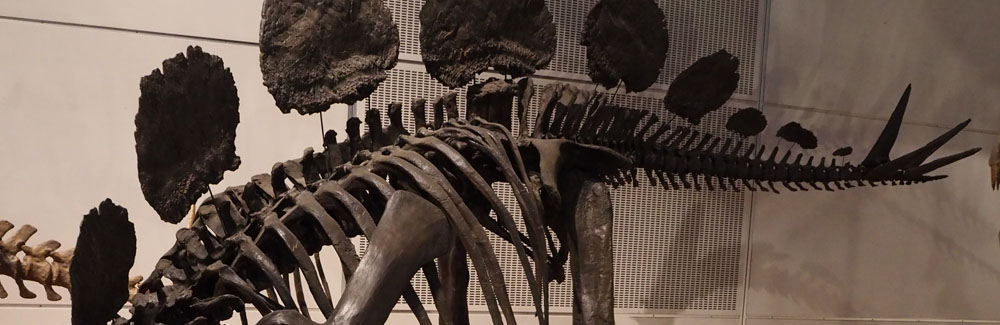
Thyreophorans are a group of quadrupedal herbivorous dinosaurs that solidified their defense against carnivorous dinosaurs by developing hard bony plates (armor) and sharp spikes from their necks to their backs and tails. This group includes "stegosaurs" (such as Stegosaurus and Kentrosaurus), which had large bony plates lining their backs and used the spikes at the end of their tails as weapons, and "ankylosaurs/armored dinosaurs" (such as Ankylosaurus, Saichania, and Minmi), which covered their entire bodies in heavy armor and defended themselves with weapons like tail clubs.
Ornithischia, Ornithopoda Ornithopoda, Ornithischia
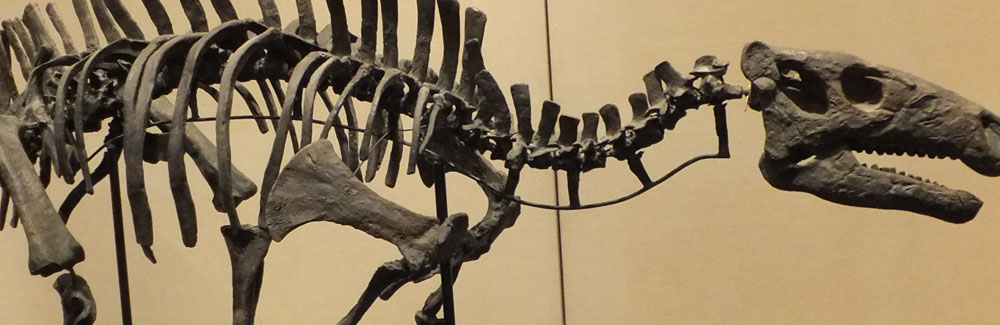
Ornithopods are a group of ornithischian herbivorous dinosaurs that flourished greatly worldwide from the Jurassic to the end of the Cretaceous. They flexibly switched between bipedal and quadrupedal walking and developed an advanced tooth structure (such as dental batteries) for grinding tough plants. This group includes Iguanodon, known since the early days of dinosaur research; Parasaurolophus, which resonated its calls through a characteristic crest on its head; and Maiasaura, which raised its young in groups. It also includes many important dinosaurs discovered in Japan, such as Fukuisaurus and Kamuysaurus.