
Jurassic
Jurassic Period
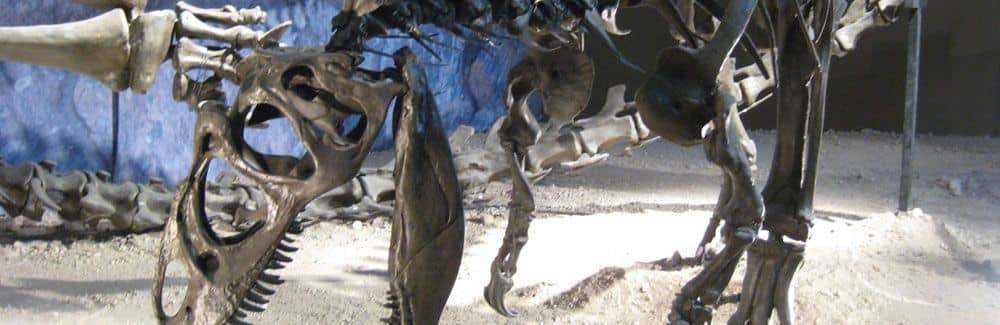
At the end of the Triassic period, a mass extinction occurred due to massive environmental changes, wiping out 20% of marine species and many large terrestrial reptiles. The dinosaurs that survived this crisis underwent explosive evolution in the ensuing "Jurassic period (199.6 - 145.5 million years ago)" and leaped to become the rulers of the Earth. The name "Jurassic" comes from the Jura Mountains, which stretch from eastern France to Switzerland, where limestone layers deposited during this period are widely distributed.
During the Jurassic, the breakup of the supercontinent Pangea began, allowing moist air to flow inland, and enveloping the entire Earth in a warm climate. Rich forests of conifers, ginkgos, cycads, and ferns spread across the land, and supported by this vast plant resource, sauropodomorphs took the path of rapid gigantism. Following early Lufengosaurus and Shunosaurus, and the extremely long-necked Mamenchisaurus, the Late Jurassic saw the golden age of super-giant sauropods such as Brachiosaurus, Diplodocus, Apatosaurus, and Camarasaurus. Carnivorous theropods also grew larger, with the two-crested Dilophosaurus, the first described dinosaur Megalosaurus, and the Late Jurassic kings Allosaurus and Ceratosaurus reigning at the top.
It was also during this period that the foundation for diverse species was built, including stegosaurs with bone plates on their backs such as Stegosaurus and Kentrosaurus, the oldest ceratopsian Yinlong, and the early ornithopod Camptosaurus. Furthermore, in the Late Jurassic, the small feathered dinosaur Anchiornis, the membrane-gliding Yi, and the famous first bird Archaeopteryx appeared, marking the era when dinosaurs began their challenge to the skies.
Jurassic Jurassic period (199.6 - 145.5 million years ago)
Genera (Group 2)
