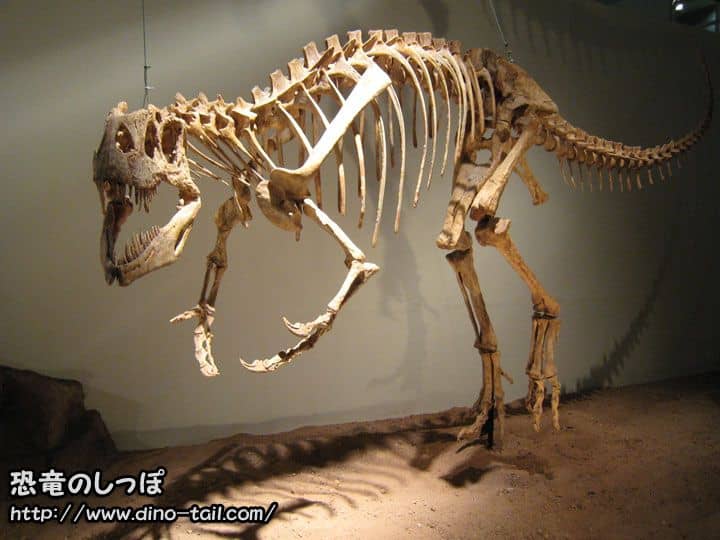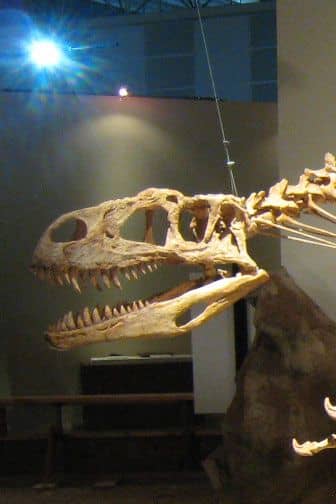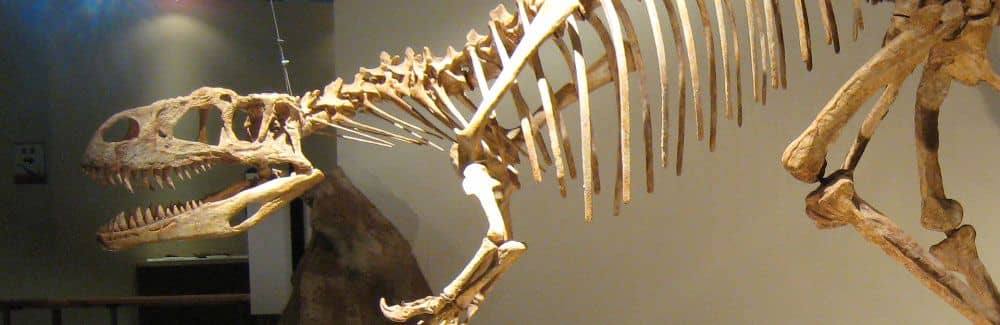
What is Afrovenator?
| Scientific Name (Genus) | Afrovenator |
| Meaning of Name |
African hunter
Afro(African)[Latin]-vēnātor(hunter)[Latin] |
| Classification | Saurischia, Theropoda, Tetanurae, Megalosauridae (Afrovenatorinae) |
| Total Length | Approx. 8-9m |
| Diet | Carnivorous |
| Period | Middle to Late Jurassic (approx. 167-157 million years ago) |
| Sub-classification / Species Name | Afrovenator abakensis |
| Year of Paper Publication | 1994 |
| Genus Name Publication |
Sereno, P.C., Wilson, J.A., Larsson, H.C.E., Dutheil, D.B., & Sues, H-D. 1994.
"Early Cretaceous dinosaurs from the Sahara". Science 266: 267-271. |
Harsh Excavations and the History of Discovery
Afrovenator fossils were discovered in 1993 in the Sahara Desert (Tiourarén Formation) of the Republic of Niger in Africa by an expedition led by American paleontologist Paul Sereno. After an epic journey of over 1,600 kilometers across the pathless desert using trucks and boats, a nearly complete skeleton was excavated under extremely hot, dry, and harsh conditions.
Initially, the strata where it was found were thought to date to the Early Cretaceous (about 132 to 125 million years ago). Therefore, Afrovenator attracted worldwide attention as an "outdated survivor that evolved independently after being left behind in Africa following the breakup of the Pangaea supercontinent."
However, when the strata and other fossils were re-examined in 2009, the period it lived in was significantly revised to the Middle to Late Jurassic (about 167 to 157 million years ago). This discovery revealed that Afrovenator was not an isolated survivor, but a dinosaur belonging to the Megalosauridae, a group that thrived globally during the Jurassic before the continents fully separated.
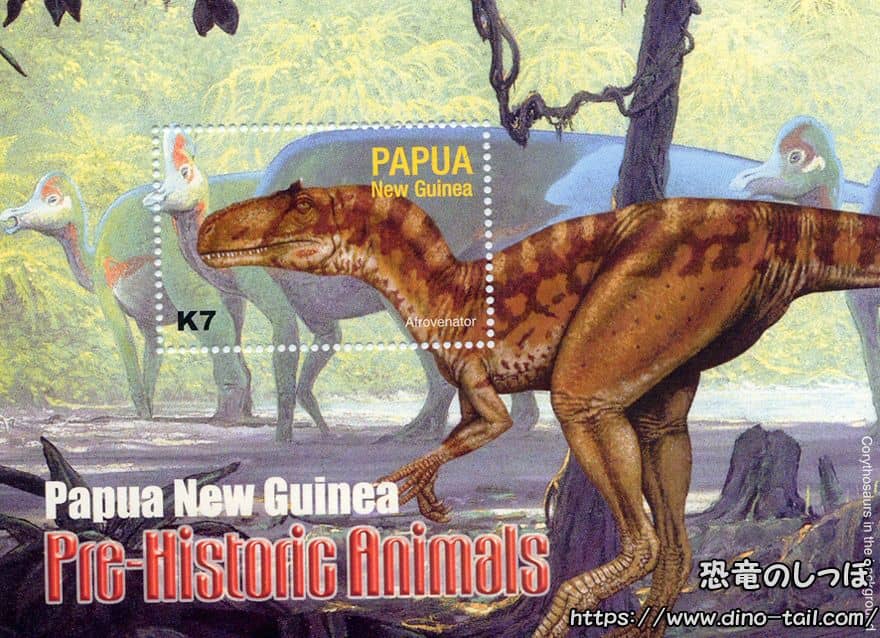
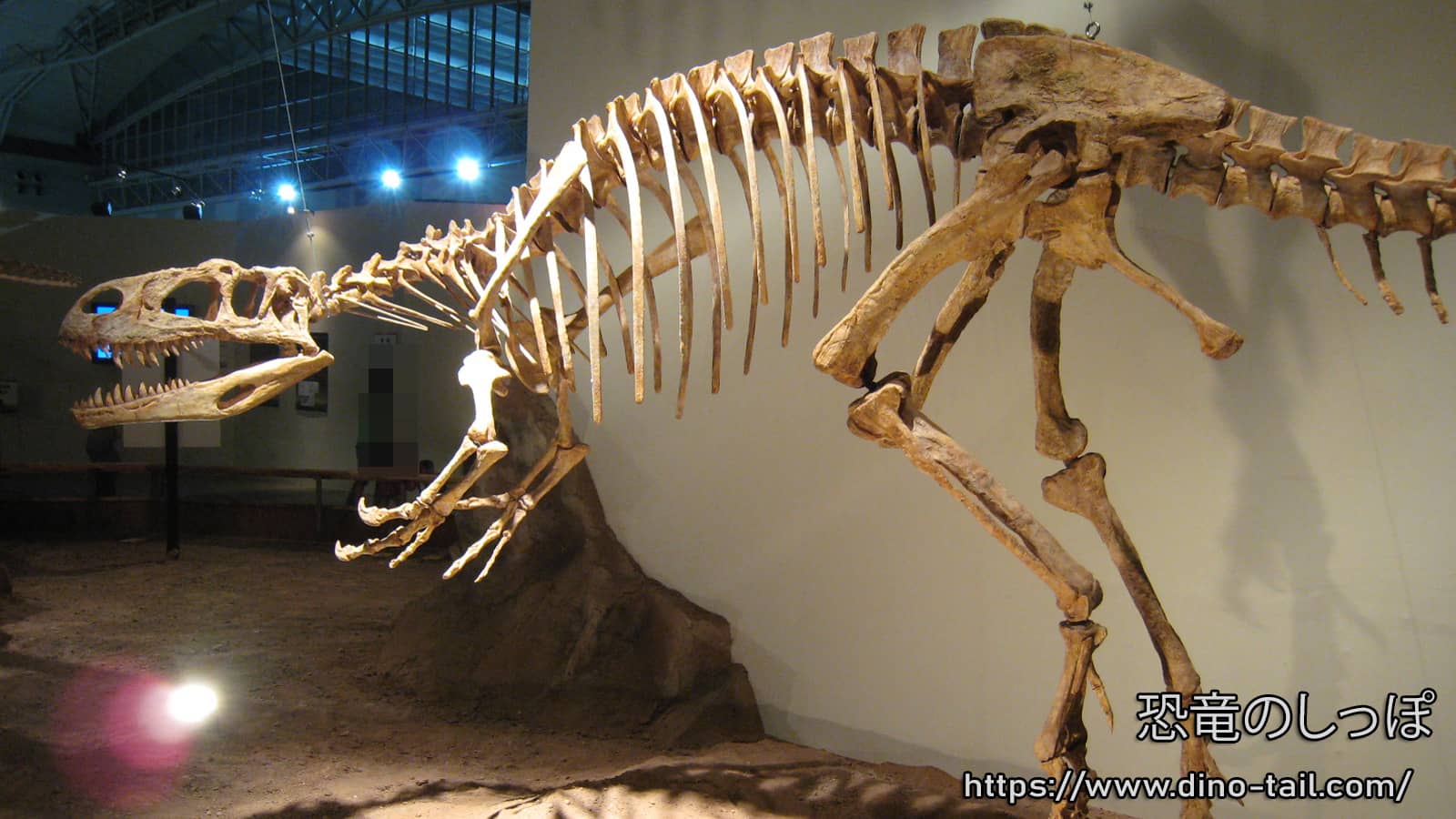
The entire skeleton was very lightly built, and it is thought to have been a lightweight and agile hunter capable of swift movements, even compared to famous carnivorous dinosaurs of the same era like Allosaurus. The skull was low, and its jaws were lined with sharp teeth designed to efficiently slice through the flesh of its prey.
This refers to the shape of teeth like those of Afrovenator, which are thin and have fine serrations on the edges. They acted like modern steak knives and were highly suited for slicing through the skin and muscles of prey.
New Specimen of 2024 and Amazing Running Ability
For a long time, Afrovenator was known only from the first discovered fossil (holotype), but in 2024, a new specimen was reported from an excavation site called "Tawachi." This new specimen included the snout bones, lower jaw bones, and limb bones that had not been found previously.
The new lower jaw bone was found to have a very robust left-right connection, showing some resemblance to the features of piscivorous (fish-eating) dinosaurs like Spinosaurus. This provides an invaluable clue showing an intermediate stage in the evolution of carnivorous dinosaur jaws.
Furthermore, in this study, fossils were digitized with high precision using CT scans, and a "3D biomechanical modeling" was conducted to simulate movement on a computer.
The study of biological structures and movements from the perspective of physics and mechanics. By calculating muscle attachments from the length and shape of dinosaur bones, it is possible to scientifically infer how fast they could run and what posture they had.
The analysis revealed that Afrovenator's hind legs had an extremely well-balanced proportion for running, with the "shin bone being about the same length as the thigh bone." It was scientifically proven that it had a high running ability surpassing that of the similarly-sized famous carnivorous dinosaur Allosaurus, and was an extremely refined hunter that actively pursued prey utilizing the powerful spring of its hip joints.
Paleoenvironment and the Apex of the Ecosystem
The North Africa of the Jurassic period, where Afrovenator lived, was different from the barren desert of today. It was a warm and humid environment with flowing rivers and distinct rainy seasons. From the same strata, numerous fossils of the giant herbivorous dinosaur Jobaria, which exceeded 20 meters in length, have been discovered.
Afrovenator was the apex predator in this ecosystem. It is thought to have used its excellent running ability and agility to target young Jobaria separated from the herd or weakened individuals.
Also, another species of carnivorous dinosaur called Spinostropheus lived in the same environment, but its body structure differed from Afrovenator's. It seems they coexisted without conflict by practicing "niche partitioning," separating their targeted prey sizes and hunting grounds.
In addition to pure hunting, it is highly likely that it also played the role of a "scavenger," sniffing out the carcasses of giant dinosaurs that collapsed due to droughts and arriving quickly with its long legs to eat the meat.
Let's Go See Afrovenator
Afrovenator fossils can be seen at the following museums.
Please note that exhibits may be subject to change. Please verify the latest information yourself.
Koshiki Museum (Satsumasendai City, Kagoshima Prefecture, Japan)
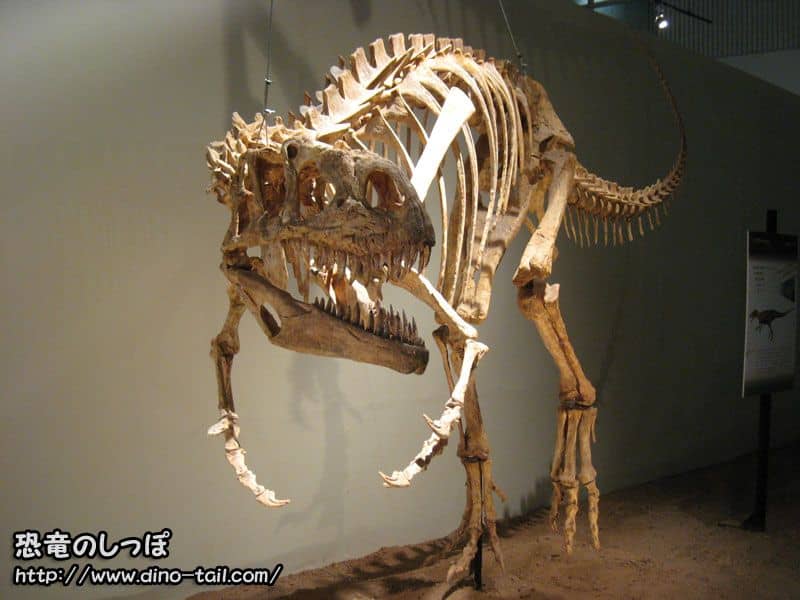
Fossil Parts Available: Full skeletal reconstruction (replica)
Highlights/Points of Interest: Because a carnivorous dinosaur tooth discovered on the Koshiki Islands was similar to that of Afrovenator, a full skeleton was introduced as comparative material. Facilities in Japan that have a permanent exhibition of an Afrovenator full skeleton are extremely rare, and you can observe it in a state-of-the-art exhibition environment.
Afrovenator Stamp & Fossil Gallery