Marginocephalia
Fringed heads
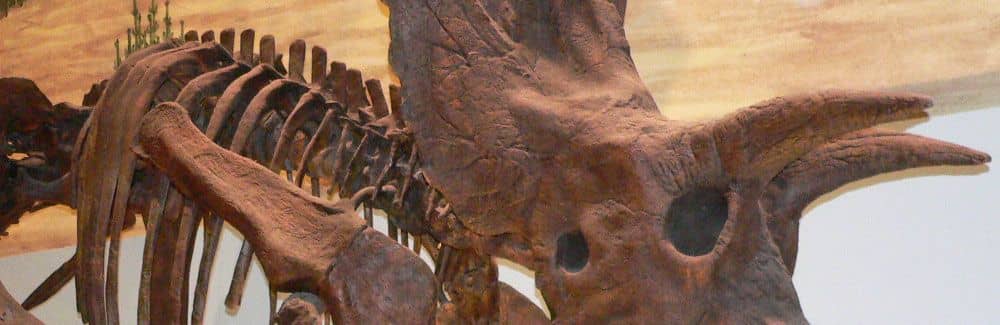
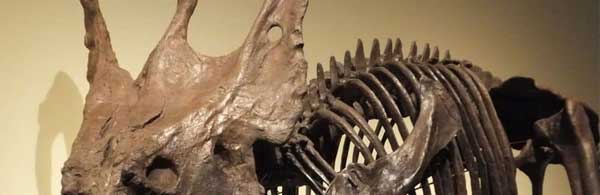
Marginocephalia is a group of ornithischian herbivorous dinosaurs that includes the "ceratopsians" (horned dinosaurs), which have horns and frills, and the "pachycephalosaurs" (bone-headed dinosaurs), which have thick skulls. As their name, meaning "fringed heads," suggests, they share a common structure where the back of the skull projects like a shelf or bulges thickly.
In particular, many new species of ceratopsians have been discovered in recent years, revealing that they developed a much wider variety of skull ornaments (horns and frill projections) than previously thought. The oldest species, such as Yinlong and Psittacosaurus, which lived in Asia from the Late Jurassic to the Early Cretaceous, were agile bipeds about 1 to 2 meters long, but they already had sharp, parrot-like beaks. Later, as their heads and frills grew larger through species like Protoceratops and Zuniceratops, they transitioned to a sturdy quadrupedal stance to support their heavy heads. In the Late Cretaceous, ceratopsians such as Kosmoceratops and Styracosaurus, which had numerous horns lined up like a crown on their frills, Pachyrhinosaurus, which had a bump on its nose, and Triceratops and Torosaurus, which had three long horns and a "dental battery" for chopping hard plants and thrived in North America at the end of the Cretaceous, appeared. It is now known that these horns and frills were not only weapons against carnivorous dinosaurs, but also served as visual signals for species recognition, for pushing matches among peers, and even as attachment points for strong jaw muscles.
The other group, the pachycephalosaurs, maintained a bipedal stance while thickly reinforcing the bones at the top of their heads. Known species include Pachycephalosaurus and Stegoceras, which had dome-shaped heads, and Homalocephale, which had a flat top to its head. Let us introduce these dinosaurs with distinctive heads.
Genera: Group 3
- (Currently, there are no dinosaurs registered in this group.)