About Homalocephale
| Scientific Name (Genus) | Homalocephale |
| Meaning of Name |
Flat head
homalos (flat) [Greek] - kephale (head) [Greek] |
| Classification | Ornithischia, Marginocephalia (Pachycephalosauria, Pachycephalosauridae) |
| Total Length | Approx. 1.5m - 3m (generally around 1.8 - 2m) |
| Weight | Approx. 43 - 50 kg |
| Diet | Herbivorous |
| Period | Late Cretaceous (late Campanian to Maastrichtian: approx. 72 to 66 million years ago) |
| Discovered in | Asia (mainly southern Mongolia, around the Gobi Desert, Nemegt Formation) |
| Sub-classification / Species Name |
Homalocephale calathocercos
* The specific name calathocercos means "basket tail," derived from the structure of ossified tendons reinforcing the tail. |
| Year of Paper Publication | 1974 |
Homalocephale: Characteristics
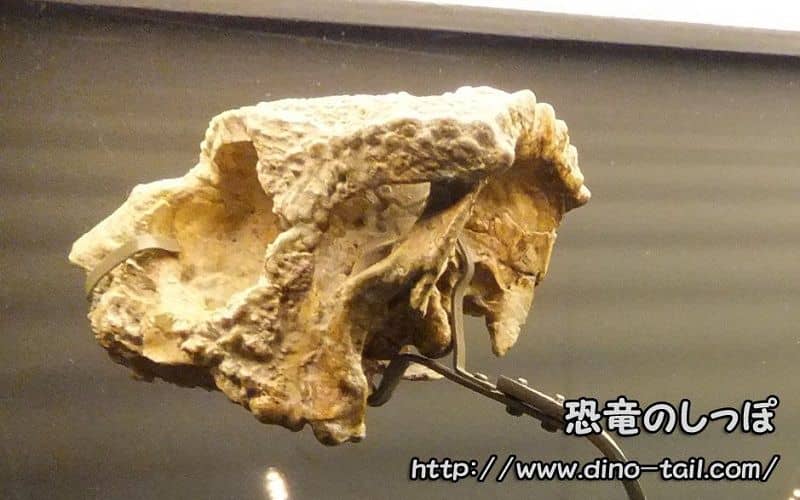
Unusually for a pachycephalosaur (bone-headed dinosaur), the top of the head is flat.
Homalocephale is a dinosaur classified as a pachycephalosaur (bone-headed dinosaur) that lived in Asia during the Late Cretaceous period. Its total length is estimated to be about 1.8 to 2 meters, and its weight around 50 kilograms.
Unlike other pachycephalosaurs, it did not have a dome-shaped protrusion on the top of its head, but instead was flat. This feature is also the origin of its genus name ("flat head"). Even though the top of the head was flat, the bone tissue itself was extremely thickened and reinforced compared to normal dinosaurs.
Regarding Homalocephale, a unique theory was once proposed. Because the pelvis of the discovered specimen was extremely wide, there was a theory that it might have been "ovoviviparous," hatching eggs inside its belly and giving birth to live young instead of laying eggs.
However, in subsequent research, since oviparity (laying eggs) is the basic reproductive method for all dinosaurs, few researchers currently support this ovoviviparous theory. The extremely wide pelvis is now thought to have been a space to accommodate massive intestines to increase plant digestion efficiency, or to have functioned as a mechanical anchor to lower the center of gravity and increase stability during pushing contests in intraspecific combat (fights between members of the same species).
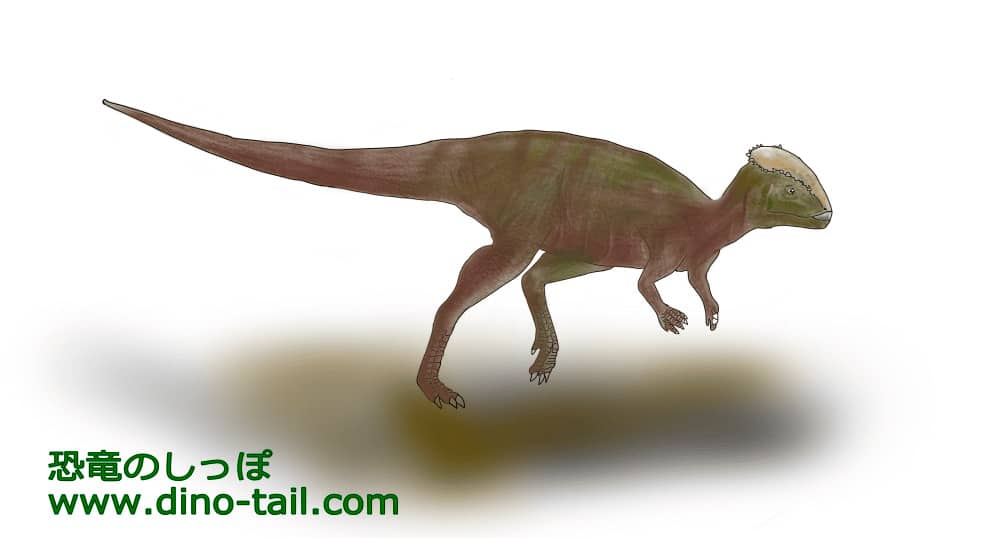
Re-evaluation from Prenocephale Juvenile Theory to an Independent Genus
In the history of Homalocephale research, a subject of debate for many years has been the question, "Is this dinosaur an independent genus, or is it a juvenile (child) of another large pachycephalosaur?"
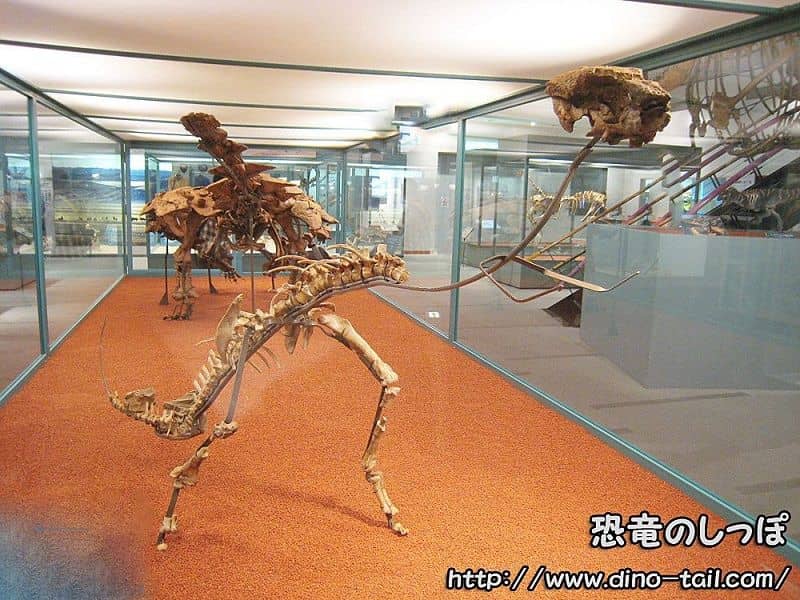
Through research since the late 2000s, it has become clear that the head shape of many pachycephalosaurs changed dramatically during their growth process, and even if they had a flat head as a child, a dome would swell up as they became adults. Based on this growth model, a hypothesis was proposed in 2010 and gained traction that "the flat-headed Homalocephale is the childhood form of Prenocephale, a dinosaur with a dome-shaped head that lived in the same era and region."
However, this hypothesis was rejected by a 2018 study. Fossils of juvenile and young Prenocephale individuals were newly discovered and analyzed in detail, revealing that Prenocephale had already formed a rounded, high dome structure from a very young stage.
It was proven anatomically unreasonable to consider the flat-skulled Homalocephale as a "juvenile Prenocephale," and Homalocephale has now re-established its status as an independent, valid genus.
Head-butting with a Flat Head and the Humid Cretaceous Ecosystem
The theory that the extremely thick skulls of pachycephalosaurs were used for "head-butting behavior in intraspecific competition" is well-known, but in the case of flat-headed types without a dome, like Homalocephale, it was often thought that they were not suited for frontal head-butting.
However, as a result of simulation experiments using computer-based finite element analysis, it became clear that head-butting behavior was actually possible.
The analysis showed that even the flat-headed Homalocephale had a structure that effectively dispersed the massive impact force generated during a collision, preventing fatal damage from reaching the brain. It is highly likely that Homalocephale pushed their flat heads, covered in thick keratinous pads, against each other, engaging in tests of strength or flank-butting.
Furthermore, the "Nemegt Formation" in Mongolia, where Homalocephale fossils were found, was not the dry Gobi Desert it is today, but a humid environment with abundant rivers and lakes (similar to the modern Okavango Delta in Africa) at the time.
In an ecosystem ruled by giant carnivorous dinosaurs like Tarbosaurus at the top, it is inferred that Homalocephale, with its excellent eyesight and agile legs, thrived as an herbivorous dinosaur that selectively plucked and ate specific plants around the edges of watersides and forests.
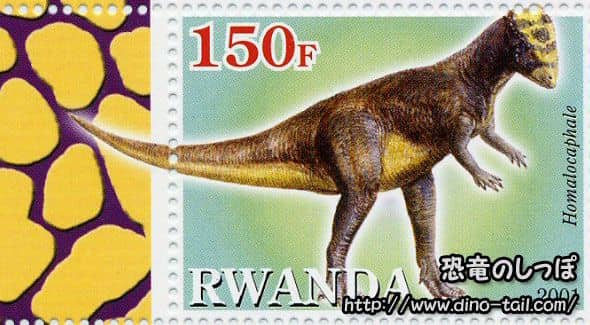
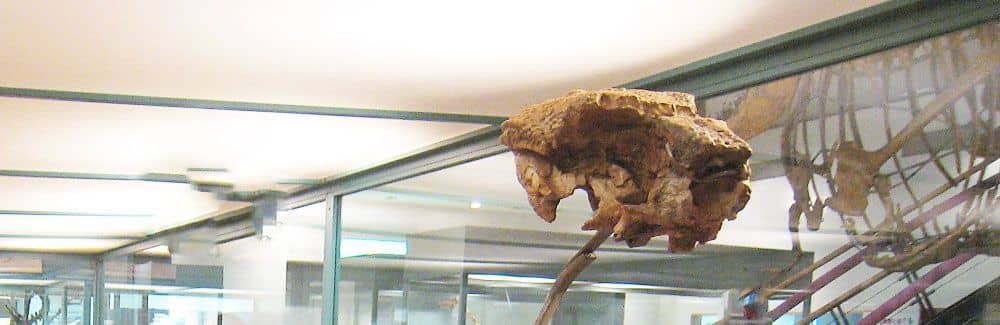
Homalocephale Stamp and Fossil Gallery