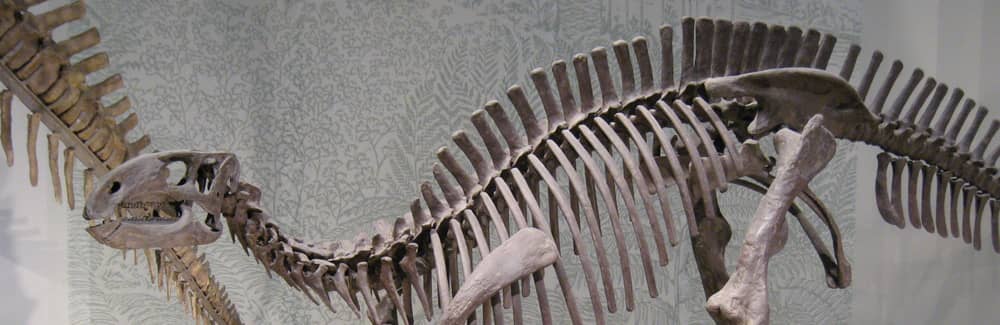
About Fukuisaurus
| Scientific Name (Genus) | Fukuisaurus |
| Meaning of Name |
Fukui lizard
Fukui - saurus (lizard) [Greek] |
| Classification | Ornithischia, Ornithopoda, Iguanodontia |
| Total Length | Approx. 4.5 - 4.7m |
| Diet | Herbivorous |
| Period | Early Cretaceous (Approx. 125 to 115 million years ago) |
| Sub-classification / Species Name | Fukuisaurus tetoriensis |
| Year of Paper Publication | 2003 |
| Genus Name Publication | Kobayashi, Y. & Azuma, Y. (2003). A new iguanodontian (Dinosauria : Ornithopoda) from the Lower Cretaceous Kitadani Formation of Fukui Prefecture, Japan. Journal of Vertebrate Paleontology. |
The Origin of Dinosaur Research in Japan
Fukuisaurus is a monumental figure in the history of Japanese paleontology. Fossils were discovered in 1989 in the Kitadani Formation of the Tetori Group in Katsuyama City, Fukui Prefecture, and it was affectionately known by the nickname "Fukuiryu" at the time.
Later, the discovered skull, backbone, and arm bones were pieced together, and in 1995, an attempt was made to reconstruct a full skeleton for the first time for a Japanese dinosaur. This reconstruction of Fukuisaurus was a major step forward for full-scale dinosaur research in Japan and became the trigger for Fukui Prefecture to be widely known as a "Dinosaur Kingdom."
Fukuisaurus's Characteristic "Immobile" Jaw
Detailed examination of the skull of Fukuisaurus revealed a very unique feature that differs from many other herbivorous dinosaurs.
Advanced ornithopods (such as hadrosaurs) had a special mechanism called "pleurokinesis" to eat plants efficiently.
It is a mechanism where, as the lower jaw is raised to close the mouth, the pressure causes the bones of the upper jaw to slide outwards. This allowed them to rub their upper and lower teeth together, "grinding" plants in their mouths like a millstone.
However, the joints of Fukuisaurus's skull were tightly bound, and it could not move its jaw sideways like this pleurokinesis at all. In other words, Fukuisaurus had a fixed, "immobile" jaw.
So, how did it eat plants?
Because it could not grind them, it is thought that Fukuisaurus specialized in simply "chopping" plants with great force using the sharp edges of its teeth, opening and closing its upper and lower jaws straight like a guillotine. It is believed that it evolved a sturdy jaw to adapt to the many hard, fibrous plants, such as ferns and cycads, that grew in the Fukui region at that time.
Thumb Spike and Sturdy Build
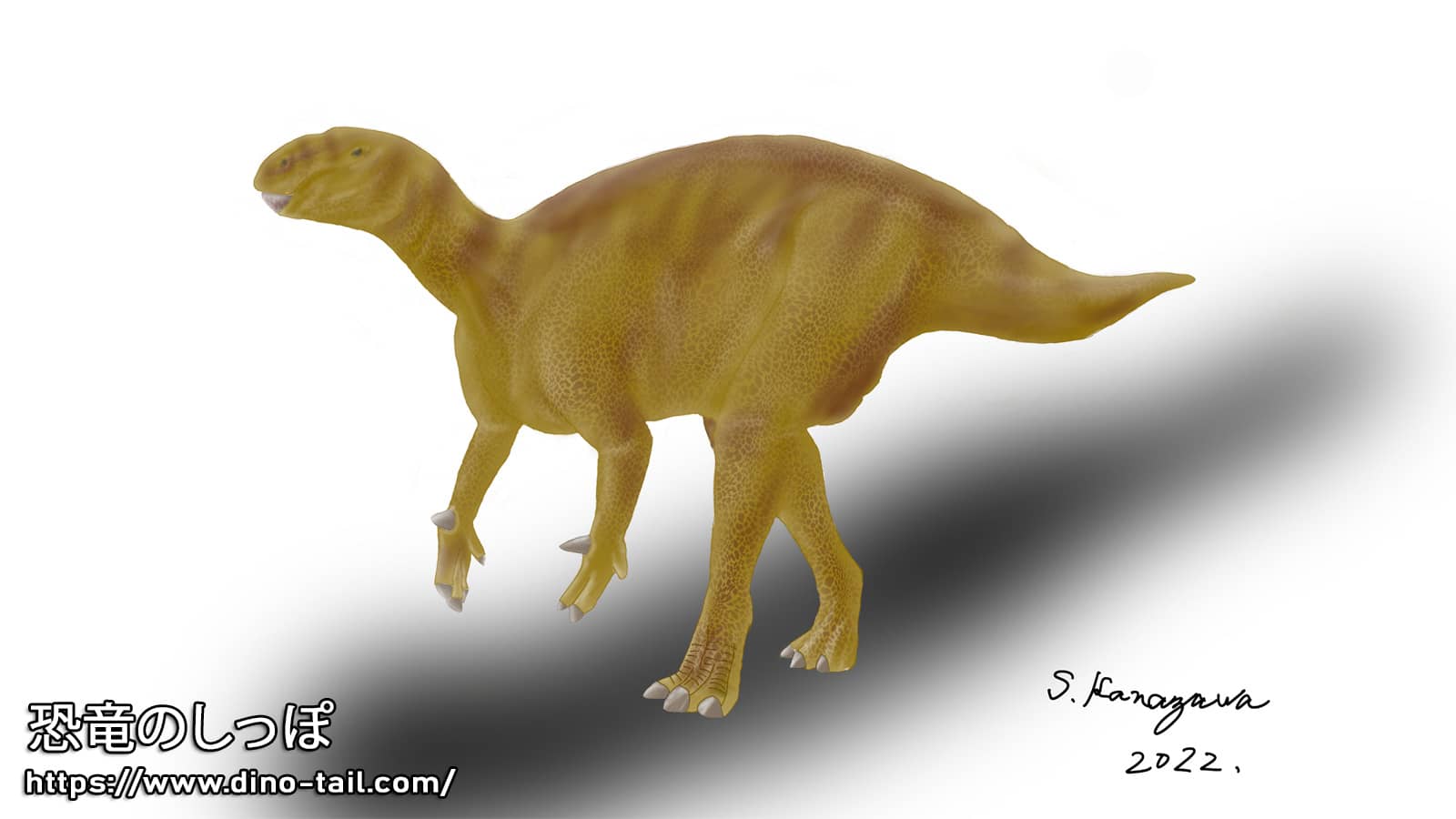
Its total length is estimated to be about 4.5 to 4.7 meters, and its weight is about 400 to 900 kilograms. Although smaller than the giant herbivorous dinosaurs of later eras, its body was very sturdy.
Basically, it moved bipedally using its strong hind legs, but it seems to have been able to walk quadrupedally by placing its short front legs on the ground when eating grass near the ground or walking slowly.
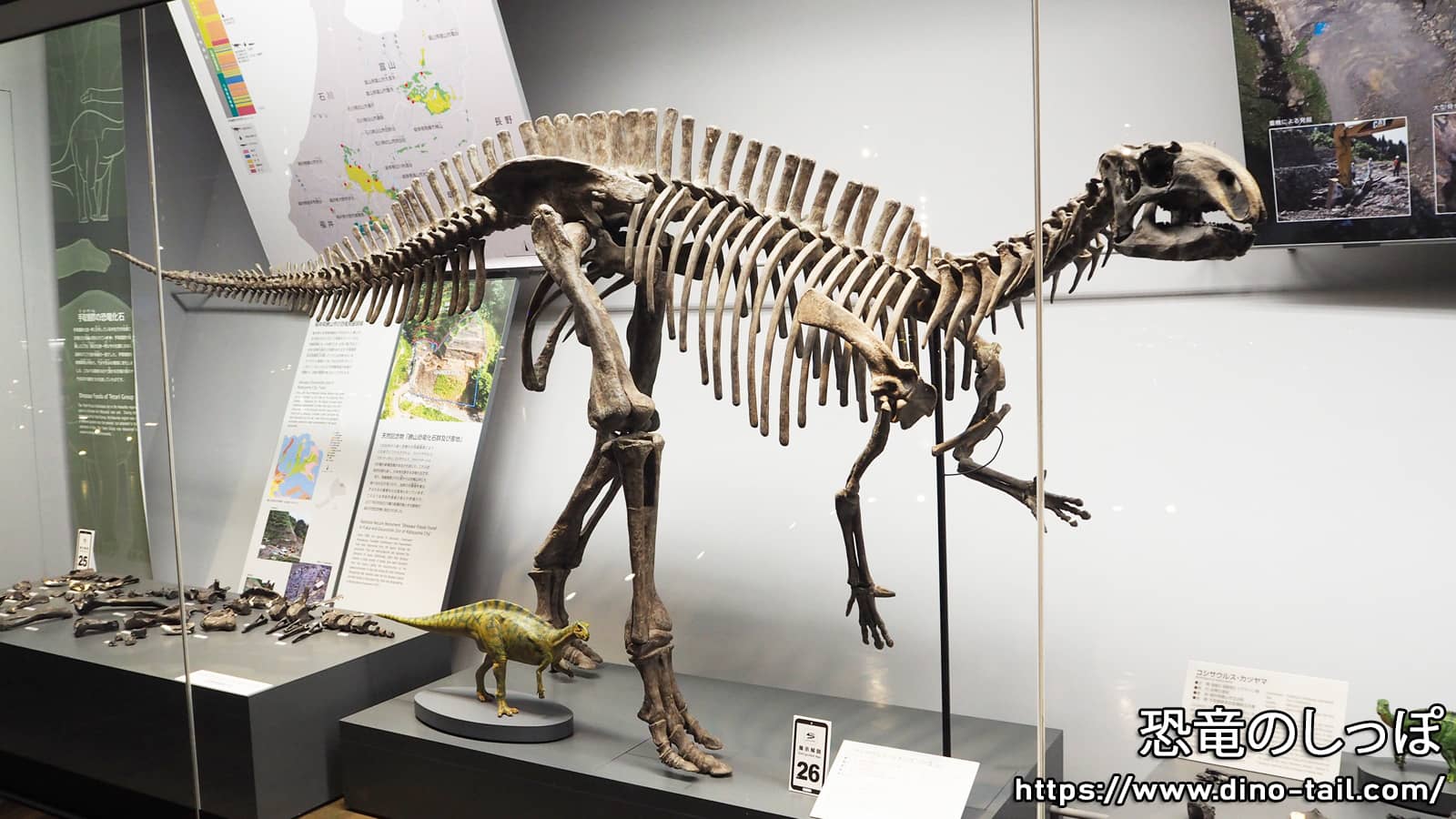
A major feature of its front legs was a dagger-like pointed bone (spike) on its first digit (thumb). This is a feature also seen in the closely related Iguanodon, and it is thought to have served as a tool for breaking hard nuts and plants, or as a powerful defensive weapon when attacked by carnivorous dinosaurs.
Coexistence and Threat: The Rich Ecosystem of the Early Cretaceous
In the Fukui region during the Early Cretaceous period when Fukuisaurus lived, rich and diverse animals lived. Another ornithopod called "Koshisaurus" has also been discovered from the same formation.
While Fukuisaurus ate hard plants with its sturdy body and immobile jaw, Koshisaurus had a more slender build and is thought to have selectively eaten softer leaves.
It is a mechanism by which similar creatures living in the same limited area avoid unnecessary conflict (competition) and coexist by changing the types of plants they eat or shifting their active times.
The fact that two types of medium-sized herbivorous dinosaurs could prosper in the same place shows that the nature of Fukui at that time was rich in plant resources.
In the habitat of Fukuisaurus, a powerful carnivorous dinosaur up to 5 meters long, "Fukuiraptor," also lurked. Fossils of Fukuiraptor and Fukuisaurus are often found mixed in the same bonebed, and it is highly likely that Fukuisaurus was one of the main prey items in this region. Many bones of children, as well as adult Fukuisaurus bones, have been found at the excavation site. It is thought that Fukuisaurus lived in herds while constantly exposed to the threat of this terrifying predator, and the thumb spike must have been an essential weapon to protect itself.