About Fukuiraptor
| Scientific Name (Genus) | Fukuiraptor |
| Meaning of Name |
Thief of Fukui (place name)
Fukui [place name] - raptor (thief, plunderer) [Latin] |
| Classification | Saurischia, Theropoda (Tyrannosauroidea, Megaraptora) |
| Total Length | Approx. 4.2m - 4.7m |
| Weight | Approx. 300kg - 590kg |
| Diet | Carnivorous |
| Period | Early Cretaceous (Barremian to Aptian stages) |
| Sub-classification / Species Name | Fukuiraptor kitadaniensis |
| Year of Paper Publication | 2000 |
| Genus Name Publication |
A new carnosaur (Dinosauria: Theropoda) from the Lower Cretaceous of Japan.
Canadian Journal of Earth Sciences, 37. by Azuma, Y. and Currie, P. J. 2000. |
Characteristics: The Misunderstood "Raptor" and the Evolution of Its Classification
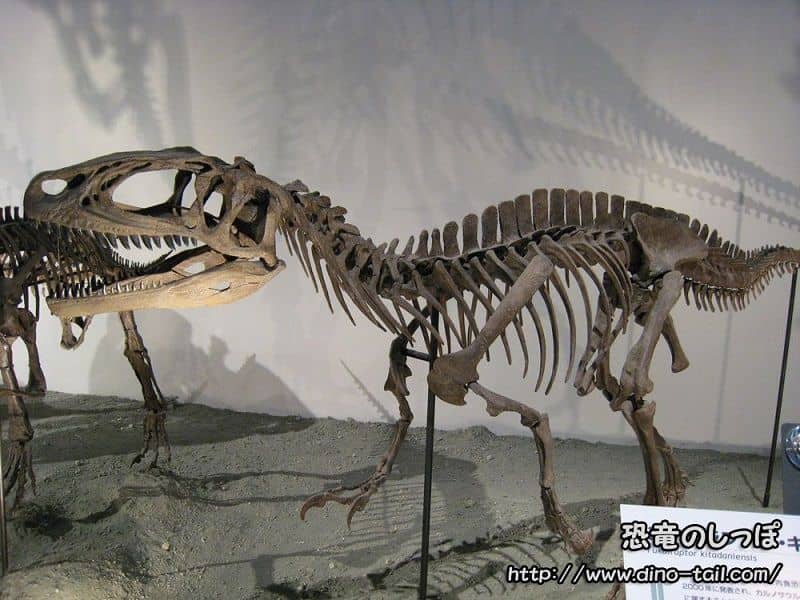
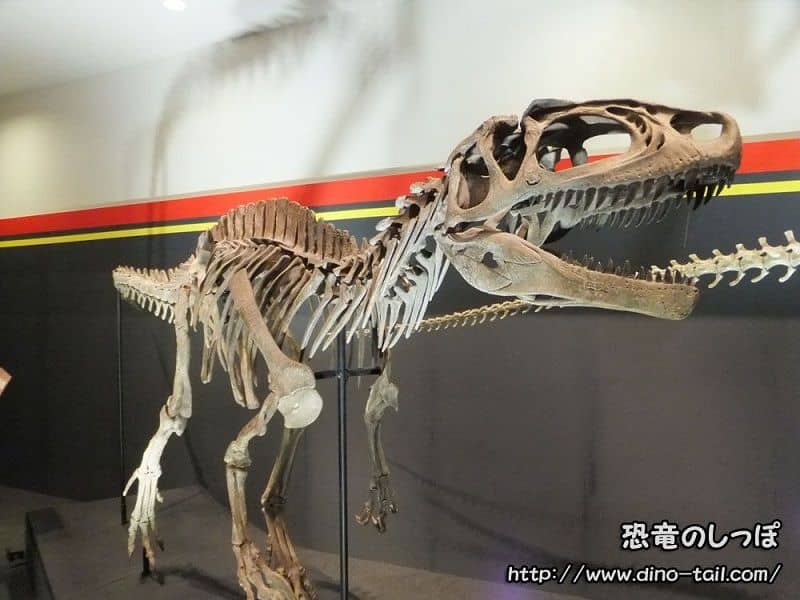
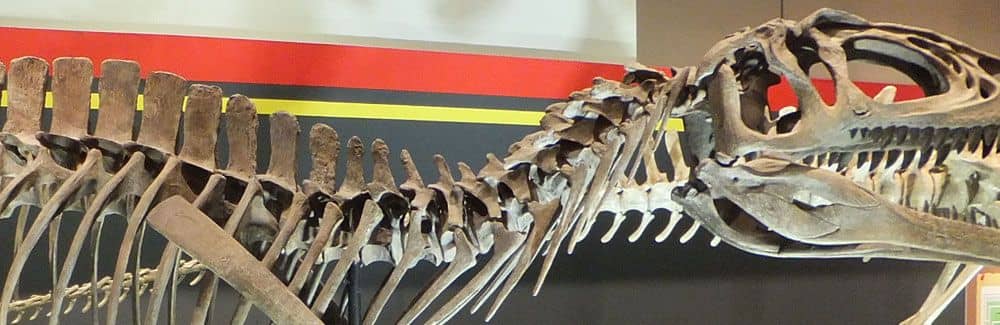
Fukuiraptor is the first carnivorous dinosaur discovered in Japan to have its complete skeleton restored. Its name combines "Fukui," the discovery site, and "raptor," meaning "thief."
When it was first discovered in 1993, researchers found an extremely large claw exceeding 10 cm, which they thought was a giant "foot" claw of a dromaeosaurid dinosaur like Velociraptor. This is why it was named "raptor."
However, as numerous skeletons were discovered in subsequent excavations, it was revealed that this giant claw belonged to the **"hand (forelimb)" rather than the foot**. As a result, the dromaeosaurid theory was rejected.
The classification of Fukuiraptor underwent several changes after that. At the time of its description in 2000, it was classified as a relative of Allosaurus, but in the 2010s, a unique group called **"Megaraptora"**, characterized by powerful forelimbs and giant claws, was proposed.
In current advanced research, Fukuiraptor belongs to the "Coelurosauria," distant relatives of Tyrannosaurus, and is considered the most primitive (basal) member of the megaraptorans that evolved into giants in the Southern Hemisphere. They were agile hunters that used their strong arms and thin, sharp, giant claws to chase down and finish off prey with their mobile long legs.
The first discovered individual (holotype specimen) has a total length of about 4.2m, but examination of the bones indicates that it is a young, still-growing individual (subadult), and it is highly likely that adult Fukuiraptors grew even larger.
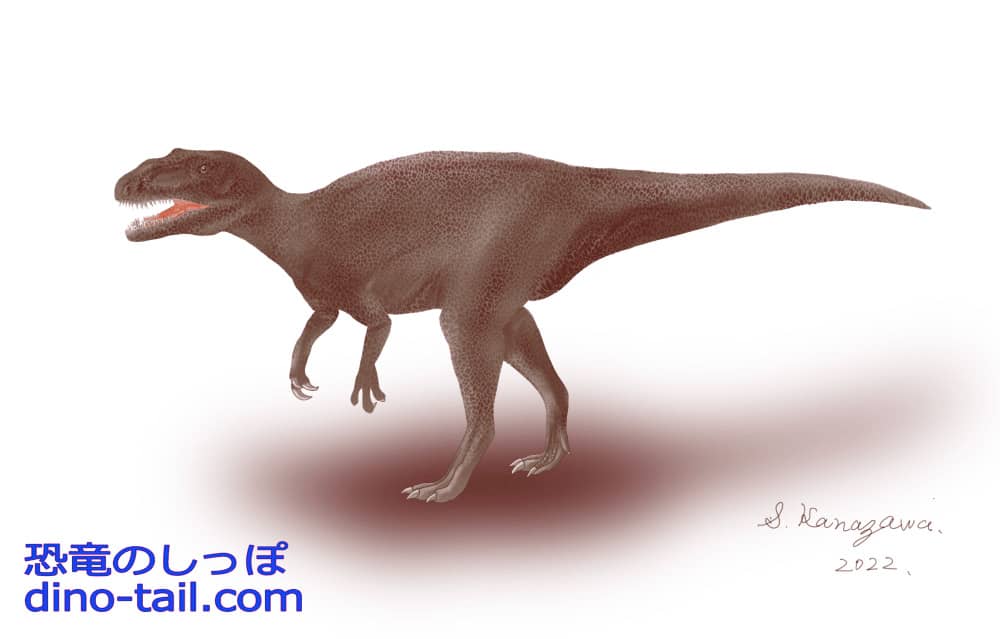
Apex Predator of the "Katsuyama Dinosaur Fauna"
The eastern edge of the Asian continent (around present-day Katsuyama City, Fukui Prefecture) where Fukuiraptor lived about 125 to 111.5 million years ago was a warm and rich environment with developed rivers and lakes. Many new species of dinosaurs, including Fukuiraptor, have been discovered in this formation.
It is speculated that Fukuiraptor used its running ability to track prey, extended its powerful forelimbs, and tore the prey apart with its thin, sharp, giant claws. It is thought that plant-eating dinosaurs living in the same era, such as Fukuisaurus and Koshisaurus, were its main prey, reigning as the apex predator in the terrestrial ecosystem at the time.
In addition, fossils of spinosaurids, the masters of the waterside, have also been found in the same formation, suggesting that there was a division of habitat (niche partitioning) with Fukuiraptor, which targeted terrestrial prey.
The Homeland of Fukuiraptor and the Fukui Prefectural Dinosaur Museum
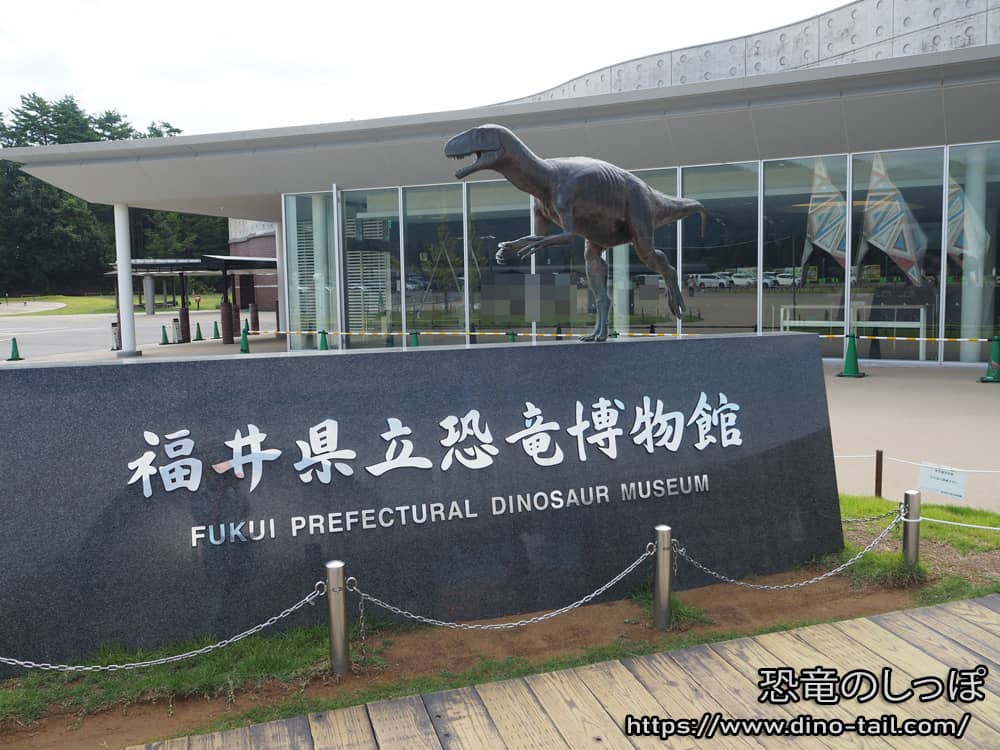
Katsuyama City in Fukui Prefecture, where Fukuiraptor fossils were excavated, is home to the " Fukui Prefectural Dinosaur Museum," hailed as one of the world's three great dinosaur museums. The impressive complete skeleton of Fukuiraptor is displayed in the dome-shaped permanent exhibition hall inside the museum.
Fukuiraptor's significance goes beyond academics; it is widely known as a powerful icon leading Japan's dinosaur culture, serving as the motif for Fukui Prefecture's official dinosaur brand character "Rapto," and being chosen as the subject for the special effects film "Fukuiraptor" scheduled for release in 2026.
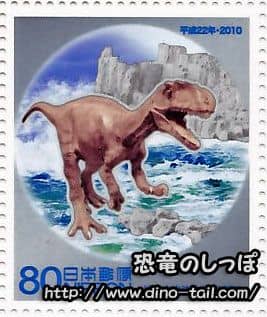
Fukuiraptor Stamp & Fossil Gallery