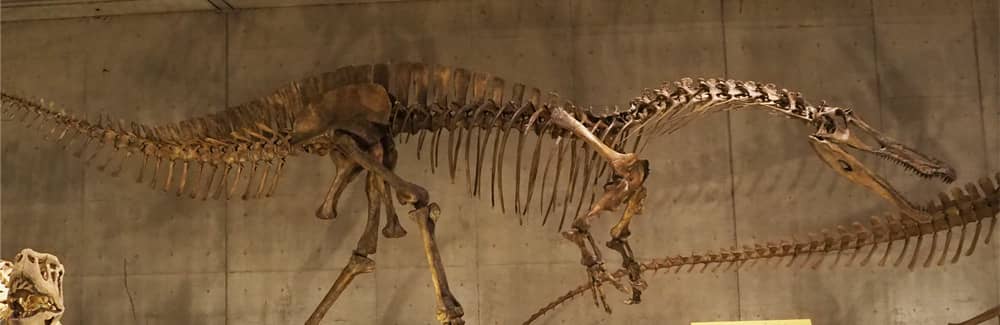
About Suchomimus
| Scientific Name (Genus) | Suchomimus |
| Meaning of Name |
Crocodile mimic
suchos (crocodile) [Greek] - mimos (mimic) [Greek] |
| Classification | Saurischia, Theropoda, Spinosauridae (Baryonychinae) |
| Total Length | Approx. 9.5-13m |
| Diet | Carnivorous (mainly piscivorous) |
| Period | Early Cretaceous (Aptian - Albian stages: approx. 125-112 million years ago) |
| Sub-classification / Species Name | Suchomimus tenerensis |
| Year of Paper Publication | 1998 |
| Genus Name Publication | A Long-Snouted Predatory Dinosaur from Africa and the Evolution of Spinosaurids. Science. 282 (5392). by Sereno, P. C. et al. 1998. |
History of Discovery and the Environment of the Elrhaz Formation
Suchomimus was discovered in the fall of 1997 by an international expedition led by paleontologist Professor Paul Sereno. It was an excavation in the extreme environment of the Ténéré Desert in central Niger, a place called "Gadoufaoua (the place where camels fear to go)". The discovery was triggered when a team member found a giant thumb claw exposed on the surface. Later, over 400 skeletal fragments were recovered, and it was formally described in the journal Science the following year in 1998.
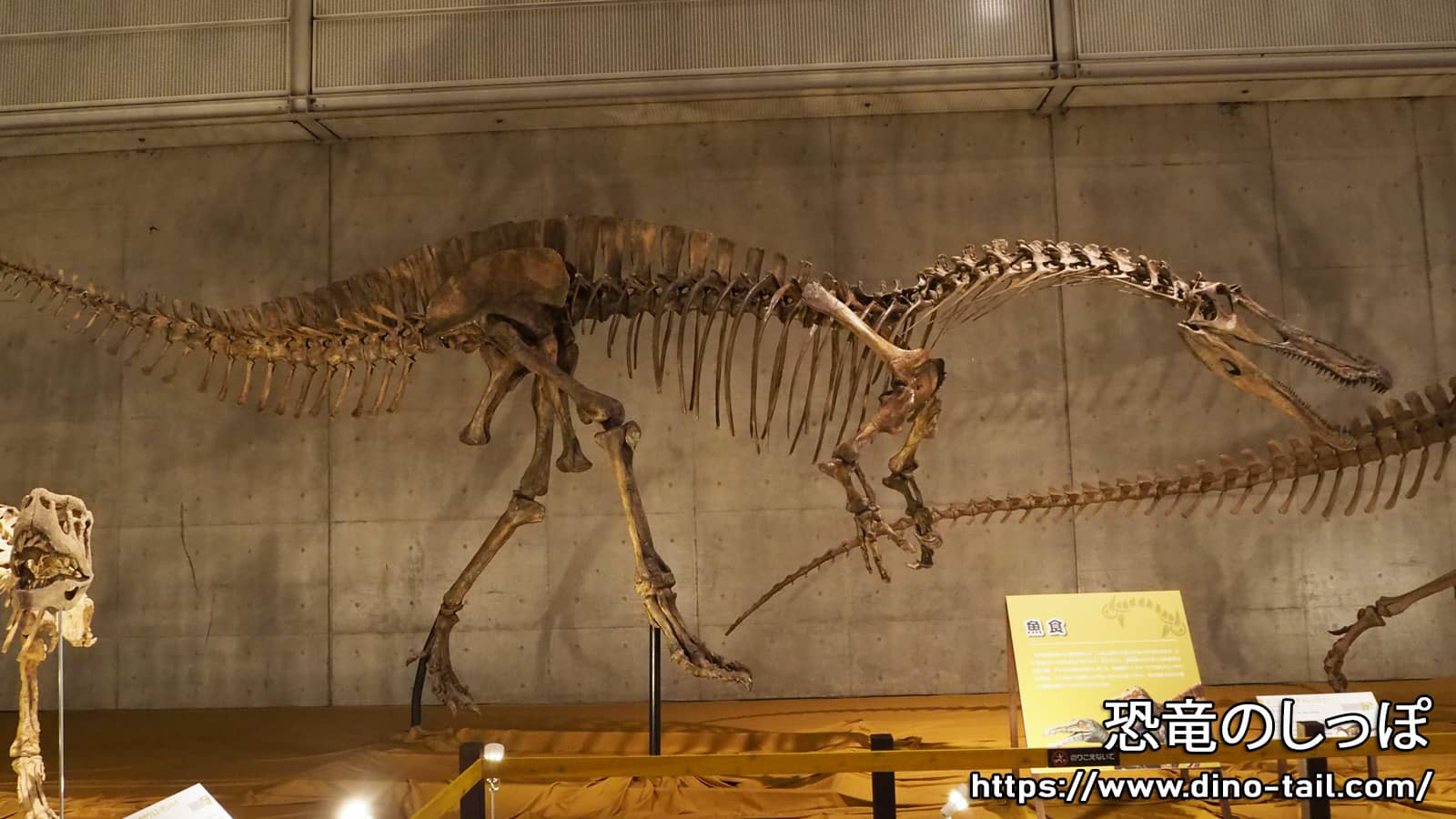
The "Elrhaz Formation" where the fossils were produced is a vast desert today, but during the Early Cretaceous when Suchomimus lived, it was a tropical/subtropical wetland environment with rich forests, meandering giant rivers, and lakes. Diverse creatures inhabited this rich waterside, including sharks like Hybodus, large bony fish, and the giant crocodile Sarcosuchus, nicknamed "SuperCroc."
Anatomical Features: A Mouth for Catching Fish and Powerful Arms
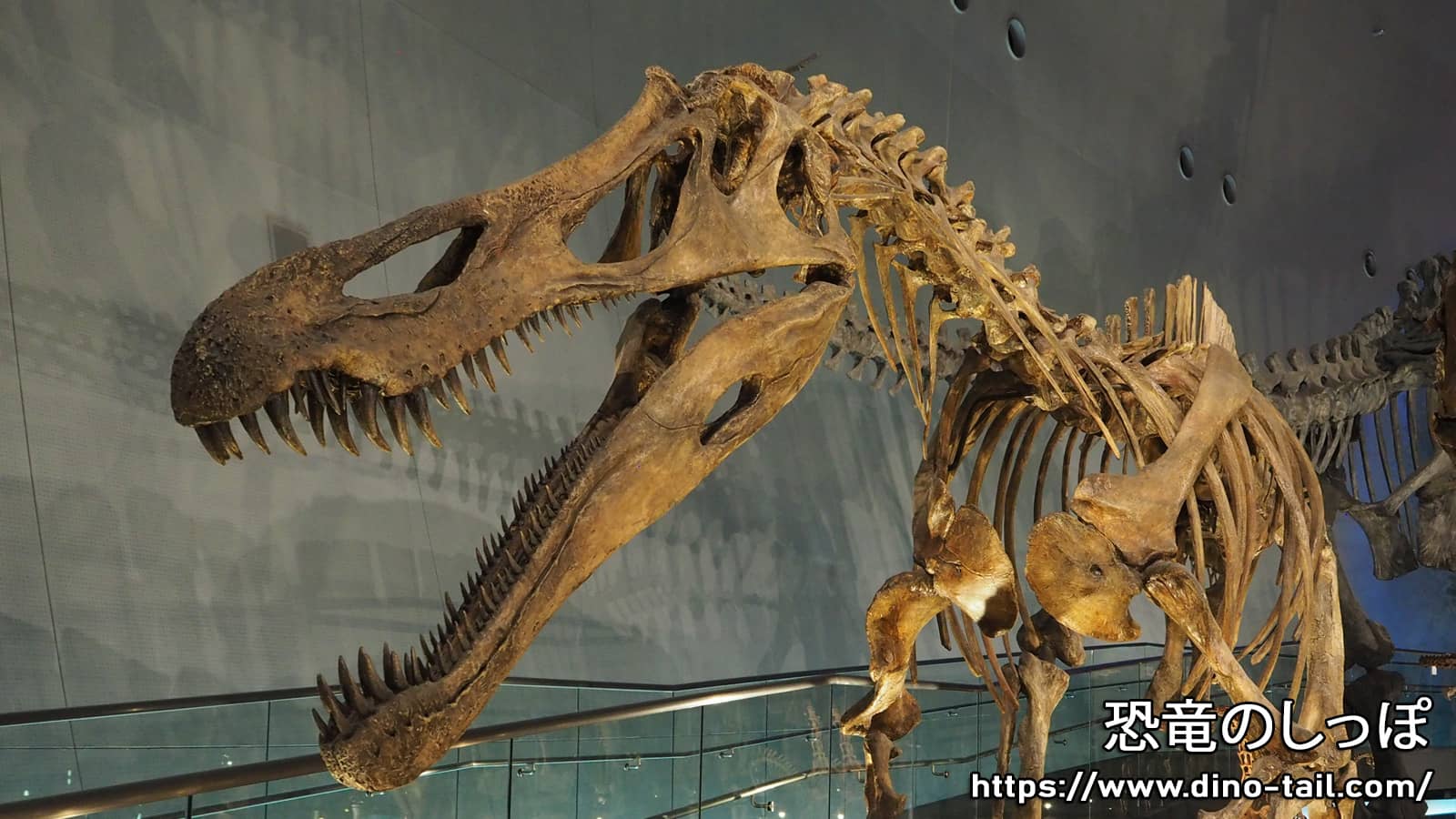
A characteristic skull reminiscent of a crocodile
The most striking feature of Suchomimus is its elongated skull, which is reminiscent of a modern crocodile. This skull, reaching about 1.2 meters in length, was lined with about 122 conical teeth in the upper and lower jaws combined. These teeth functioned not as meat-slicers, but as "hooks" to pierce slippery fish and prevent them from escaping. Additionally, the tip of the snout was expanded laterally, creating a structure to firmly clamp down on thrashing prey in the water. The retraction of the nostrils to the rear of the head is also considered an adaptation to make it easier to breathe while plunging its mouth into the water.
What further makes Suchomimus stand out are its extremely robust forelimbs and a giant sickle-shaped "thumb claw" measuring up to 30 cm long. It is presumed that this powerful weapon was used to hook and pull fish out of the water, or used for defense and dismantling prey.
Relationship with Baryonyx
Suchomimus is a very close relative (Baryonychinae) of Baryonyx, which has been discovered in the UK and elsewhere. Because their skeletons are very similar, some researchers suggested that it is another species of the genus Baryonyx (Baryonyx tenerensis). However, because Suchomimus is larger and has higher neural spines on its back (possessing a primitive sail), the general consensus now is that they belong to separate genera.
Hunting Style: The "Hell Heron" Model
The fact that Suchomimus's main diet was fish is supported by its conical teeth and the analysis of calcium isotopes detected in its tooth enamel (which showed values clearly different from those of dinosaurs that ate terrestrial animals). This allowed for "habitat segregation" with large terrestrial carnivorous dinosaurs (such as Carcharodontosaurids) that lived in the same period and region.
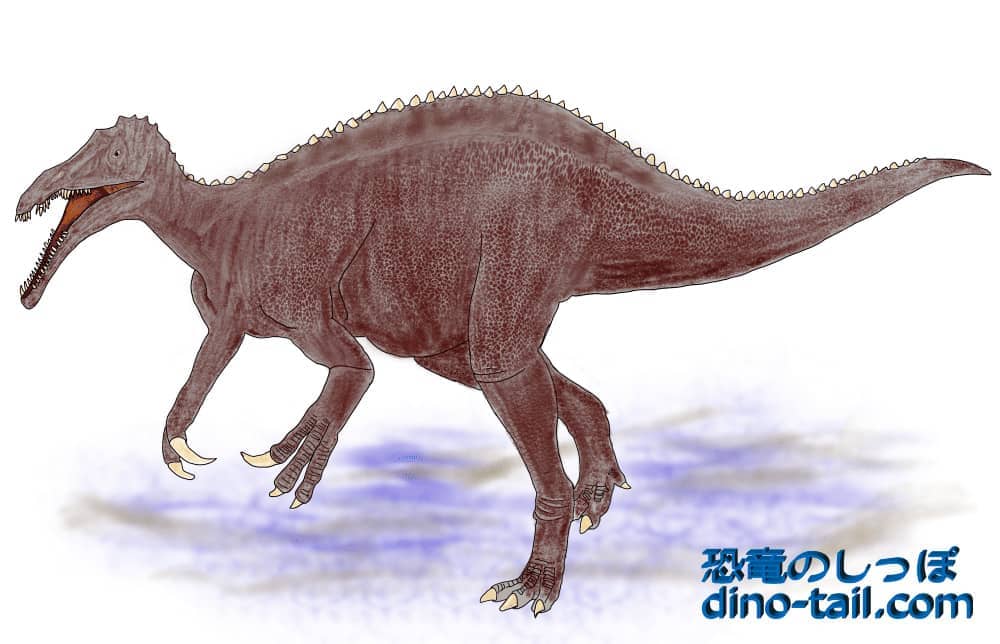
In recent years, there has been a debate about "how adapted spinosaurid dinosaurs were to water (whether they could dive)." A 2022 study announced a theory that close relatives had high bone density like penguins and dove into the water, but Suchomimus's bone density was not that high.
Furthermore, in 2024, a re-examination of digital models by Paul Sereno and others concluded that their buoyancy was too strong, making diving difficult. Instead, the "Heron model" was proposed. It is thought that Suchomimus had a hunting style like a "hell heron," standing firmly on the riverbed and swiftly ambushing prey passing near the water surface with its giant claws and jaws.
2025 Latest Research: Upgrade to a Large Theropod
Until now, Suchomimus was considered to have a relatively slim build, with its weight estimated at around 3 tons. However, the latest research published in 2025 by Matthew Dempsey and others has changed this perception.
By recalculating the body weight using a "volume-based convex hull expansion method" that more accurately accounts for the amount of dinosaur soft tissue (muscles and internal organs), the results indicated the possibility that the largest Suchomimus individuals reached 13 meters in length and exceeded 5 tons in weight.
The figures of 13 meters in length and 5 tons in weight mean joining the ranks of giant predatory dinosaurs that should be called "megatheropods." Suchomimus was the "ruler of the riverbanks," possessing an overwhelming presence on the African continent at that time.