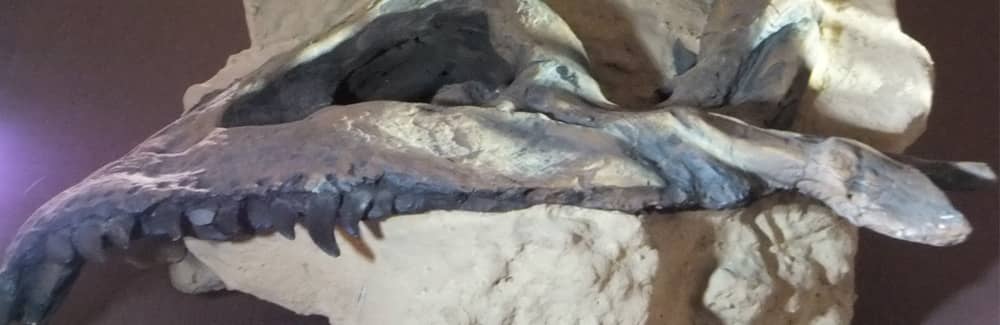
About Nanotyrannus
| Scientific Name (Genus) | Nanotyrannus |
| Meaning of Name |
Pygmy tyrant
nano(small)[Latin]-tyrannus(tyrant)[Latin] |
| Classification | Saurischia, Theropoda, Eutyrannosauria |
| Total Length | Approx. 5 - 6.5m |
| Diet | Carnivorous |
| Period | Late Cretaceous (Maastrichtian) |
| Sub-classification / Species Name |
Nanotyrannus lancensis
Nanotyrannus lethaeus |
| Year of Paper Publication | 1988 |
| Genus Name Publication | Nanotyrannus, a new genus of pygmy tyrannosaur, from the latest Cretaceous of Montana. Robert T. Bakker, Michael Williams, Philip J. Currie. 1988. |
The Controversy Surrounding Small Tyrannosaurs
It has long been thought that the ecosystem of Laramidia, located in the eastern part of the modern North American continent during the Maastrichtian stage of the Late Cretaceous, was dominated by Tyrannosaurus rex, the iconic predator symbolizing the end of the dinosaur age.

However, in the shadows, the debate over a small tyrannosaurid called "Nanotyrannus" had become one of the fiercest and longest-running controversies in paleontology. Since its discovery in 1942, the question of whether this animal was a "juvenile Tyrannosaurus" or an independent "pygmy tyrant" had been a crucial issue influencing our understanding of dinosaur taxonomy and ecosystem structure.
Innovative research published between 2024 and 2025, particularly the analysis of the "Dueling Dinosaurs" specimen and the re-evaluation of the Cleveland Museum of Natural History holotype specimen, provided conclusive evidence to put an end to this decades-long debate.
History of Research and Systematic Changes of Nanotyrannus
The history of Nanotyrannus research began with a single skull (CMNH 7541) discovered in 1942 in the Hell Creek Formation of Montana by David Dunkle, a curator at the Cleveland Museum of Natural History. This skull was about 570 mm long, less than half the size of an adult Tyrannosaurus.
| Year | Specimen Number / Nickname | Major Events / Taxonomic Changes | Proponent / Researcher |
|---|---|---|---|
| 1942 | CMNH 7541 | Skull discovered in the Hell Creek Formation, Montana | David Dunkle |
| 1946 | CMNH 7541 | Described as a new species Gorgosaurus lancensis | Charles Gilmore |
| 1970 | CMNH 7541 | Reclassified to Albertosaurus lancensis | Dale Russell |
| 1988 | CMNH 7541 | Named as a new genus and species Nanotyrannus lancensis. Advocated adult theory | Robert Bakker et al. |
| 1999 | CMNH 7541 | Proposed to be a juvenile Tyrannosaurus rex | Thomas Carr |
| 2001 | BMRP 2002.4.1 (Jane) | A well-preserved nearly complete skeleton discovered, reigniting the debate | Burpee Museum of Natural History |
| 2006 | NCSM 40000 (Bloody Mary) | Discovery of the "Dueling Dinosaurs" in combat with Triceratops | Clayton Phipps et al. |
| 2024 | Multiple specimens | The validity of Nanotyrannus as an independent species re-evaluated through osteohistology and phylogenetic analysis | Nick Longrich et al. |
| 2025 | CMNH 7541 / NCSM 40000 | Confirmation of histological maturity and proposal of a new species Nanotyrannus lethaeus | Lindsay Zanno, James Napoli et al. |
In 1988, Robert Bakker and colleagues defined this as a new adult genus, Nanotyrannus, based on the apparent fusion of the skull sutures. However, when Thomas Carr argued in 1999 that it "matched the morphological changes seen in the juvenile stages of Tyrannosaurus," the mainstream view in the early 21st century became that "Nanotyrannus does not exist (specimens assigned to Nanotyrannus are baby Tyrannosaurus)." Many paleontologists considered Nanotyrannus to be a preliminary stage undergoing a dramatic metamorphosis as Tyrannosaurus grew to gigantic proportions.
However, in 2024-2025, decisive evidence that it was "not a juvenile Tyrannosaurus" was progressively discovered.
Differences from Tyrannosaurus
The greatest logical rationale for considering Nanotyrannus an independent species lies in the presence of anatomical features incompatible with the known growth series of Tyrannosaurus rex.
Comparison of Skull and Dentition
The skull of Nanotyrannus is elongated and low, contrasting with the massive, wide, box-like structure of an adult Tyrannosaurus. Notably, the number of teeth is different. Nanotyrannus had more teeth.
| Part/Feature | Nanotyrannus ( N. lancensis ) | Tyrannosaurus ( T. rex ) |
|---|---|---|
| Maxillary tooth count | 14-15 | 11-12 |
| Dentary tooth count | Approx. 16 | 12-13 |
| Tooth shape | Laterally compressed, blade-like | Thick, "banana-like" |
| Skull width | Narrow | Wide (especially at the back) |
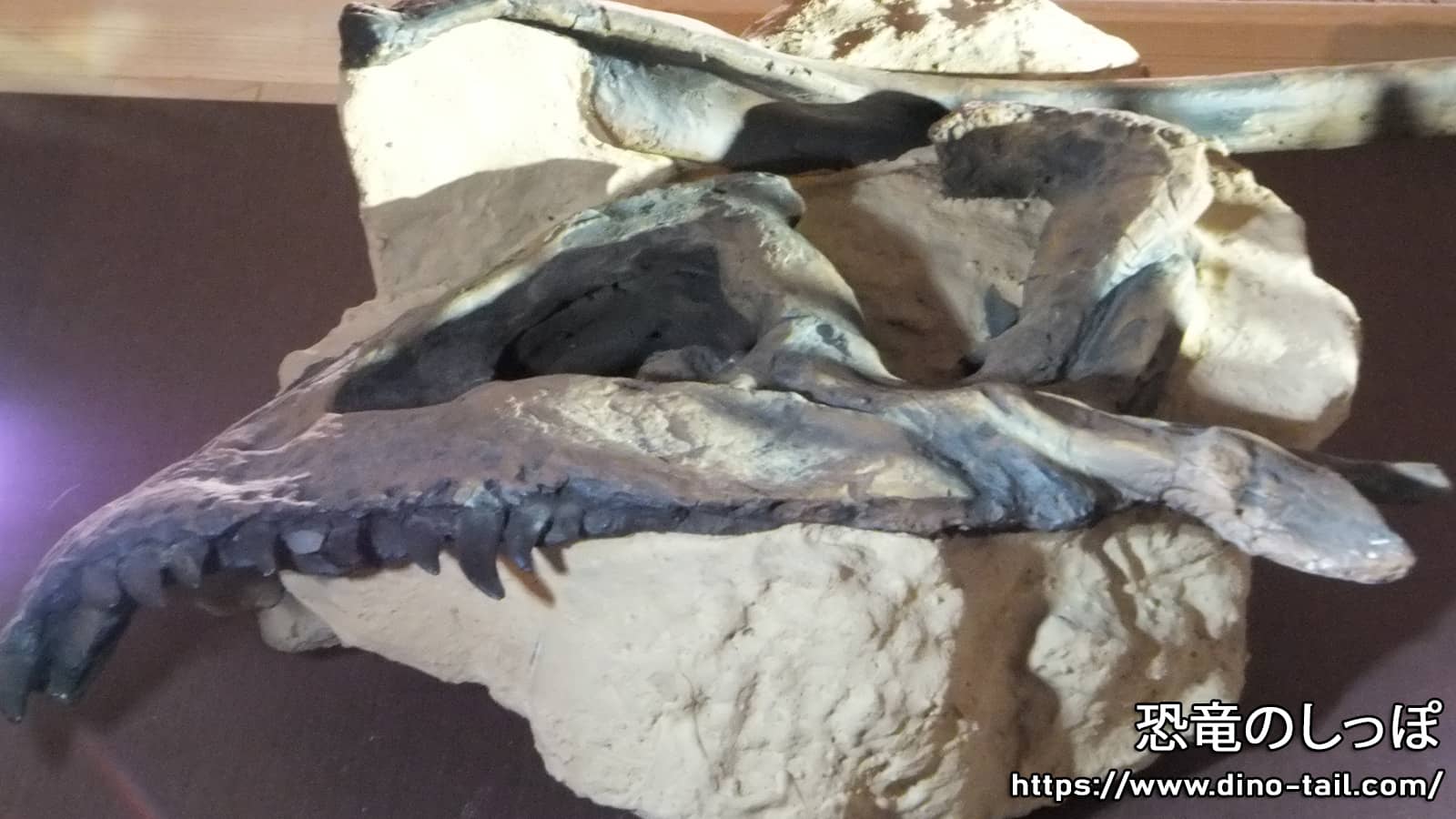
In vertebrates, a decrease in tooth count as they grow is an extremely rare phenomenon; rather, in most cases, tooth count is maintained or tends to increase to match the growth of the jaw. If Nanotyrannus were a juvenile Tyrannosaurus, it would require an unknown process where alveoli are resorbed at some stage of growth, but to date, no specimen showing such an intermediate state has been found.
Anatomical Divergence of Forelimbs and Hindlimbs
The size and proportions of the forelimbs (arms) provide one of the strongest anatomical pieces of evidence supporting the Nanotyrannus independent species theory. The arms of the approximately 6-meter-long Nanotyrannus are larger in bone size and claw size than the arms of the massive Tyrannosaurus exceeding 12 meters in length. A phenomenon where specific bones shrink in absolute size during an animal's growth process is physiologically impossible, meaning that the two had completely different body blueprints.
Histological Proof of an "Adult"
The core of the research published in 2024 and 2025 lies in the histological proof that Nanotyrannus specimens are not "young, growing individuals" but "adults whose growth has almost stopped."
Microstructure of Bone Tissue and LAG Analysis
Lines of Arrested Growth (LAGs) formed within bones indicate the individual's age, much like tree rings. In the 2024 study, it was confirmed that the spacing of LAGs in Nanotyrannus specimens became extremely narrow towards the outside. This indicates a preliminary stage of a structure called the "External Fundamental System (EFS)" or a similar stagnation in growth, showing that the individual had already reached a near-adult level and would not grow any larger.
Decisive Evidence from the Hyoid Bone
In 2025, the research team conducted a histological re-evaluation of the Cleveland specimen (CMNH 7541) and focused on a small throat bone, the "hyoid," which had previously been overlooked. As a result, a clear EFS (External Fundamental System) was discovered in the hyoid bone of the Cleveland specimen. The presence of an EFS is evidence that the individual is skeletally fully mature. This definitively established that the holotype specimen, which had been claimed to be a juvenile Tyrannosaurus for over 80 years, was actually an adult "pygmy tyrant," an independent genus.
The Shock Brought by the "Dueling Dinosaurs" Specimen
The "Dueling Dinosaurs" specimen (NCSM 40000) discovered in Montana, which preserves almost 100% of a Nanotyrannus skeleton, played a central role in settling this debate.
In this specimen, a Triceratops (Triceratops horridus) and a Nanotyrannus (Nanotyrannus lancensis) are preserved intertwined in the same sandstone block. Analysis revealed that the Nanotyrannus in this specimen (nicknamed Bloody Mary) died at the age of about 20 and was physically fully mature. The age of 20 is a time when a Tyrannosaurus would have finished its maximum growth phase and reached a massive body weight of several tons. However, this specimen remained at about 6 meters in length, making it clear that it possessed a unique growth strategy different from Tyrannosaurus.
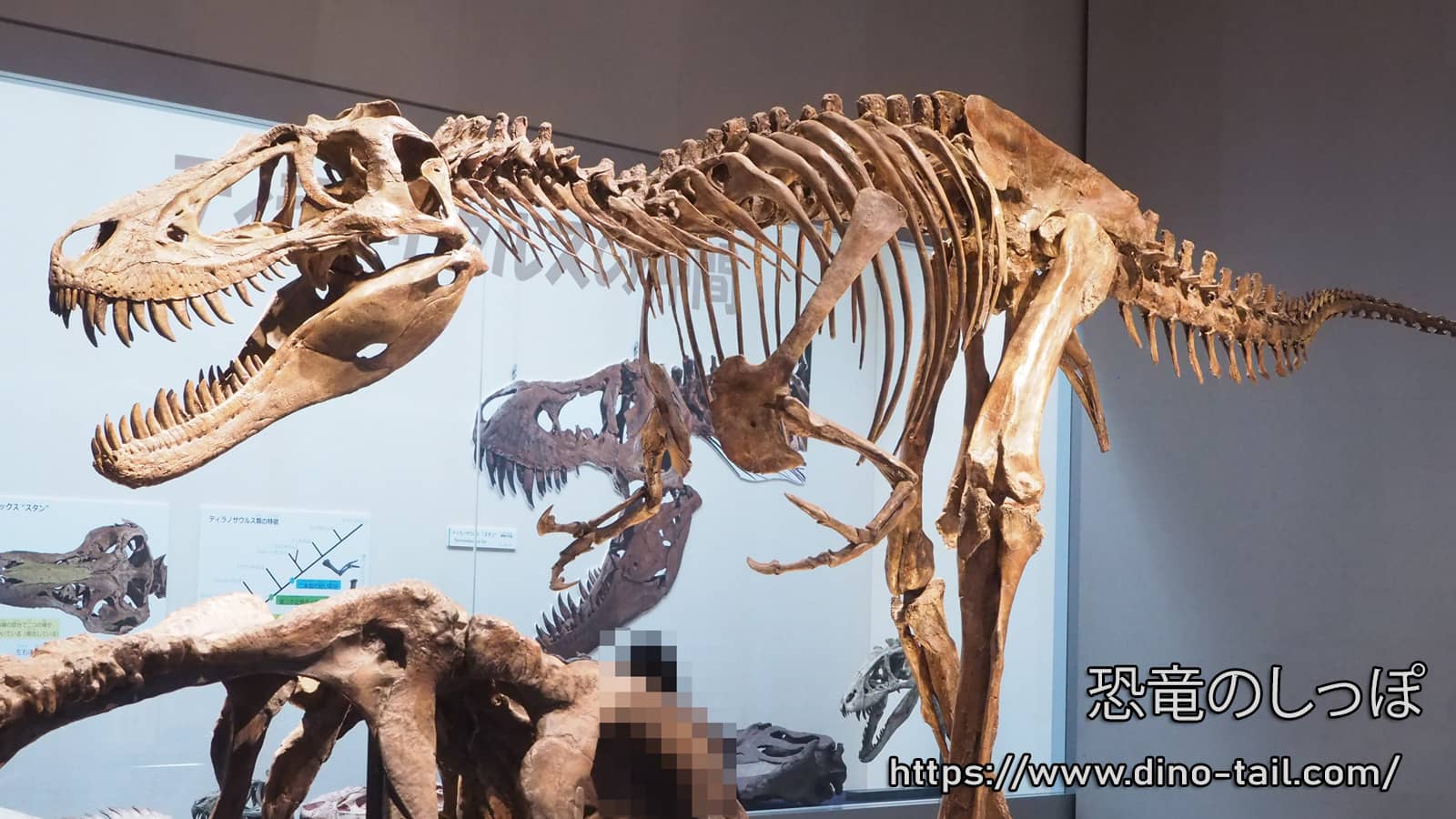
It has been proposed to be Nanotyrannus lethaeus
The 2025 research also proposed the possibility that Nanotyrannus is not a single species. A new species, Nanotyrannus lethaeus, was proposed, with the famous specimen "Jane" (BMRP 2002.4.1), once considered a juvenile Tyrannosaurus, as its holotype.
The new species name lethaeus is derived from the "River Lethe (river of forgetfulness)" in Greek mythology, serving as a metaphor for the fact that this species was hidden in the shadow of Tyrannosaurus for decades and "forgotten" by science.
The Rich Ecosystem of the Late Cretaceous Proven by Nanotyrannus
The establishment of the validity of Nanotyrannus rewrites our understanding of the Late Cretaceous North American ecosystem. Until now, it was thought to be dominated by Tyrannosaurus rex as the "apex predator." However, in reality, a picture of a rich ecosystem has emerged, where a wide variety of hunters, from large to small, coexisted through niche partitioning.
| Feature | Tyrannosaurus | Nanotyrannus |
|---|---|---|
| Estimated Weight | Approx. 8,000 kg or more | Approx. 900 - 1,500 kg |
| Total Length | Approx. 12 - 14m | Approx. 5 - 6.5m |
| Hunting Style | Heavy, power-oriented. Mighty bone-crushing bite | Lightweight, speed-oriented. Sharp teeth for slicing meat and long legs |
| Ecological Role | Apex predator (targeting giant prey) | Mesopredator/high-speed hunter (targeting medium-sized prey) |
The relationship between Tyrannosaurus and Nanotyrannus can be compared to the relationship between lions and cheetahs or leopards in modern Africa. It is thought that the coexistence of predators with different sizes and abilities maintained a complex ecosystem that efficiently utilized the diverse prey resources of the region.
Many museums around the world have exhibited individuals previously called Nanotyrannus (mainly replicas of "Jane") as "juvenile Tyrannosaurus." In light of the results of a series of recent studies, exhibition labels and explanatory texts worldwide will be considered for updates in accordance with the progress of paleontology.