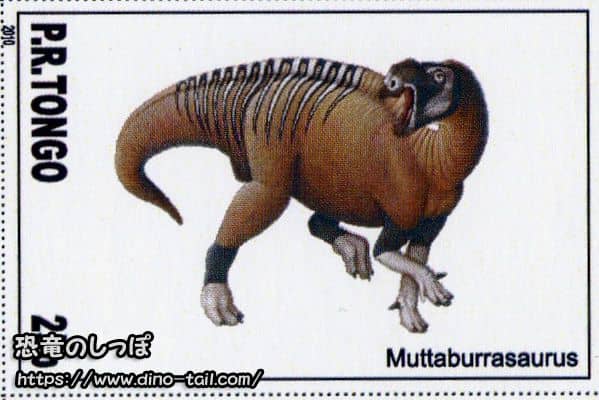
About Muttaburrasaurus
| Scientific Name (Genus) | Muttaburrasaurus |
| Meaning of Name |
Lizard from Muttaburra
Muttaburra [Place name] - saurus (lizard) [Greek] |
| Classification | Ornithischia (Basal Neornithischia or Elasmaria) |
| Total Length | Approx. 8m |
| Diet | Herbivorous |
| Period | Early to early Late Cretaceous (approx. 112 to 96 million years ago) |
| Sub-classification / Species Name | Muttaburrasaurus langdoni |
| Year of Paper Publication | 1981 |
| Genus Name Publication |
Muttaburrasaurus: a new Iguanodontid (Ornithischia:Ornithopoda) dinosaur from the Lower Cretaceous of Queensland.
Memoirs of the Queensland Museum. 20. by Bartholomai, A; Molnar, R.E. 1981. |
Characteristics and Latest Classification
Muttaburrasaurus is one of the dinosaurs for which a complete skeleton fossil has been discovered in Australia, and its classification has been a subject of debate for many years. Initially thought to be a relative of Iguanodon, later theories suggested it belonged to a group close to the European Rhabdodontidae.
However, research in the 2020s indicated that it may belong to the "Elasmaria," a group unique to the Southern Hemisphere, or it could be a survivor of a primitive lineage that falls outside any iguanodontians. It is thought to have been a unique herbivorous dinosaur that evolved independently, achieving a large size while retaining ancestral features in Australia (part of the former Gondwana continent), isolated from other continents.
It is a group of small to medium-sized herbivorous dinosaurs that uniquely flourished in the Southern Hemisphere (Gondwana), including South America, Antarctica, and Australia.
The "Bump" on Its Nose and Excellent Senses
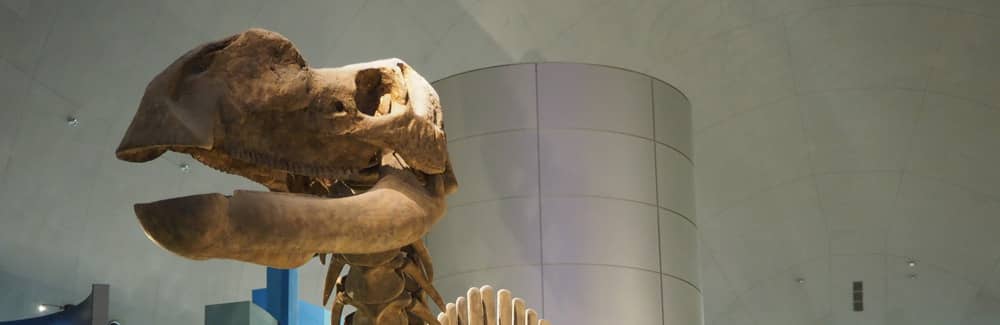
The most prominent feature of Muttaburrasaurus is the large "bump"-like bulge protruding on its snout. For a long time, it was thought to be a hollowed-out swelling of the nasal bone, but high-resolution CT scans in 2026 revealed that it is formed by a bone called the "premaxilla," which is not seen in other dinosaurs.
Inside this structure was a complex air chamber, and it is known to have had one of the largest olfactory bulbs (the brain organ that senses smell) among known dinosaurs. This suggests it had a very acute sense of smell for finding food and detecting danger.
Furthermore, examining its ear structure revealed that it also excelled at hearing low-frequency sounds. It has been suggested that they may have used low frequencies, which travel far, to communicate with peers in wide coastal areas and forests.
Secrets of Its Teeth and Diet
Research has also made significant progress regarding what Muttaburrasaurus ate. Based on the shape of some teeth, it was once thought to be an "omnivore that also ate meat," or that it "cut plants like scissors and ate them," like ceratopsians.
However, analysis using CT images confirmed that their back teeth had a mechanism to efficiently "grind" plants while continuously being replaced in waves. They were fundamentally herbivorous dinosaurs.
Even more surprisingly, it was discovered that they retained front teeth called "premaxillary teeth" at the tip of their beaks, which were thought to have been lost for a long time. While many large herbivorous dinosaurs lack teeth at the tip of their beaks, Muttaburrasaurus is believed to have been a "selective feeder" that dexterously plucked specific leaves and nutritious nuts using these front teeth.
Seaside Life and "Salt Glands"
Geological evidence shows that Muttaburrasaurus lived along the coasts of a shallow sea that spread across the interior of the Australian continent at the time. In a seaside environment, it is thought that they routinely ate plants with saltwater attached to their surfaces and plants containing a lot of salt inside.
While herbivorous animals will become sick if they consume too much salt, recent skull analysis has found evidence suggesting they had "salt glands" in their heads to excrete excess salt.
It is an organ found in modern seabirds (such as albatrosses) and marine iguanas that excretes excess salt from the body as highly concentrated saltwater. It is very rare for the existence of this organ to be indicated in a herbivorous group of dinosaurs.
Huge Body and Walking Style
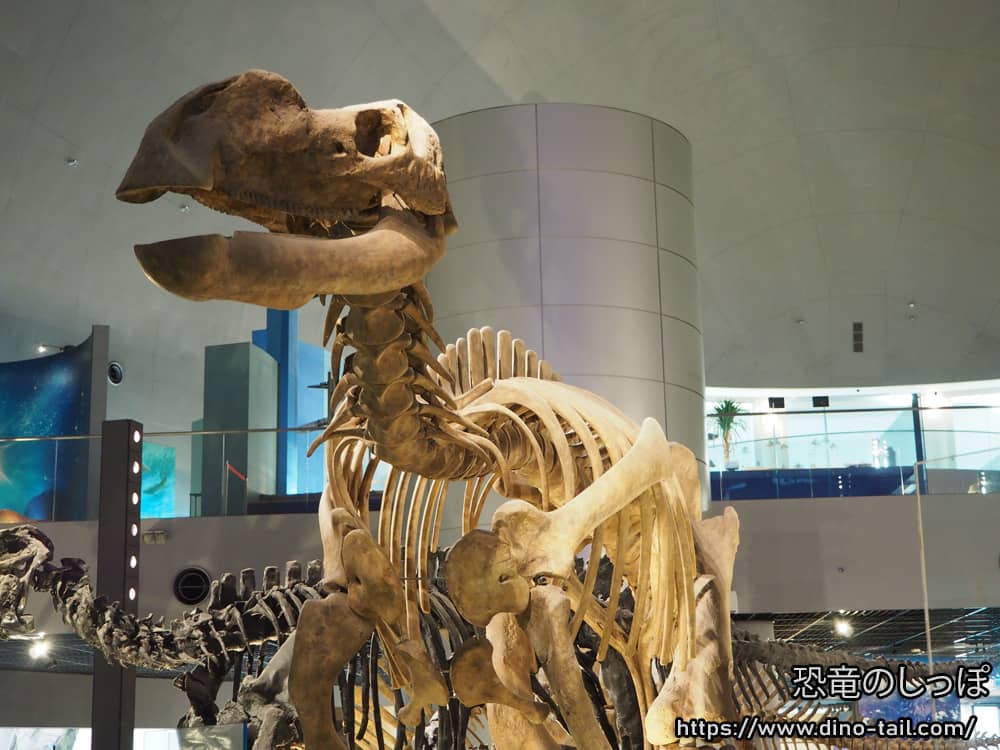
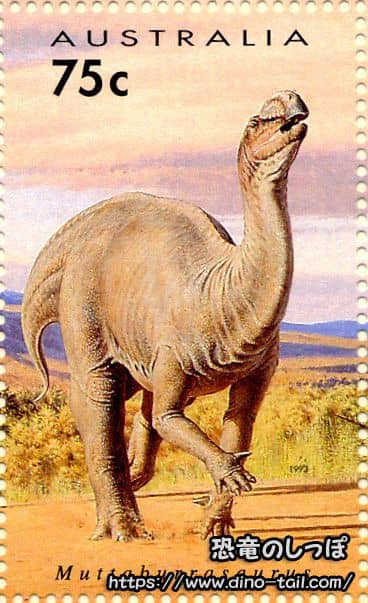
When first discovered, it was thought to have an Iguanodon-like thumb spike on its forelimb and walked on all fours, but the very existence of the spike is now questioned.
According to mechanical calculations, its weight may have reached up to about 8.8 tons, comparable to Tyrannosaurus or modern African elephants. Based on the structure of its skeleton and semicircular canals (the organ deep in the ear for balance), it is thought that they were not quadrupedal but basically engaged in "bipedalism (facultative bipedalism)" using their hind legs, putting their front legs on the ground to support their bodies only when eating plants close to the ground.
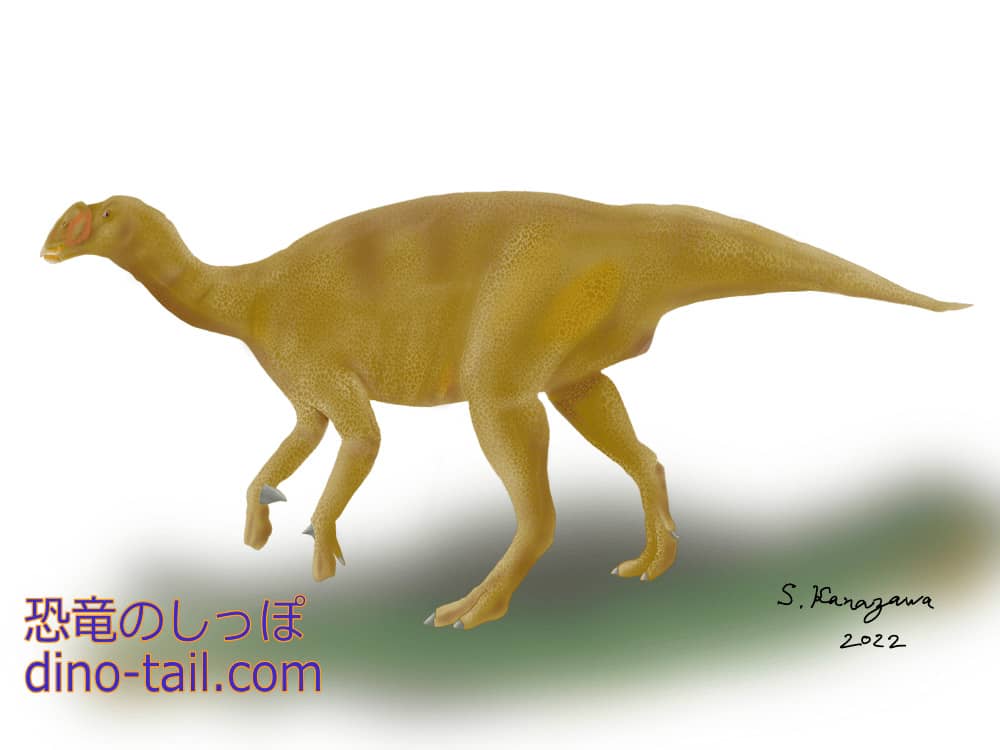
Today, the existence of the forelimb thumb spike itself is questioned.
Muttaburrasaurus Stamp and Fossil Gallery