Specimens and stamps of Iguanodon, the ornithopod that pioneered the history of dinosaur research
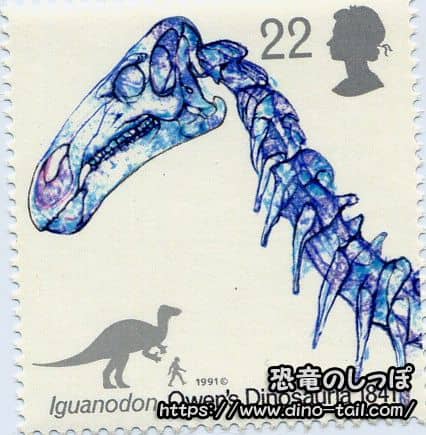
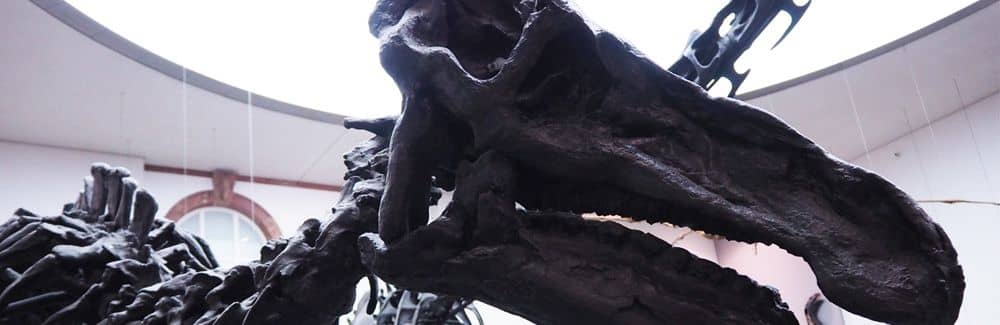
This gallery features an Iguanodon skull fossil photographed in 2011 and Iguanodon stamps issued around the world. Living in Europe and other regions during the Early Cretaceous, Iguanodon is a monumental dinosaur that became the second in the world to be given a scientific name (after Megalosaurus) in 1825, when the word "dinosaur" did not even exist. It was also selected as one of the standards when the group "Dinosauria" was proposed in 1841. You can trace their appearance, which has been studied for about 200 years since their discovery, through fossil photos and stamps.
Fossils
Highlights and observation points of the featured skull fossil
When observing the "skull fossil" photographed in 2011, please pay attention to the highly evolved mouth structure for eating plants. First, looking at the tip of the jaw (snout), there are no teeth here, and during its life, it was covered with a hard keratinous "beak," efficiently cropping the branches and leaves of ferns and other plants. On the other hand, moving your gaze to the back of the mouth, you will see rows of leaf-shaped teeth with jagged edges densely packed together, closely resembling the "iguana teeth" from which its scientific name is derived. Iguanodon had a special mechanism where the upper jaw bone spread slightly outward when the lower jaw was closed, and by grinding the upper and lower teeth together, it was able to crush and digest hard, fibrous plants. The horse-like elongated face is also a major highlight.

Stamps and Illustrations
Enjoying the evolution of "restored images" from stamp designs
In the "Stamps and Illustrations" section, we feature dinosaur stamps issued in various countries around the world. Iguanodon is known as the dinosaur whose restoration style has changed the most dramatically in the history of paleontology, and you can decipher this evolution from the pictures on the stamps. In the very early 19th century, its sharp thumb spike was mistaken for a "horn on the nose," and it was depicted as a rhinoceros-like quadrupedal monster. Later, when numerous complete skeletons were discovered in a Belgian coal mine in 1878, it was revealed that the nose horn was a "thumb spike," and this time, the image of it standing upright on two legs dragging its tail on the ground like a kangaroo became established for over 100 years. Then, based on research since the 1980s, looking at the tendons supporting the spine and the hoof-like structure of the front toes, it has been revised to the modern appearance of usually walking on all fours with its tail held horizontally, and standing on two legs when necessary. Please compare the differences in the "thumb spikes" and standing postures depicted on the stamps.