Amargasaurus, a Bizarre Sauropod Symbolizing South American Dinosaur Exhibitions
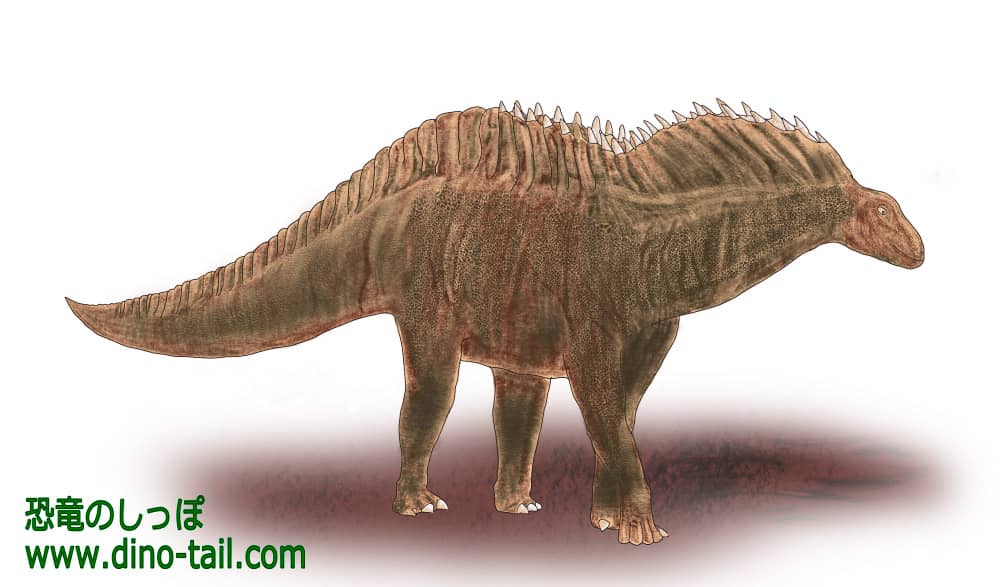
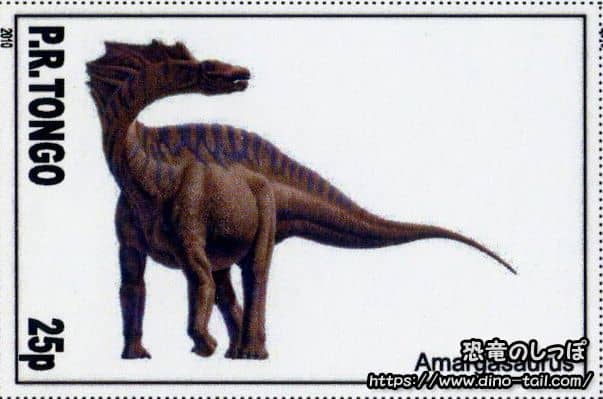
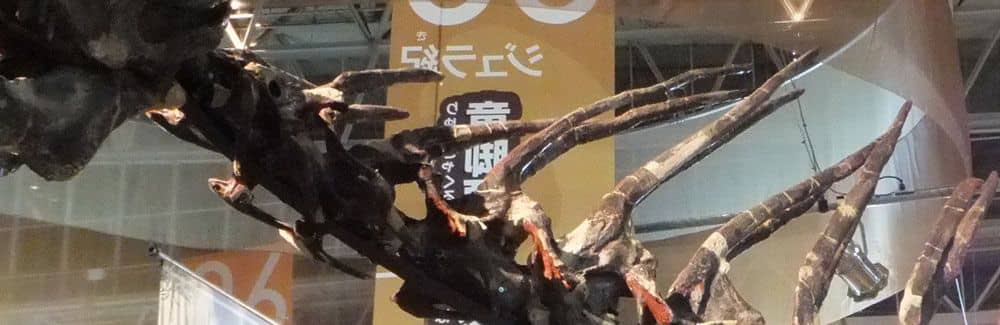
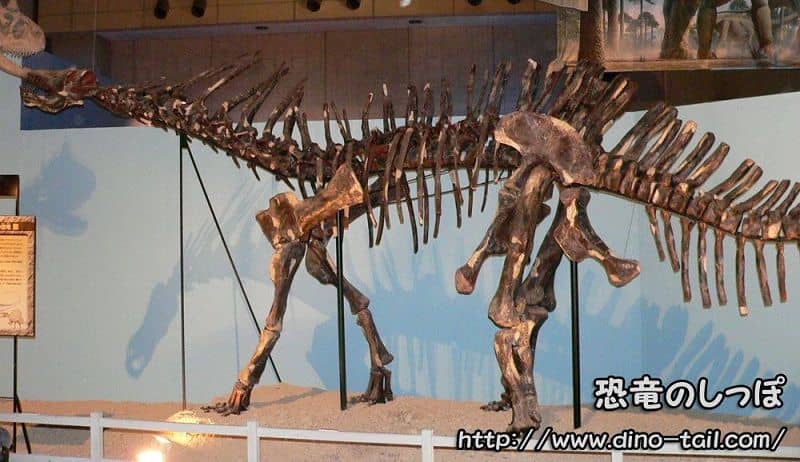
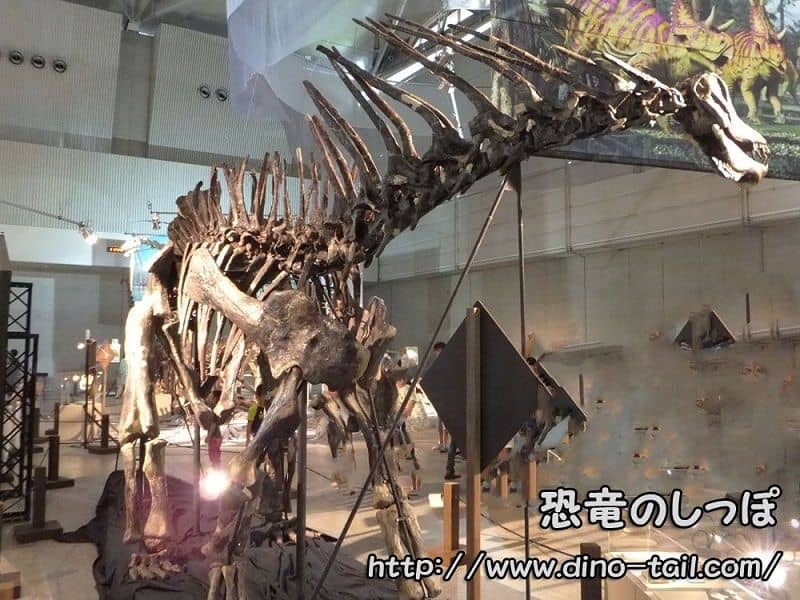
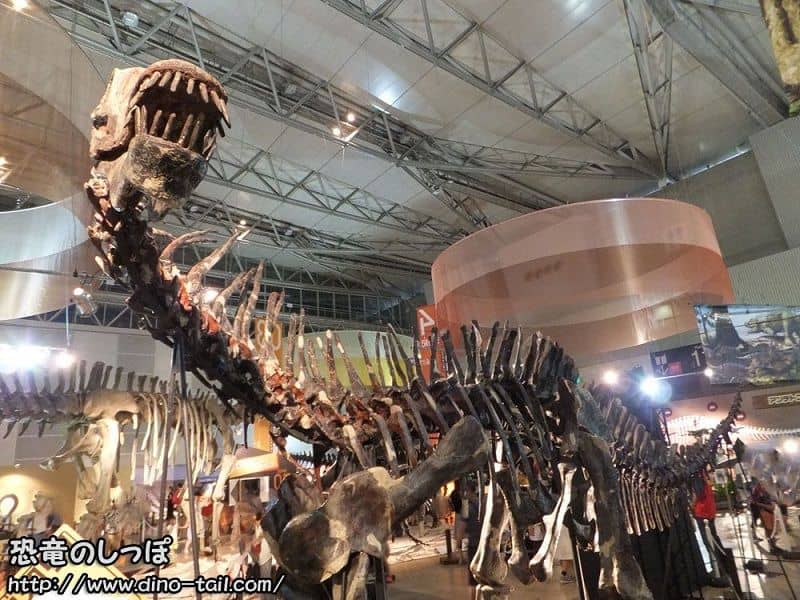
This gallery features fossilized full skeletons of Amargasaurus photographed at domestic dinosaur exhibitions and museums, including the 2015 special exhibition, as well as original restoration illustrations from this site and dinosaur stamps from around the world. Amargasaurus, which lived in South America (present-day Argentina) during the Early Cretaceous period, stands out among sauropods due to the long neural spines extending from its neck to its back. Discovered as a nearly complete skeleton in 1984 and described in 1991, this dinosaur is also a valuable species whose overall skeletal structure is one of the best understood among Early Cretaceous sauropods. By comparing photos and illustrations, you can observe the appearance of their unique evolution from multiple angles.
Fossils
Highlights and Observation Points of the Exhibited Full Skeleton Fossils
When observing the full skeleton photos taken in 2015 and other years, please pay attention to its proportions and neck structure, which are significantly different from those of typical sauropods. The biggest highlight is the "neural spines" (thorns) over 60 centimeters long, which are bifurcated and arranged in two rows from the neck to the back. Looking at the skeleton from the front or at an angle, you can clearly see the three-dimensional structure of the sharp spines rising in a V-shape from the neck bones. Also, compared to giant sauropods like Brachiosaurus or Apatosaurus, it was relatively small with a total length of about 10-12 meters, and the fact that its neck is short and compact relative to its torso is a characteristic unique to the family Dicraeosauridae. Furthermore, paying attention to the angle of the skull, the ecology revealed from research on the semicircular canals of the inner ear—that it "usually faced its snout towards the ground to eat low-lying plants"—can also be read from the natural forward-leaning posture of the exhibited skeleton.
Stamps and Illustrations
Enjoying the Restoration Variations of "Neck Spines" Through Illustrations and Stamps
In the "Stamps and Illustrations" section, we feature an illustration created in 2022 and dinosaur stamps issued around the world. The most interesting observation point in Amargasaurus restoration drawings is the difference in how the long neck spines were depicted in terms of "what they looked like in life." In the past, it was mainstream to depict the spines as bare horns protruding individually from the skin, acting as weapons to protect the neck from carnivorous dinosaurs. On the other hand, there are restorations suggesting that skin membranes were stretched between the spines to form "two sails" used for display or thermoregulation, as well as those depicting them as massive structures containing air sacs, muscles, and ligaments based on recent research. You can enjoy a wide variety of artistic expressions depending on the era and country.