Introduction: A Paper Rewriting the Evolutionary History of Alvarezsauroids
On February 25, 2026, a groundbreaking research paper on the small theropod dinosaur "Alnashetri cerropoliciensis" discovered in Argentina was published in the global academic journal "Nature".
This study, led by an international research team headed by Professor Peter J. Makovicky of the University of Minnesota, delivered a massive shock to the paleontological community as it fundamentally rewrote the evolutionary history of the Alvarezsauroidea, which had previously remained fragmentary.
This report provides a comprehensive summary of the latest research findings centered on the February 2026 paper, anatomical and phylogenetic analysis results, and the evolutionary and biogeographical implications they suggest.
Transitions in Alnashetri Research and the Discovery of the "Rosetta Stone"
Alnashetri cerropoliciensis is a species of Alvarezsauroidea that lived during the Late Cretaceous period (Cenomanian to Turonian stages) about 90 million years ago. This dinosaur was initially described in 2012 based on fragmentary leg bones (holotype specimen), but its phylogenetic position and ecological details remained unknown at the time.
However, in 2014, an almost complete articulated skeleton (MPCA Pv 377) was discovered by Dr. Sebastián Apesteguía and colleagues in the Candeleros Formation of the "La Buitrera" paleontological area in Río Negro Province, northern Patagonia, Argentina. The specimen preserved a skull, vertebrae, girdles, and most of the limbs in an articulated state, and the research team spent 12 years preparing and analyzing it.
Professor Makovicky describes this specimen as the "Rosetta Stone of paleontology". Since well-preserved fossils of alvarezsaurids were previously skewed towards derived species in Asia (mainly Mongolia and China) and records from South America were extremely fragmentary, the discovery of this complete skeleton became the decisive key to unlocking the evolutionary mystery of the entire group.
Details of Morphological Description and Histological Analysis
Gemini Generated Image
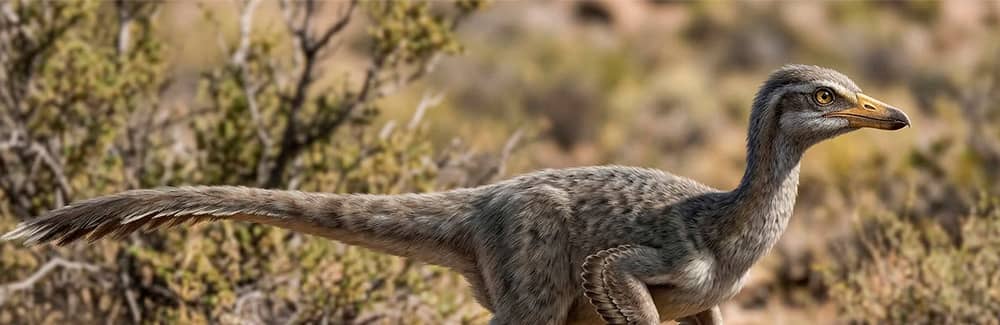
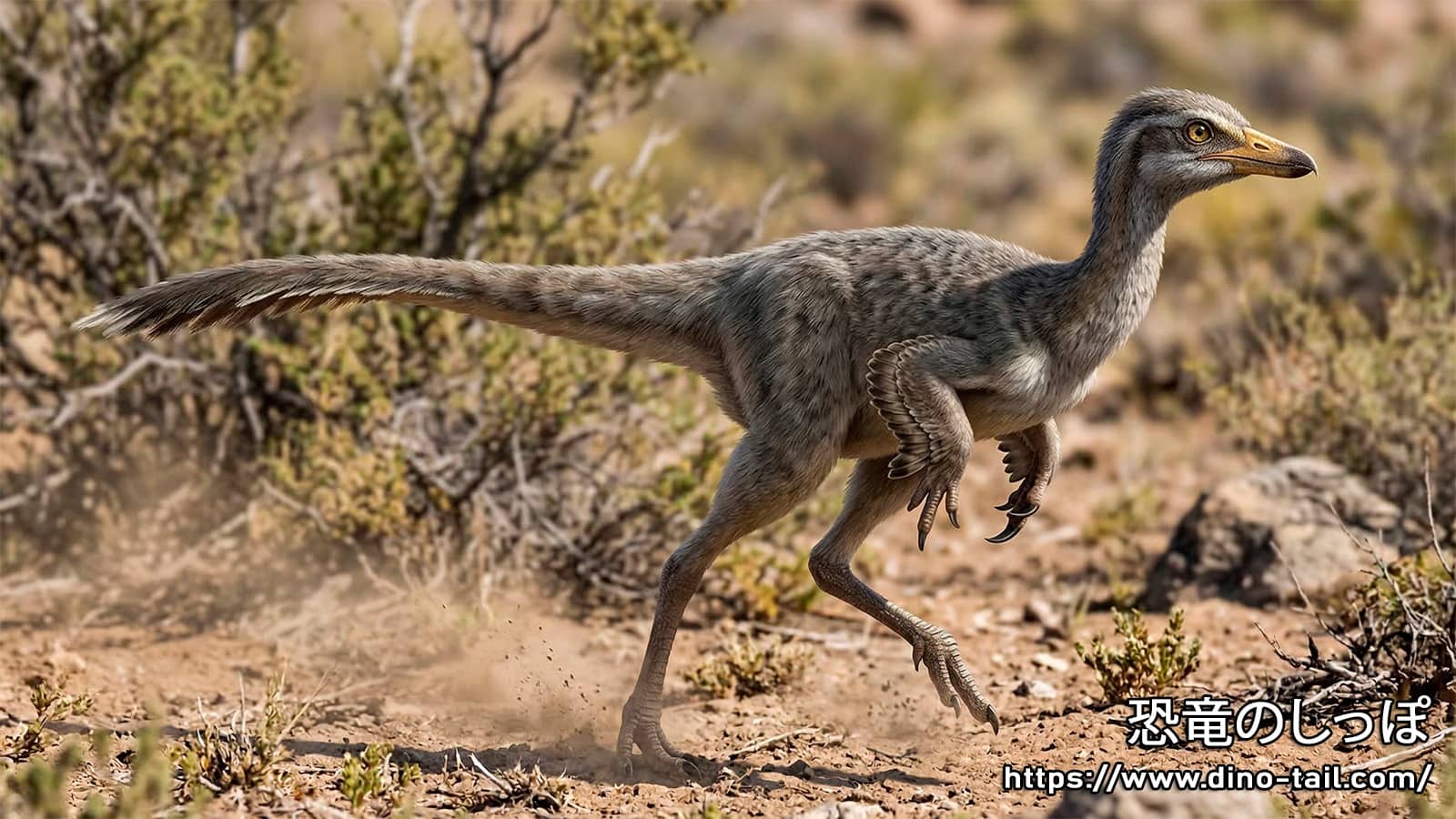
The MPCA Pv 377 specimen, described in detail in the 2026 paper, highlighted the anatomical features of Alnashetri. This individual was estimated to weigh a mere 0.7 to 0.9 kilograms (about 1.5 to 2 pounds) when alive, roughly the size of a small chicken or crow.
The teeth of Alnashetri were relatively large and pointed, unlike the microscopic teeth seen in later alvarezsaurids. This suggests that they were in a pre-stage of specializing in a diet of termites and ants (myrmecophagy), and preyed on lizards, snakes, small mammals, and invertebrates.
Furthermore, while an enlarged thumb claw (keeled claw) had already begun to appear on the forelimb, the length of the arm itself was retained, showing the transitional process to the later "digging specialist" short arms.
| Part | Detailed Features and Analysis Results |
|---|---|
| Skull and teeth | Retained 4 small unserrated teeth in the premaxilla. A triangular posterior process overlaps the maxilla. |
| Forelimbs | Relatively long compared to later species. The first digit is significantly thickened, but retains the other two digits (3 digits in total). |
| Hindlimbs | Very long and gracile. Characterized by the curvature of the metatarsals and a specific groove on the distal tibia. |
| Body size | Total length about 70 cm (more than half is tail). Estimated weight roughly 700-900g. |
| Bone histology | Analysis of Lines of Arrested Growth (LAGs) indicated an age at death of over 4 years. It had almost reached adulthood. |
| Sex determination | The presence of medullary bone confirmed it was a female in the eggshell-forming phase. |
Phylogenetic Analysis: Polyphyly of South American Taxa and Ghost Lineages
In this study, a large-scale phylogenetic analysis using TNT was conducted, resulting in a taxonomic reorganization within the Alvarezsauroidea. Consequently, the conventional theory that "South American alvarezsaurids are a single cohesive group (clade)" was refuted.
According to the analysis results, Alnashetri is a basal taxon located outside the family Alvarezsauridae, and was found to be phylogenetically distant from other South American taxa (such as Alvarezsaurus and Bonapartenykus). Surprisingly, Chinese Late Jurassic species like Bannykus and Xiyunykus were shown to be closer to the Alvarezsauridae than Alnashetri was.
This result suggests that Alnashetri's lineage had already diverged in the Jurassic, implying the existence of an extremely long "ghost lineage" (a gap in the fossil record) before its discovery in Late Cretaceous strata. It was revealed that South American alvarezsaurids were not a single lineage, but a polyphyletic group consisting of multiple lineages that flowed in or were separated at different times.
A New Theoretical Model for Evolutionary Miniaturization
The greatest theoretical shift brought about by the discovery of Alnashetri concerns the miniaturization process of dinosaurs. Previously, it was thought that "adaptation to myrmecophagy" and "body miniaturization" progressed simultaneously in alvarezsaurids. However, Alnashetri called this model into question.
Alnashetri had already achieved extreme miniaturization, weighing less than 1 kg, but its morphology (long arms, large teeth) was not yet specialized for myrmecophagy. This fact suggests that miniaturization preceded in alvarezsaurids, and that their small body size later enabled them to advance into the specialized niche of eating termites.
The research team also concluded that miniaturization within this group was not a one-time event, but occurred independently and repeatedly across different lineages (repeated evolution). This indicates that miniaturization was not merely the result of dietary adaptation, but a polyphyletic evolution in response to the environmental factors and ecological pressures of the time.
Biogeographical Considerations: Vicariance from the Supercontinent Pangaea
Another important outcome of this study is the biogeographical analysis using BioGeoBEARS. Previously, the reason alvarezsaurids were distributed in distant regions like Asia and South America was largely considered to be coincidental dispersal across continents.
However, integrating the phylogenetic position of Alnashetri with information from fragmentary fossils re-identified in North America (Wyoming) and Europe (UK) revealed that the ancestral distribution of the Alvarezsauroidea dates back to the supercontinent Pangaea.
| Age (Million Years Ago) | Geographical Context | Evolutionary Stage of Alvarezsaurids |
|---|---|---|
| ~170-160 (Middle Jurassic) | Pangaea supercontinent remains united. | Origin of Alvarezsauroidea. Global dispersal. |
| ~150 (Late Jurassic) | Continental break-up progresses. | Appearance of basal taxa (e.g., Bannykus). Beginning of regional isolation. |
| ~95-90 (Mid Cretaceous) | Separation of South America and Africa. | Alnashetri lives in Patagonia. Progression of miniaturization. |
| ~75-66 (Late Cretaceous) | Asia completely isolated from North and South America. | Parvicursorinae thrives in Asia. Peak of myrmecophagy. |
According to this model, the discontinuous distribution in the Late Cretaceous was not the result of "dispersal across oceans," but rather "vicariance" associated with the breakup of Pangaea, followed by regional extinctions in the Northern Hemisphere and elsewhere.
Paleoenvironment and Future Prospects
The strata where Alnashetri was discovered were deposits of a vast desert area known as "Kokorkom" that existed in Patagonia at the time. Meaning "Desert of Bones" in the local Mapuche language, this location was an extremely dry and harsh environment, which paradoxically created a unique state of preservation.
Alnashetri's carcass was rapidly buried by the sand of shifting dunes, minimizing the effects of weathering and other predators, thus fossilizing in an articulated state. This mechanism of "rapid burial" is what preserved a complete skeleton, which researchers would later call a "Rosetta Stone", to the present day.
Professor Makovicky has revealed that another fossil marking the "next chapter" has already been discovered in the La Buitrera area and is currently being reconstructed in the lab. By using the complete skeleton of Alnashetri established this time as a "standard," it is expected that the true identities of fragmentary small dinosaur fossils sleeping in museums around the world will be revealed one after another.
Alnashetri, appropriately named "little wings," unlocked the vast puzzle of dinosaur evolution with its tiny body, cementing its place in history as one of the most brilliant achievements in science in 2026.
[Note] Another "Arunashetri" Paper in February 2026: Social Psychology
During our research, we found that another important study associated with the keyword "Arunashetri" (or a similar spelling) gained attention in February 2026 outside of paleontology. This was a paper regarding "motivated reasoning" in social psychology. Not only in the natural sciences but also in the social sciences, February 2026 became a month marked by fascinating discoveries involving researchers with the same (or similarly spelled) name.
References
- Argentine fossil rewrites evolutionary history of a baffling dinosaur clade - PubMed, https://pubmed.ncbi.nlm.nih.gov/41741643/
- 'Exquisite' fossil of one of the smallest dinosaurs found in Argentina - CGTN, https://news.cgtn.com/news/2026-03-02/-Exquisite-fossil-of-one-of-the-smallest-dinosaurs-found-in-Argentina-1LbCVCZBH5S/index.html
- 'Tiny' dinosaur, big impact: 90-million-year-old fossil rewrites history ..., https://cse.umn.edu/college/news/tiny-dinosaur-big-impact-90-million-year-old-fossil-rewrites-history
- A new, nearly complete specimen of Alnashetri cerropoliciensis sheds light on the complex evolutionary history of alvarezsauroidea - ResearchGate, https://www.researchgate.net/publication/382023416_A_new_nearly_complete_specimen_of_Alnashetri_cerropoliciensis_sheds_light_on_the_complex_evolutionary_history_of_alvarezsauroidea
- Tiny Dinosaur Weighing Less Than 1 Kilogram Is One Of The Smallest Ever Found, https://www.iflscience.com/tiny-dinosaur-weighing-less-than-1-kilogram-is-one-of-the-smallest-ever-found-82829