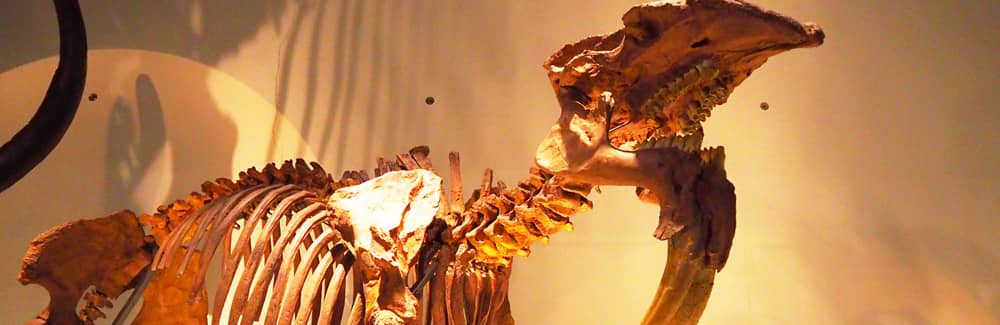
Basic Data of Deinotherium
| Scientific Name (Genus) | Deinotherium |
| Meaning of Name | Terrible beast deinos (terrible) [Ancient Greek] - therion (beast) [Ancient Greek] |
| Classification | Mammalia, Proboscidea, Deinotheriidae |
| Length | Maximum shoulder height of about 4m, weight about 12-13 tons |
| Diet | Herbivorous (mainly leaves, fruits, bark, etc.) |
| Period | Middle Miocene to Early Pleistocene (approx. 15 million to 1 million years ago) |
| Habitat | Eurasia, Africa |
| Year of Paper Publication | 1829 |
Features of Deinotherium: A Giant "Terrible Beast" with Downward-Pointing Tusks
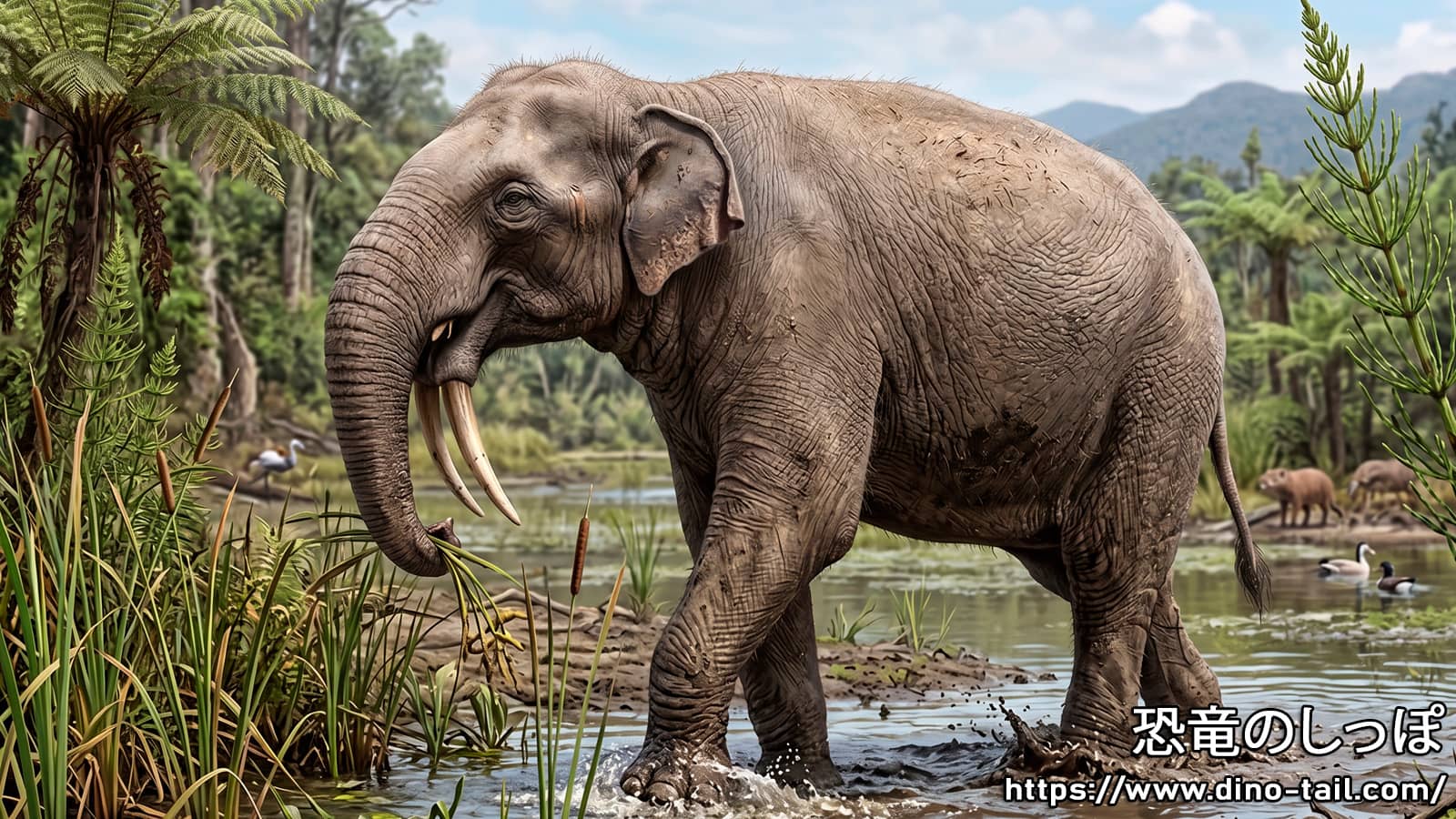
by Gemini.
Researchers are divided on the length of its trunk.
Deinotherium is a massive animal that flourished across vast areas of Eurasia and Africa from the Miocene to the Pleistocene, roughly 15 million to 1 million years ago. Although classified in the order Proboscidea (elephant relatives), it belongs to a unique lineage that diverged from modern elephants at a very early stage of evolution.
The most striking feature of this animal is the bizarre shape of its "tusks." While modern elephants, such as African elephants, have magnificent tusks growing from their upper jaws, Deinotherium had no upper tusks. Instead, it possessed a pair of huge tusks growing from its lower jaw that curved dramatically downwards and towards the back of its body.
It had a massive build; the largest species reached a shoulder height of 4 meters and is estimated to have weighed over 12 tons. This makes it one of the largest land-walking mammals in Earth's history. Despite its immense size, its limbs (legs) were relatively slender, making it well-suited for moving efficiently with long strides through forests and open woodlands.
The Mystery of Its "Trunk" and a Misunderstood History
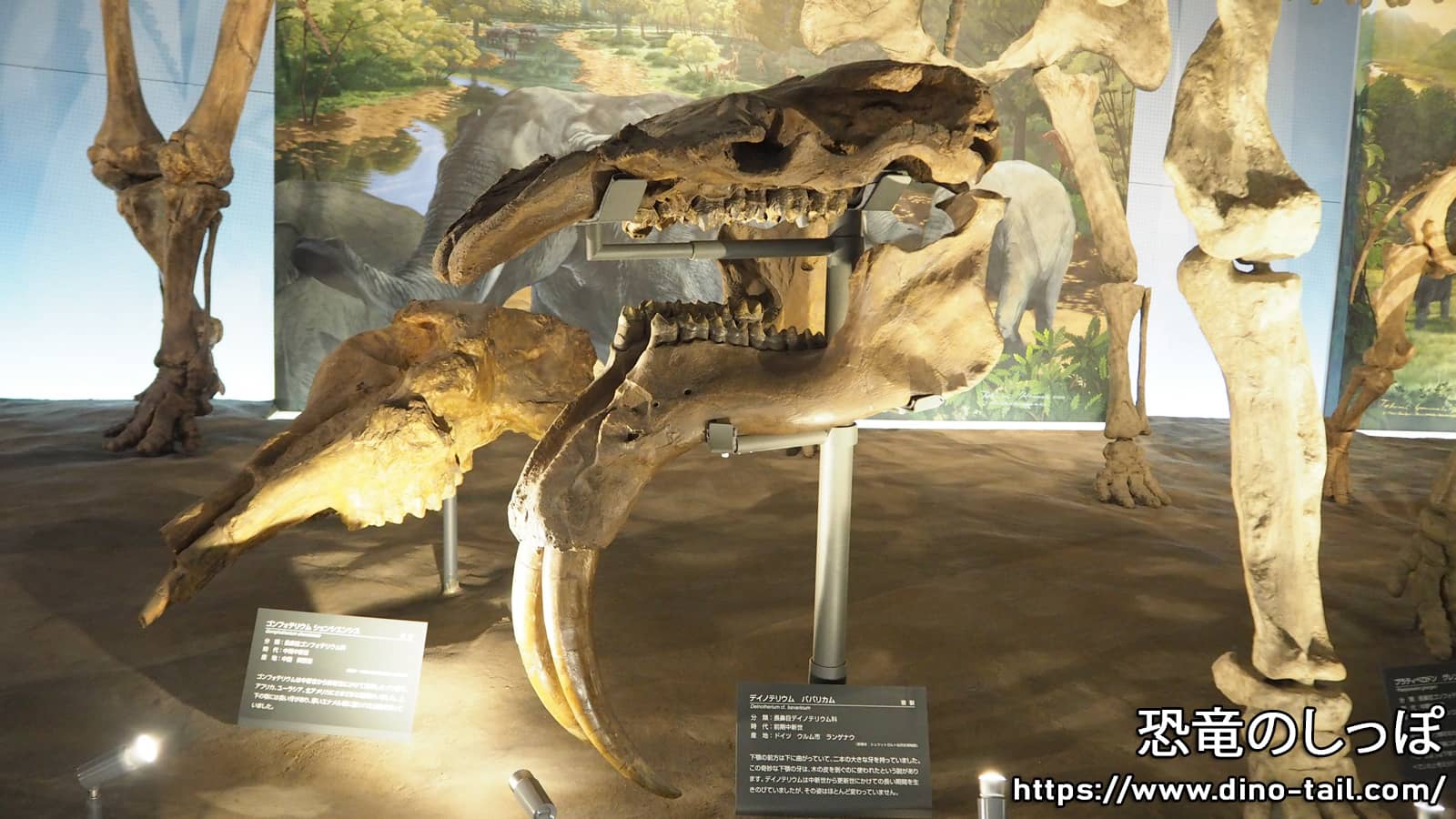
When thinking of elephant relatives, many picture a long, dexterous trunk. However, researchers are divided on what the snout or trunk of Deinotherium actually looked like.
Looking at skull fossils, the nasal openings (external nares) are located quite far back on the head, meaning they undoubtedly had an elongated "snout." In the past, they were commonly depicted with a long, hanging trunk, much like modern elephants. However, recent studies that closely examined the shape of the lower jaw and muscle attachment points have given weight to the theory that they may have had a muscular, thick, and short trunk, more like a tapir's, rather than a long elephantine one.
So, what were its most defining feature, the "downward-pointing tusks," used for?
While it was once thought they were for "digging in the dirt to eat roots," examinations of how the tusks wore down (abrasion) suggest otherwise. Today, it is believed they were used as feeding tools to "pull down high tree branches in the forest," "push obstructing thick branches out of the way," and "strip tough bark from trees."
"Bizarre Theories" That Troubled Past Researchers
When Deinotherium fossils were first discovered in the 1700s and 1800s, their strange shape caused many misunderstandings. Even the researcher who discovered the lower jaw fossil that gave the creature its name initially reconstructed it incorrectly, thinking the downward tusks were "growing upwards."
Additionally, some thought it was impossible for such a giant head and body to be supported on land, leading to the belief that it was "a marine animal like a whale or dugong." There was even a theory claiming it was "an aquatic burrowing animal that hooked its downward tusks onto riverbanks to anchor its body," but this has been completely debunked today.
Extinction at the End of Specialization
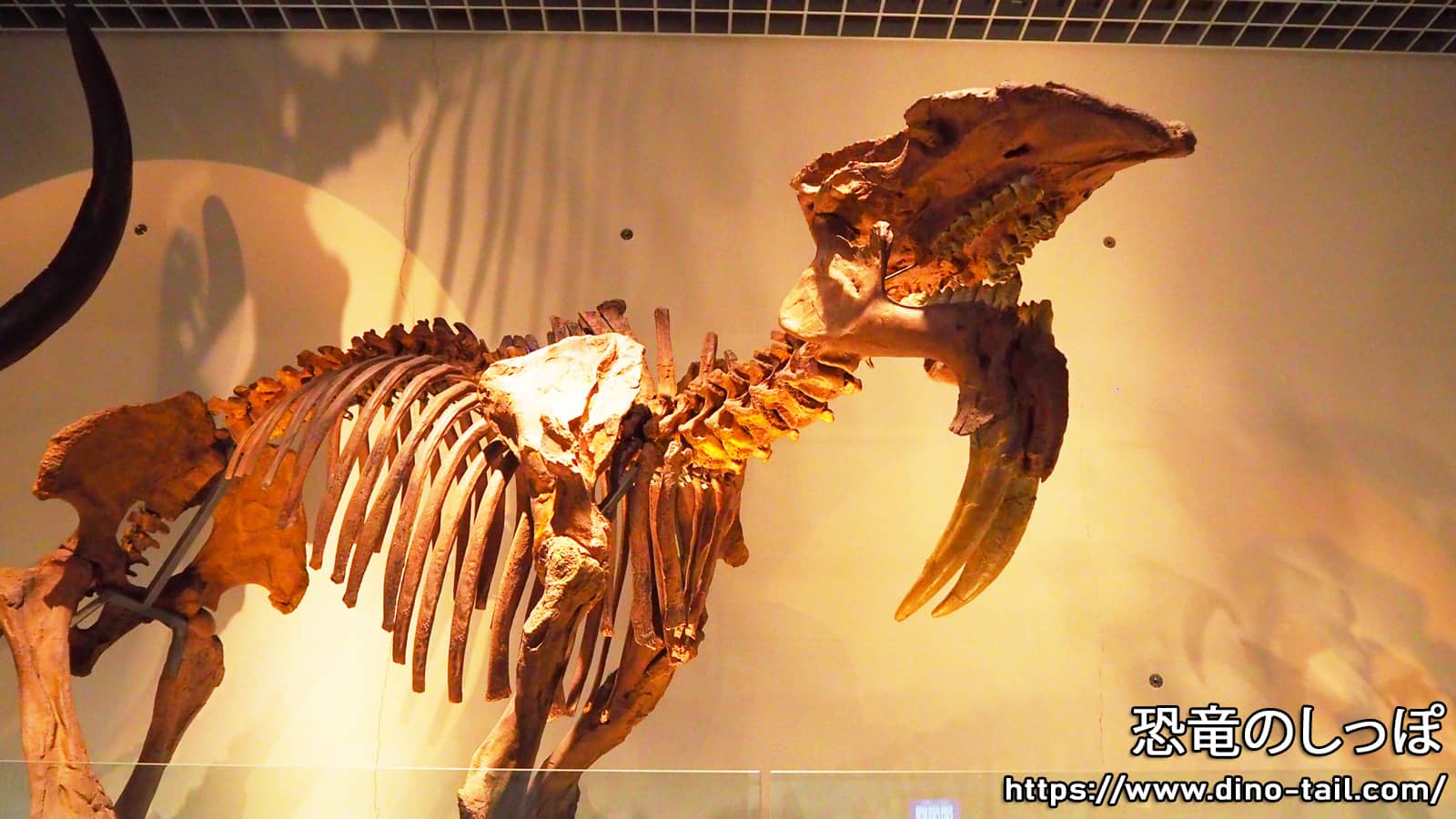
Deinotherium was a super-sized "herbivore" whose main diet consisted of leaves, fruits, and soft twigs. Using their specialized jaws and extremely robust teeth, they monopolized plant resources high up in the forest canopy, surviving for over 20 million years without significantly changing their body structure.
However, this "highly specialized adaptation to forest life" would ultimately drive them to extinction.
As global cooling and drying progressed from the Late Miocene, the lush forests that were their home gradually dwindled, and the environment drastically shifted to a world of grasslands dominated by drought-resistant grasses. While other elephant relatives evolved more complex teeth to grind up and eat tough grasses, Deinotherium's teeth could not adapt to such a sudden change.
Being too specialized in eating soft forest leaves, Deinotherium lost both its habitat and its food source simultaneously, and it gradually disappeared. While they survived in parts of the African continent until about 1 million years ago, they finally vanished from the fossil record alongside traces of early human activity (such as cut marks on bones made by stone tools), marking their extinction.