Specimen Collection of Triceratops, the Representative Ceratopsian of the Late Cretaceous
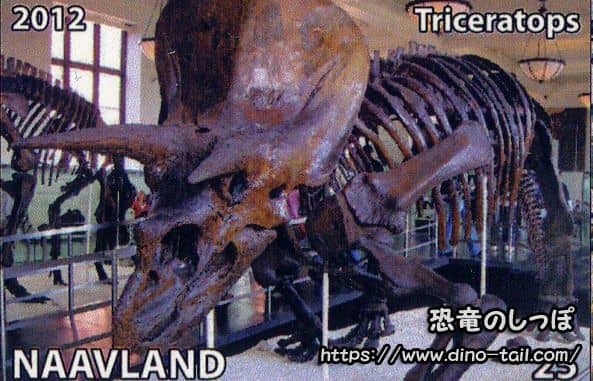
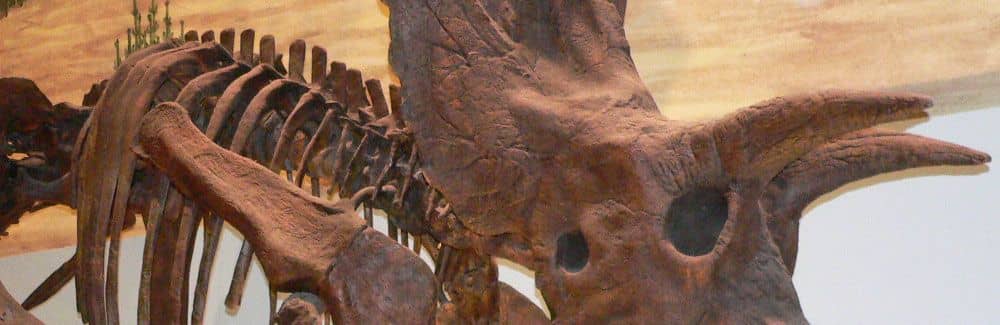
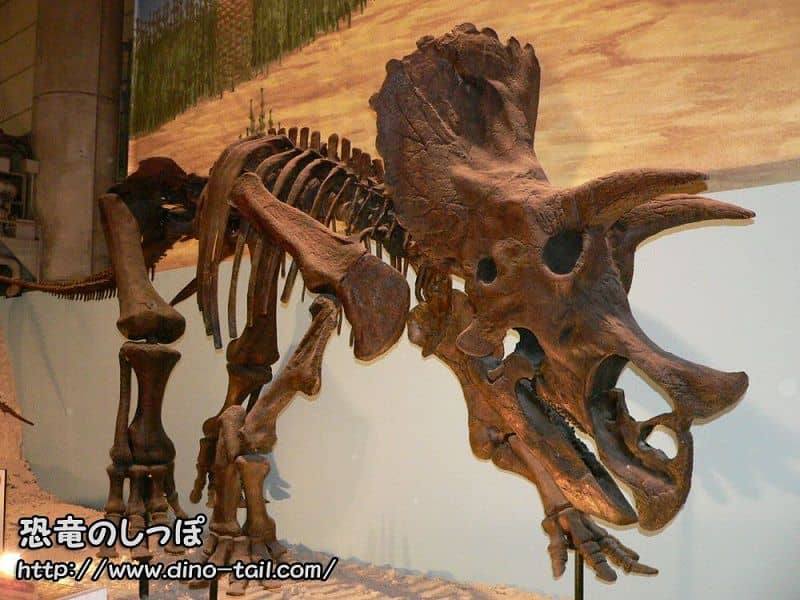
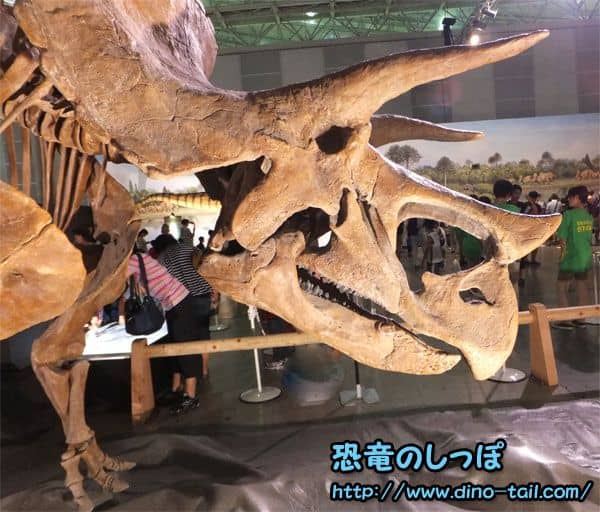
This gallery features skeleton fossils of Triceratops photographed at major special exhibitions and museums in Japan, such as the large dinosaur exhibitions in 2005 and 2006, "New Theories on Dinosaur Growth" in 2012, and the "Triceratops Exhibition" in 2014, as well as original reconstruction illustrations from this site and dinosaur stamps from around the world. Because the sturdy skull of Triceratops easily remains as a fossil, many skull specimens have been discovered, but complete skeletons and skin impressions are extremely rare. By comparing everything from complete skeletons to specific body parts, you can observe from various angles how they uniquely evolved as herbivorous dinosaurs.
Fossils
Highlights and Observation Points of the Main Fossil Specimens Featured
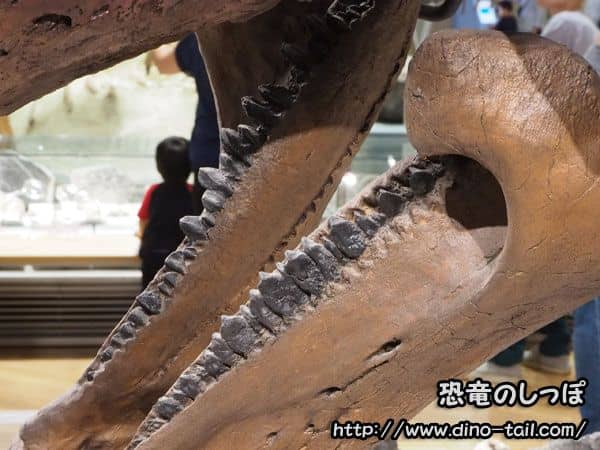
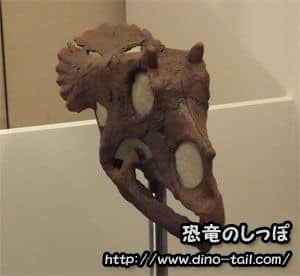
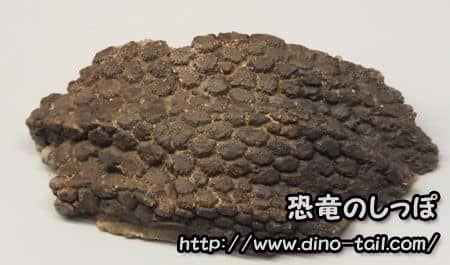
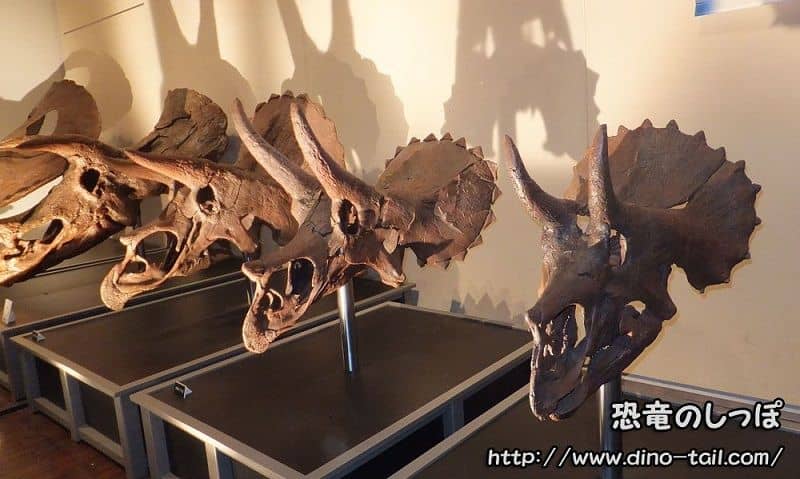
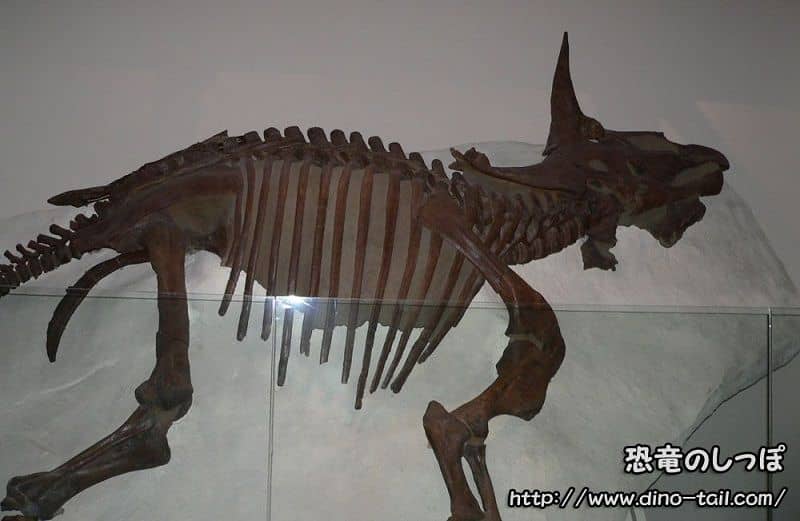
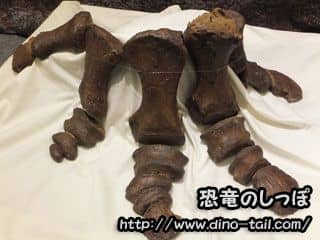
When observing the fossil photos, please pay attention to the morphological changes that occur with growth and the structure of each body part. The biggest highlights are the "juvenile skull fossil" and the "skull fossils in order of growth" photographed in 2012. The horns above the eyes of Triceratops have a unique growth pattern: they curve upwards and backwards when young, and change direction to point forwards as they become adults. You can confirm this dramatic change from the skulls lined up side by side. In addition to the "complete skeleton of Triceratops horridus" photographed in 2005 and the complete skeleton photographed in 2006, the "right forelimb fossil" and "right hindlimb fossil" photographed in 2014 show the structure of the sturdy limbs that firmly supported a massive body approaching 10 tons and a giant head, allowing them to sprint powerfully like a rhinoceros. Furthermore, you must also see the precious body part specimens that unlock the mysteries of their ecology, such as the "lower jaw" fossil where numerous teeth overlapped to chop up hard plants, and the "skin impression fossil" photographed in 2014, where the three-dimensional pattern of scales remains vividly.

Stamps and Illustrations
Enjoying the Reconstructed Image of Triceratops through Original Illustrations and Stamps
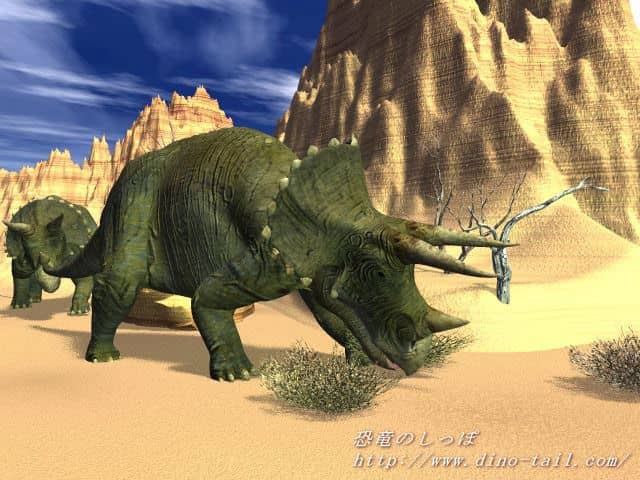
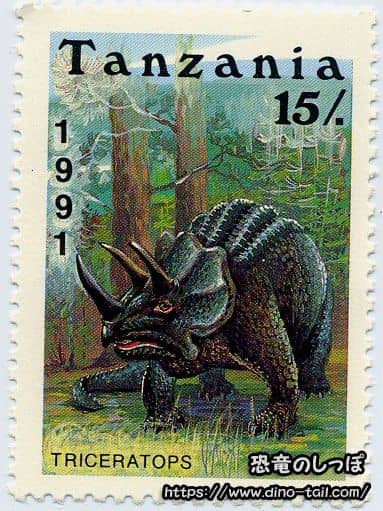
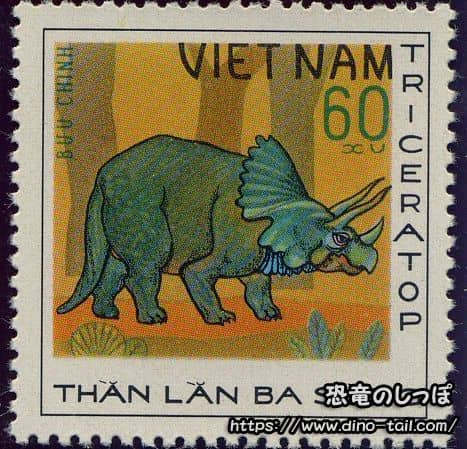
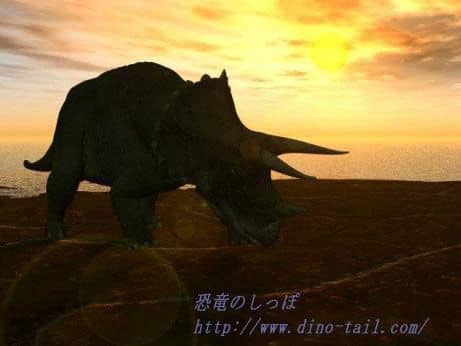
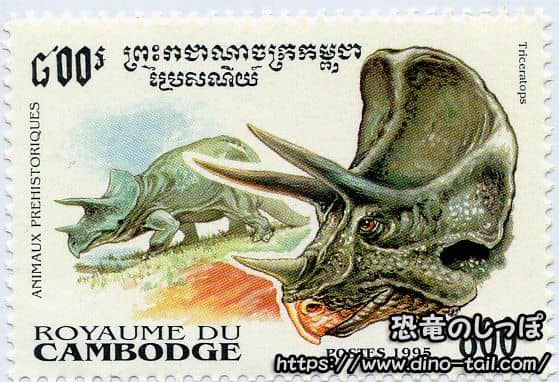
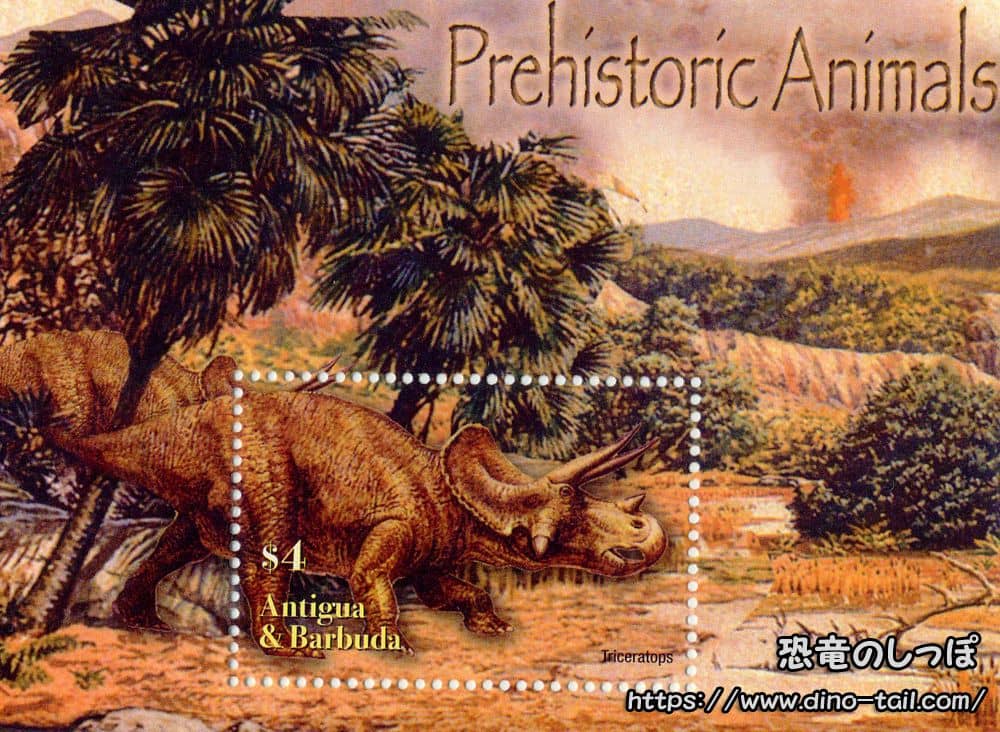
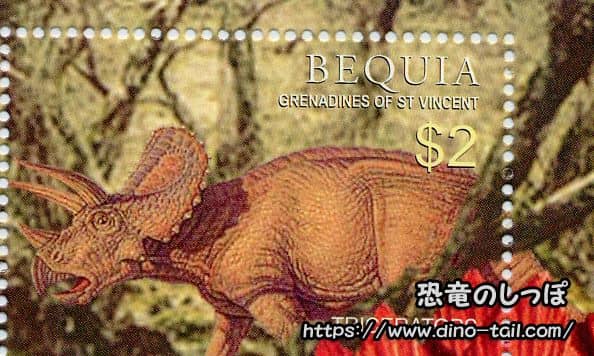
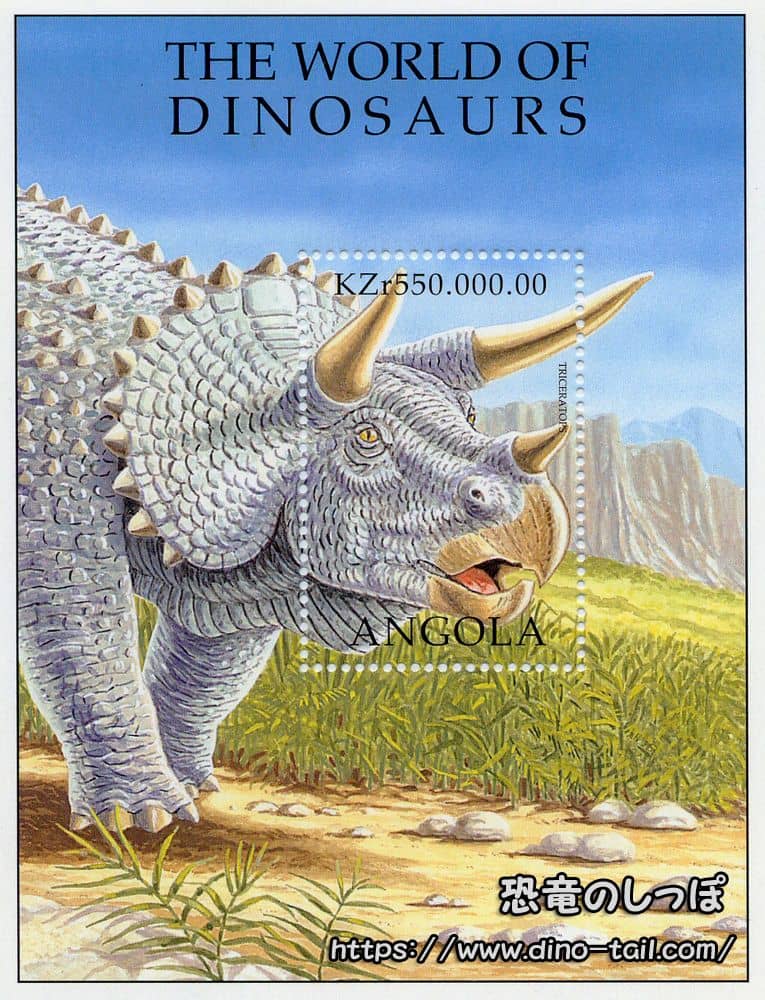
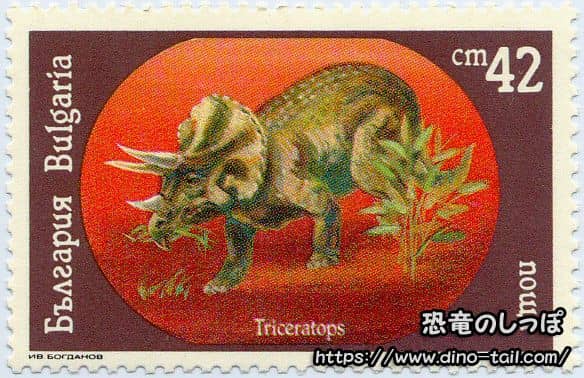
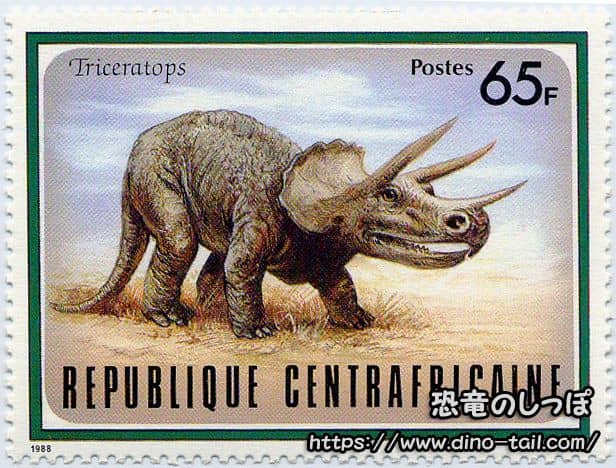
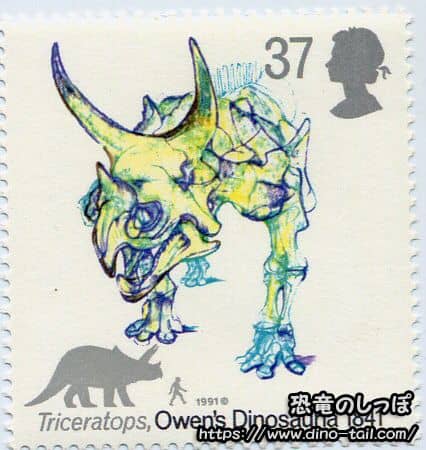
In the "Stamps and Illustrations" section, we feature two original landscape illustrations from this site depicting daytime and evening scenes, along with dinosaur stamps issued in various countries around the world. With its iconic three horns and large frill spreading behind its neck, Triceratops, alongside Tyrannosaurus, has been loved worldwide as a subject for stamps. By comparing stamps from different countries, you can enjoy a variety of artistic expressions unique to different eras and nations, such as the vivid color representations of the frill, brave compositions confronting its arch-enemy Tyrannosaurus, and the transition from the old reconstructed posture with elbows sprawling outwards like a crocodile to the modern posture of firmly planting its forelimbs beneath its body.