Spinosaurus, the giant waterside dragon whose appearance changed with the progress of research
This gallery features skeleton fossils of Spinosaurus and dinosaur stamps from around the world, photographed at major special exhibitions in Japan, such as "Dinosaur 2009: Miracle of the Desert!", "Dinosaur Expo 2016", and "Dinosaur Expo 2019". Spinosaurus, one of the largest theropods in history, reaching 13 to 15 meters in length, was a dinosaur shrouded in mystery for a long time because the first specimen was destroyed in an air raid during World War II. However, with the discovery of new specimens in recent years, its restored image has undergone dramatic changes. By comparing skeleton photos from different exhibition years, you can visually trace the evolutionary appearance that science has uncovered.
Spinosaurus - Fossil Photo Slideshow
<Featured Events>
Dinosaur 2009 Miracle of the Desert!, Dinosaur Expo 2016, Dinosaur Expo 2019
Fossils
Highlights and observation points of the main fossil specimens featured
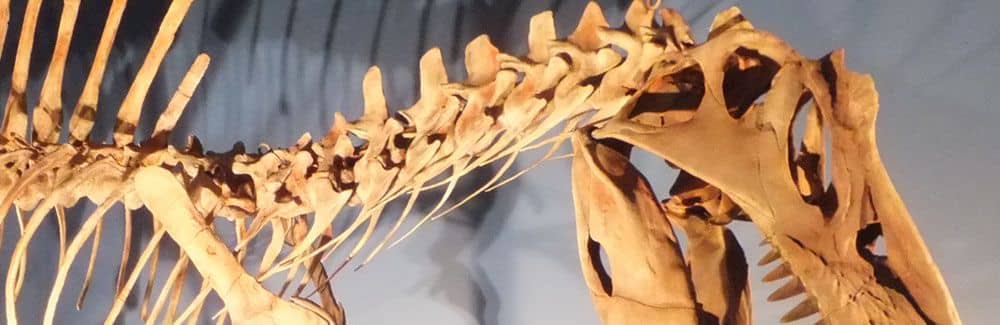
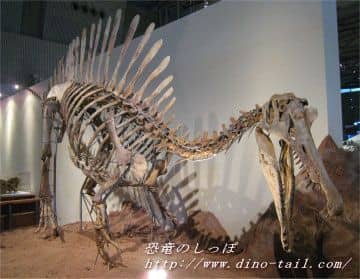
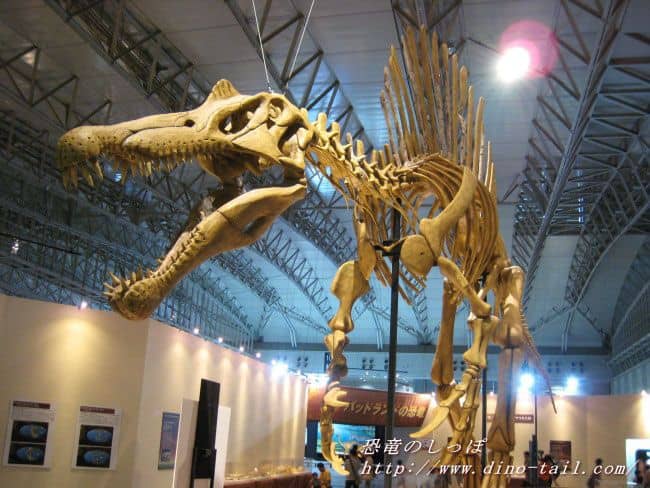
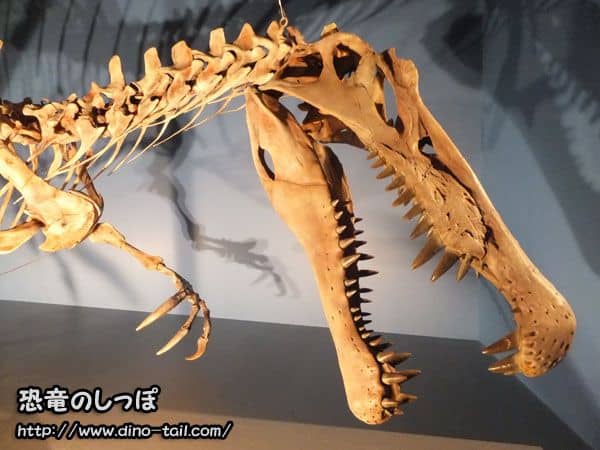
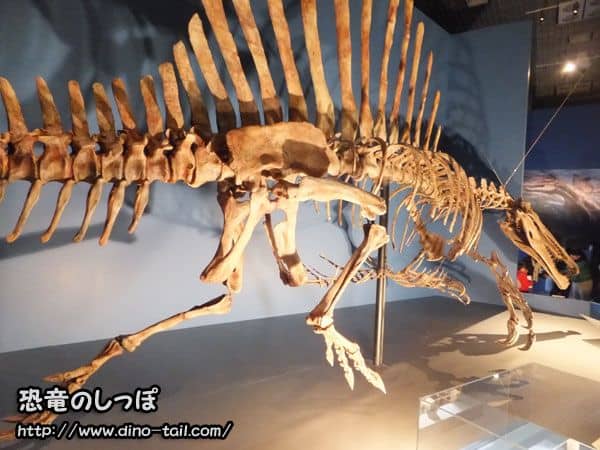
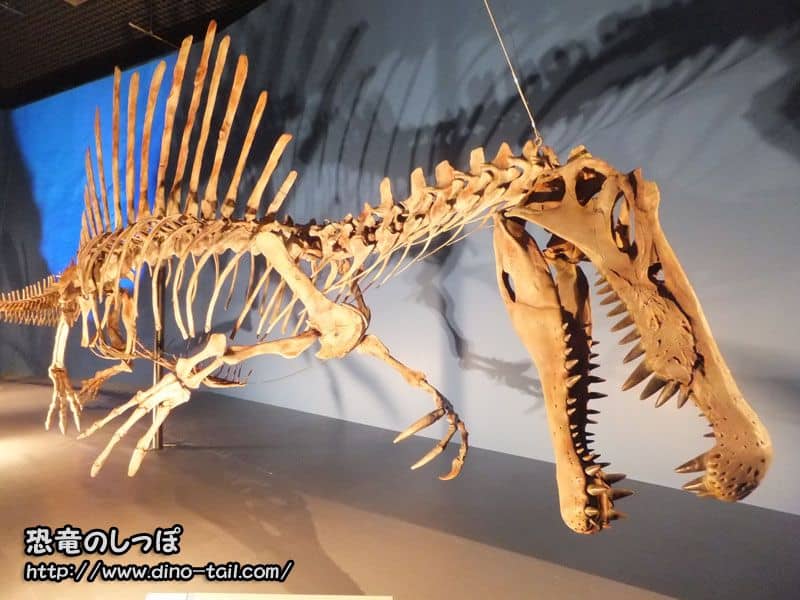
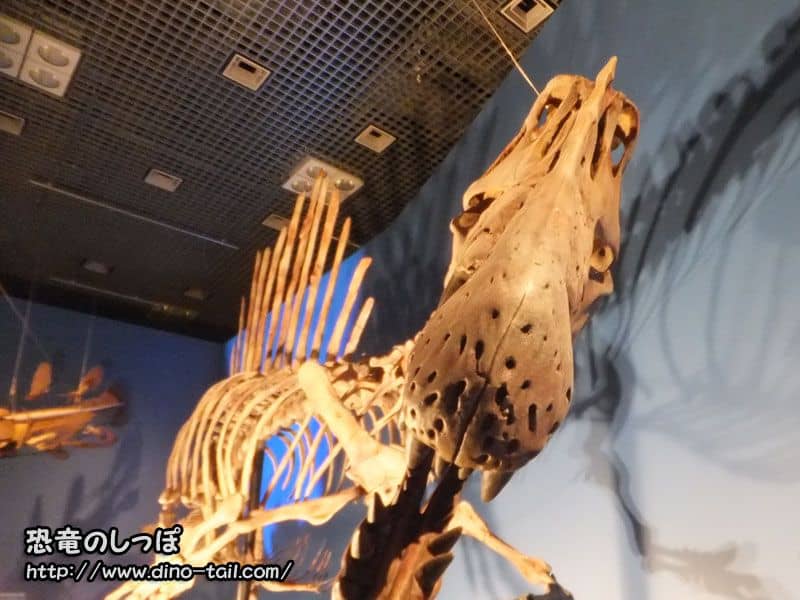
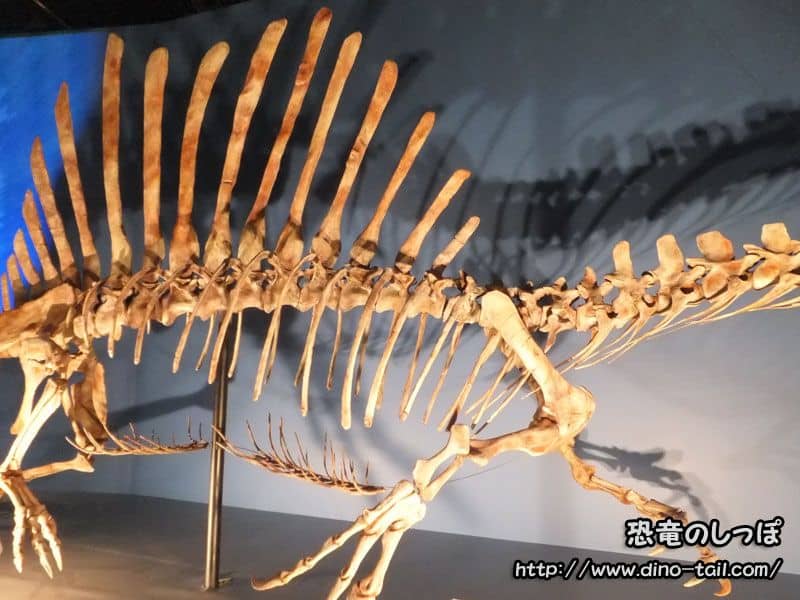
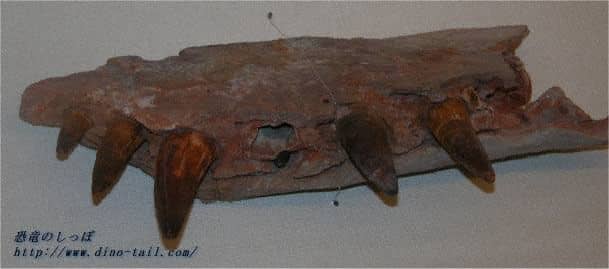
When observing the fossil photos, please pay attention to the "changes in skeletal posture" that tell the history of its discovery and the "anatomical structures adapted to the waterside". The biggest highlight is the comparison between the full skeleton photographed in 2009 and the one photographed in 2016. In the 2009 exhibition, it was restored standing on long hind legs like a typical carnivorous dinosaur. However, in the 2016 exhibition, following the research published in 2014, the newly discovered "short hind legs" were reflected, greatly changing to a forward-leaning posture as if swimming in water. Also, you cannot miss the photos of specific parts. You can confirm the impressive lineup of the "sail on the back (neural spines)" reaching 2 meters in height, and the conical teeth for piercing fish lined up in the crocodile-like slender "skull fossil" and "jaw fossil". Furthermore, in the enlarged photo of the "tip of the snout" taken in 2016, you can see countless small holes (neurovascular foramina) opened at the tip of the nose. These are the traces of highly sensitive sensors that detect the movement of prey from changes in water pressure, conveying its advanced adaptation as a piscivorous dinosaur.

Stamps and Illustrations
Changes in the restored image of Spinosaurus enjoyed through stamp designs
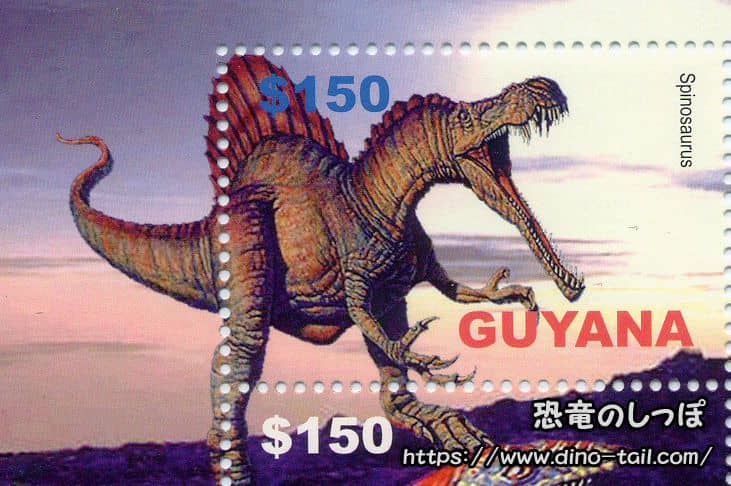
In the "Stamps and Illustrations" section, four dinosaur stamps issued around the world are featured. The unique silhouette of Spinosaurus with a giant sail on its back has long been popular as a stamp motif. Comparing stamps from different countries reveals how the depiction has changed over time, from the once-mainstream "figure with a rounded sail striding bipedally across dry land" to the "figure with a slender crocodile-like face lurking by the water". Although debates continue regarding Spinosaurus, such as recent models with paddle-like tails or hunting in shallow waters, please enjoy the scientific theories and artistic expressions of the time recorded in these stamps.