A primitive ceratopsian symbolizing the Asian Cretaceous: Psittacosaurus
This gallery features Psittacosaurus fossils photographed at special exhibitions in Japan in 2008, 2013, and 2014, the world-famous complete skeleton fossil photographed at the Senckenberg Nature Museum in Germany in 2019, as well as dinosaur stamps from various countries. Psittacosaurus, which inhabited a wide area of the Asian continent during the Early Cretaceous, is an ancestral group of ceratopsians that led to later dinosaurs like Triceratops. Thousands of fossils have been discovered in strata across Asia, and it plays an important role as an "index fossil" for identifying the age of strata. From numerous well-preserved specimen photos and stamps, you can observe the realistic appearance of this small ceratopsian.
Fossils
Highlights and observation points of the main fossil specimens shown
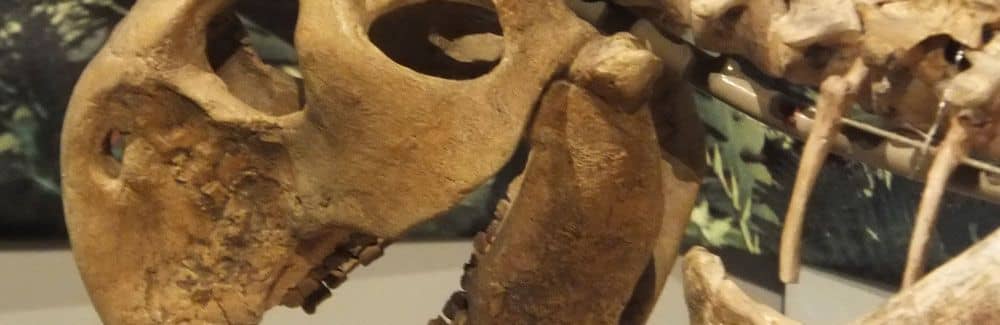
Please pay attention to the astonishing state of preservation and the characteristics of the skeleton. The biggest highlight is the "complete skeleton fossil" photographed at the Senckenberg Nature Museum in 2019. This miraculous fossil clearly preserves not only the skeleton but also the outline of the skin, gastroliths, and even the "traces of long bristles (quills)" standing up from the base of the tail towards the back. It became a crucial clue in unraveling dinosaur body color and ecology. Furthermore, from the "fossil in its state of occurrence" photographed in 2008, you can clearly see the unique burial situation of Psittacosaurus, preserved three-dimensionally with its joints connected in the stratum. In the skeleton fossils photographed in 2013 and 2014, you can confirm the balance of the long hind legs that changed from quadrupedal to bipedal walking as it grew, the cheek projections extending sideways, and the "parrot-like beak" from which its name is derived.
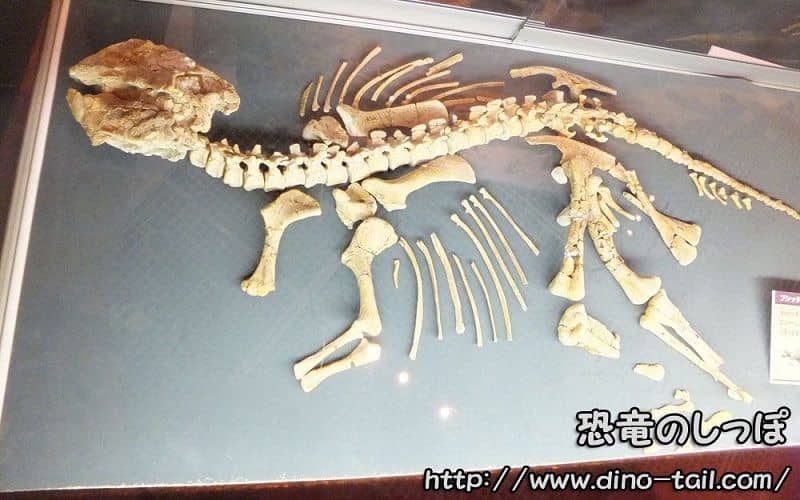
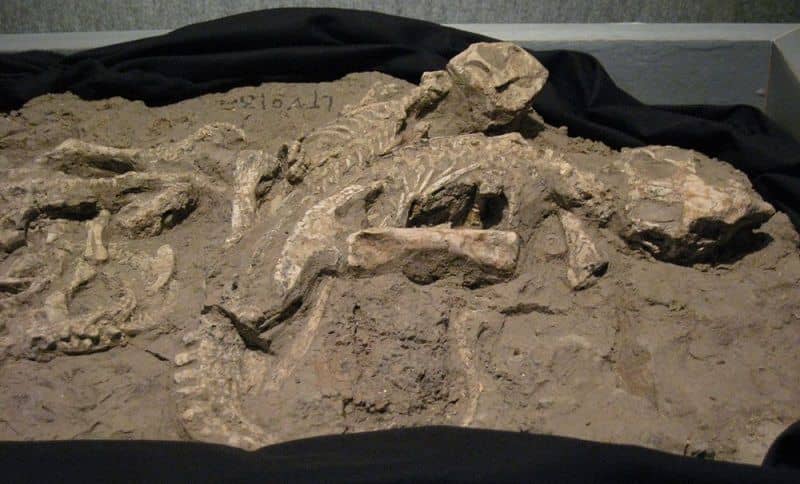
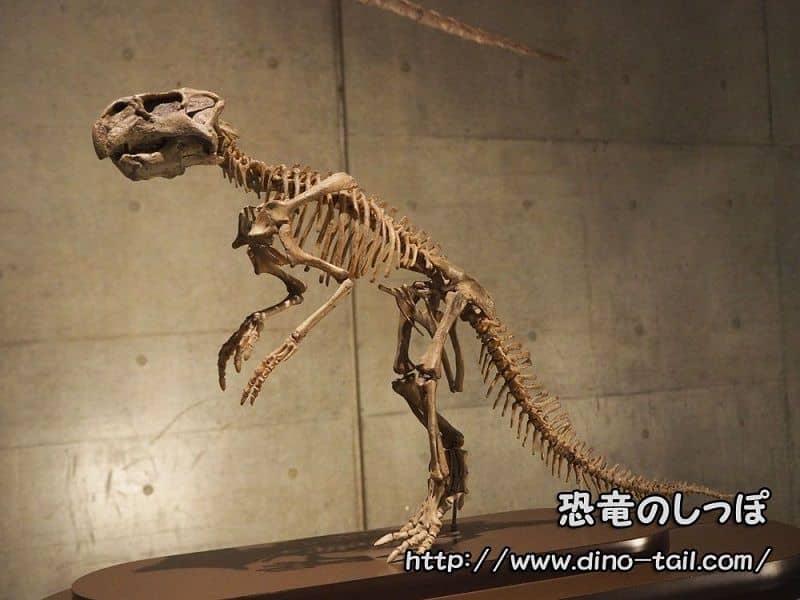
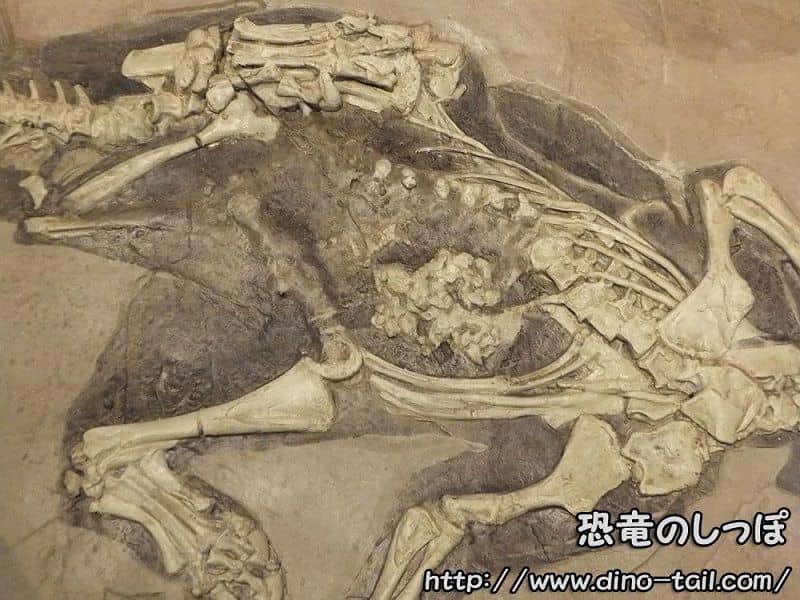
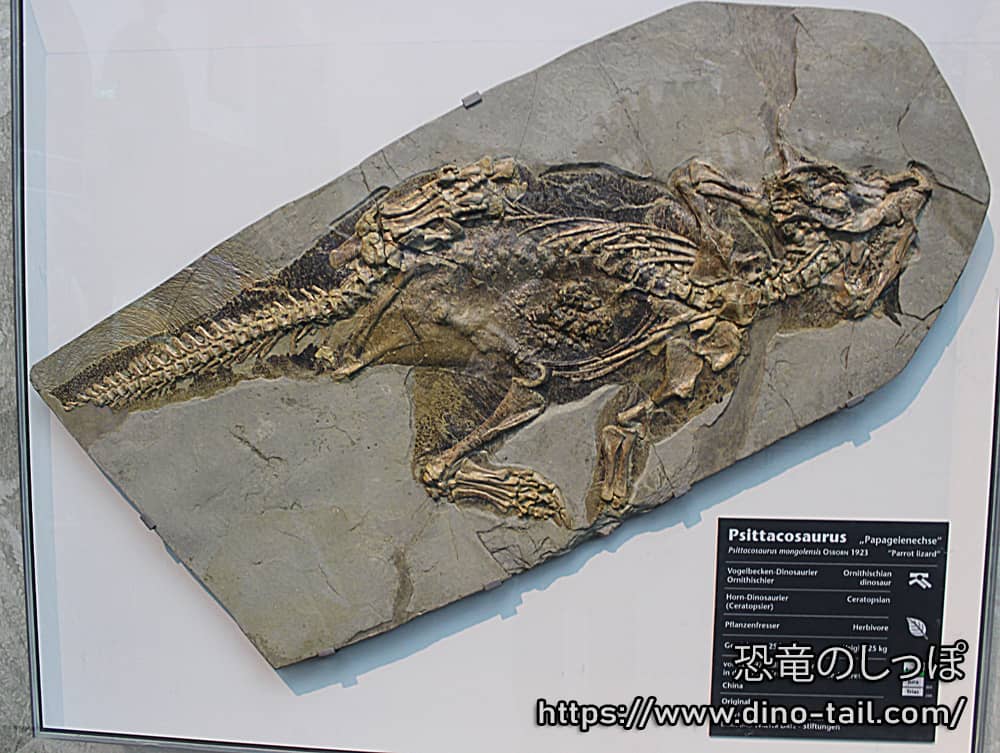
This is the famous Psittacosaurus specimen where traces of bristles were found on the tail.
Stamps and Illustrations
The evolution of Psittacosaurus restorations enjoyed through stamp designs
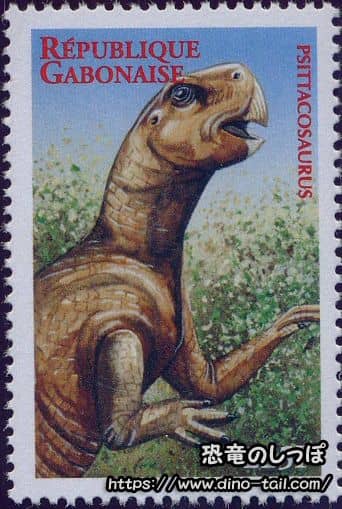
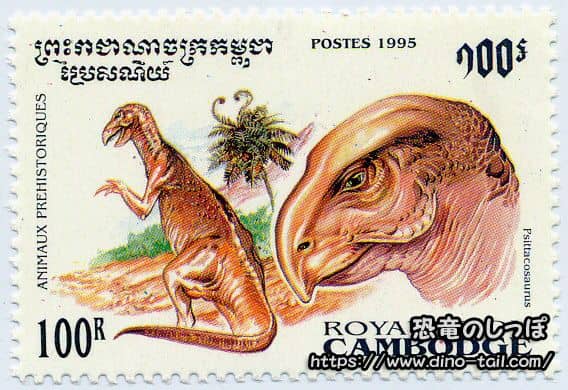
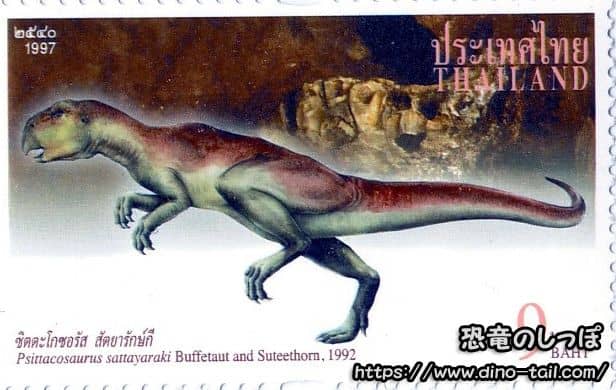
In the "Stamps and Illustrations" section, we post Psittacosaurus stamps issued in various countries around the world. With its small physique of about 1 to 2 meters in length and its adorable parrot-like beak, Psittacosaurus has been depicted on many stamps as a representative dinosaur of Asia. Comparing stamps by issue era and country, you can see how the representation has evolved from the once mainstream "simple figure covered in scales with no decorations on the tail" to the "figure displaying long, porcupine-like bristles (quills) lined up on the tail," reflecting recent fossil discoveries. Please enjoy the history of academic theories depicted in the stamps, including the differences in posing between bipedal and quadrupedal walking.