Specimens and Stamps of Brachiosaurus, the Towering Giant Dinosaur of the Jurassic
This gallery features skeleton fossils of Brachiosaurus photographed at domestic and international dinosaur exhibitions and museums, as well as dinosaur stamps from around the world. Brachiosaurus, which lived in North America during the Late Jurassic, is a giant herbivorous dinosaur known for its unique body shape of having "forelegs longer than hindlegs" among many sauropods. In fact, true Brachiosaurus fossils from North America are extremely rare. By comparing skeleton photos and stamps, including comparisons with its close African relative (Giraffatitan), which has long been used as an exhibition model, you can visually trace the history of research.
Fossils
Highlights and Observation Points of the Featured Skeleton Fossils
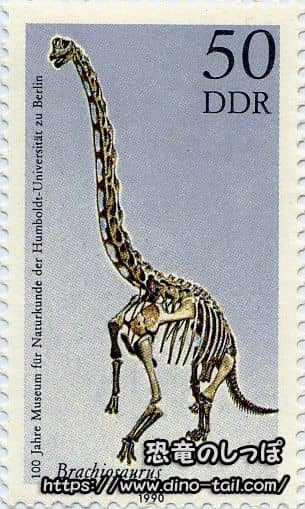
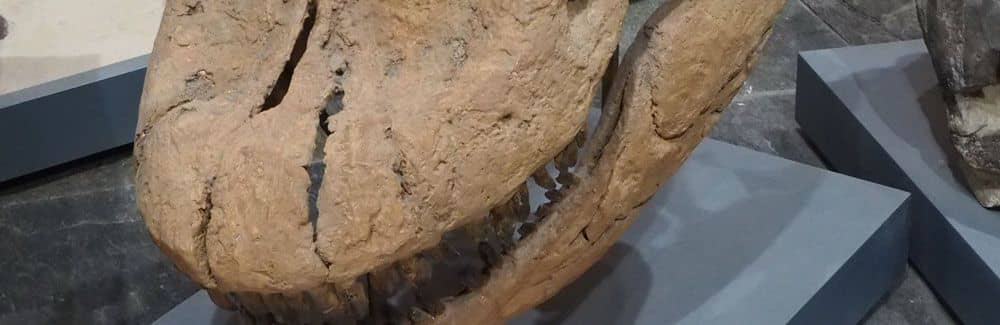
When observing the photos of the fossils, pay attention to the unique proportions indicated by the name "arm lizard," the origin of its scientific name. While typical sauropods like Diplodocus and Apatosaurus have nearly horizontal backs, Brachiosaurus has massive humeri (forelegs) over 2 meters long, and its back slopes significantly from the shoulders to the hips, much like a giraffe. This structure allowed it to raise its head to a height of 9 to 13 meters above the ground. Also, looking up at the small skull at the end of its long neck, you can see the "nasal arch" that swells greatly towards the top of its head, and the spoon-shaped teeth lined up to tear off leaves from tall trees. Furthermore, the massive skeletal balance original to the North American species, with a long torso and deep rib cage, is also an important observation point.
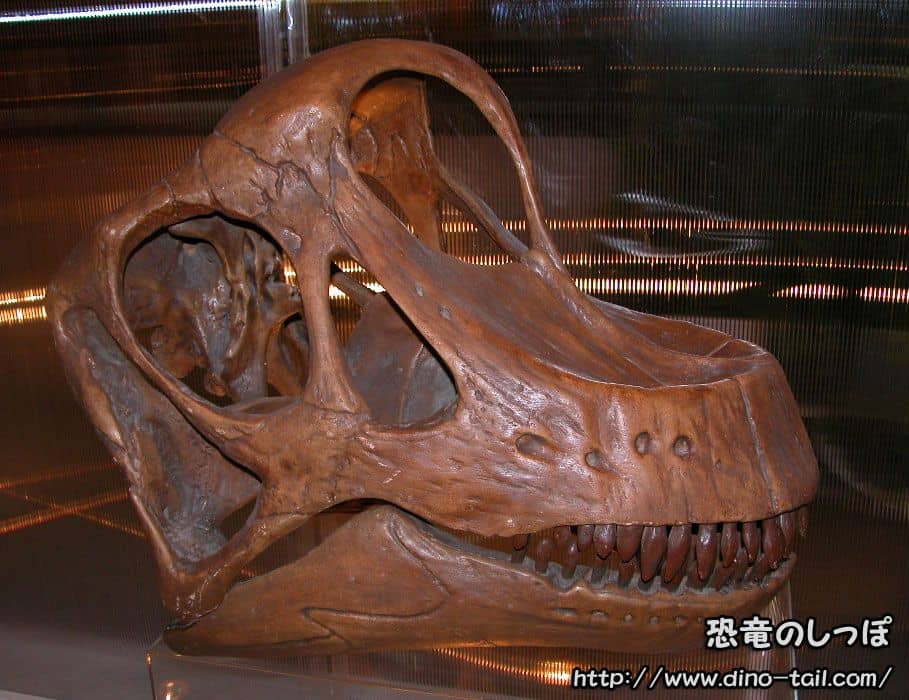
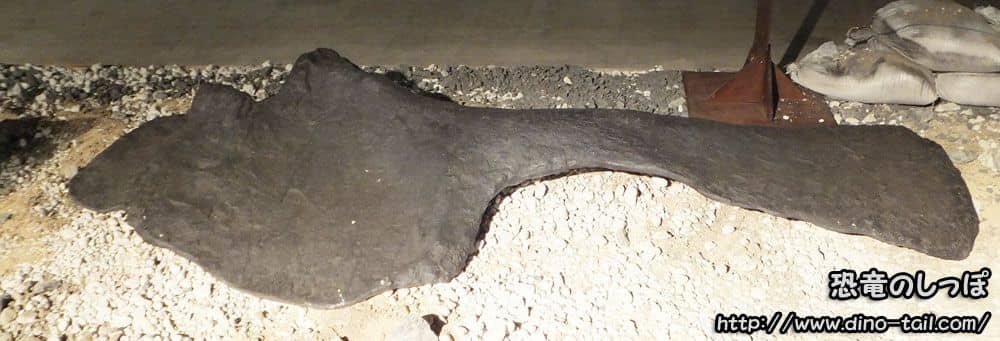
The femur alone is over 2 meters long.
Stamps and Illustrations
Decoding the "Aquatic Lifestyle Theory" and the Evolution of Neck Posture from Stamp Designs
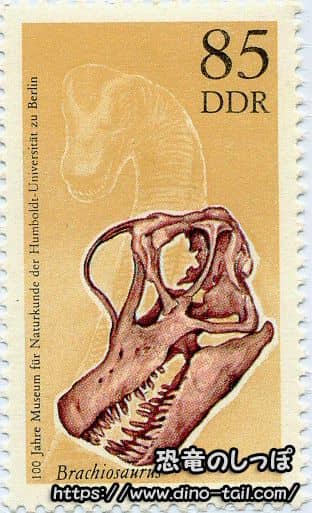
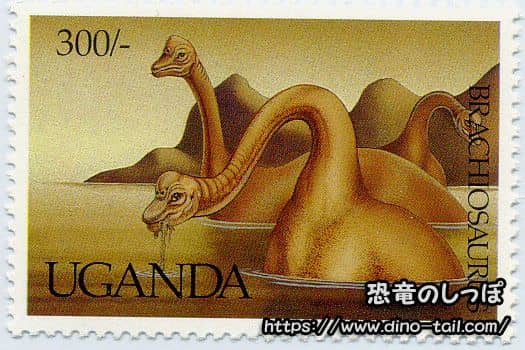
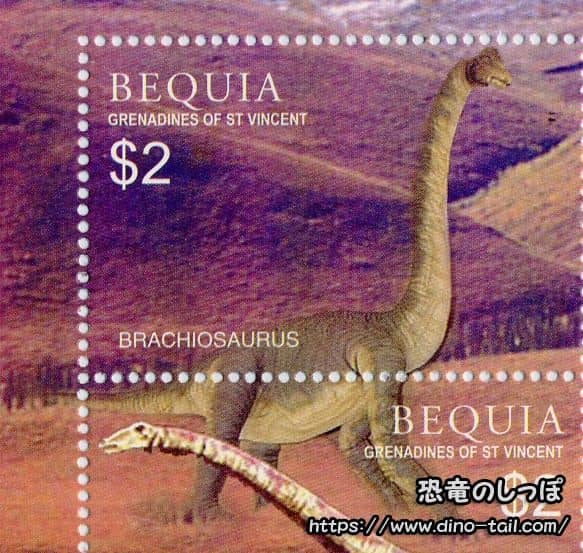
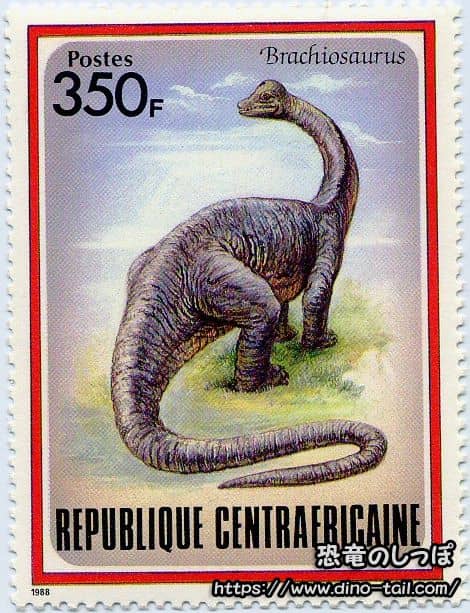
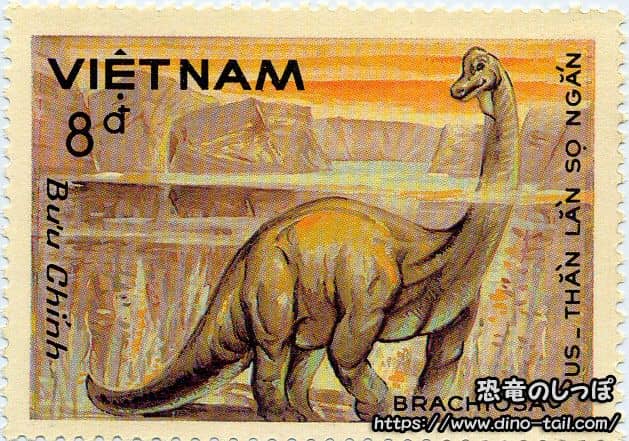
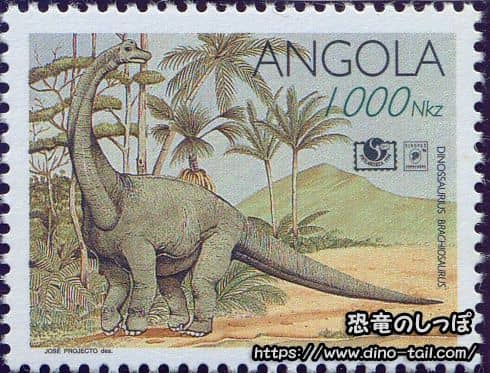
Brachiosaurus stamps issued around the world are very interesting materials that convey the "dramatic changes in theories" in paleontology to the present day. Observing stamps issued in older times, they are often depicted with their entire bodies submerged deep in lakes or swamps, breathing with only the nostrils on top of their heads exposed above the water's surface. This is because the "aquatic lifestyle theory," which suggested that their massive bodies weighing tens of tons were supported by buoyancy, was once believed. However, this is now denied because the water pressure would compress their lungs, and it has been proven that they lived on land. Also, regarding the angle of the long neck, it has changed from the "posture held vertically high like a giraffe" seen in old stamps to the "natural posture extended diagonally forward at 60-70 degrees" based on recent biomechanical research. You can enjoy the history of restoration images through stamps.