About Allosaurus
| Scientific Name (Genus) | Allosaurus |
| Meaning of Name |
Different lizard
allos (different) [Greek] - saurus (lizard) [Greek] |
| Classification | Saurischia, Theropoda, Allosauridae |
| Total Length | Approx. 9-12m |
| Diet | Carnivorous |
| Period | Late Jurassic (approx. 155 to 145 million years ago) |
| Sub-classification / Species Name |
Allosaurus fragilis
Allosaurus europaeus Allosaurus jimmadseni Allosaurus tendagurensis |
| Year of Paper Publication | 1877 |
| Genus Name Publication | Marsh, Othniel Charles (1877). Notice of new dinosaurian reptiles from the Jurassic formation. American Journal of Science and Arts, 14, 514-516. |
"King of the Jurassic" Allosaurus coloring Japanese dinosaur exhibitions
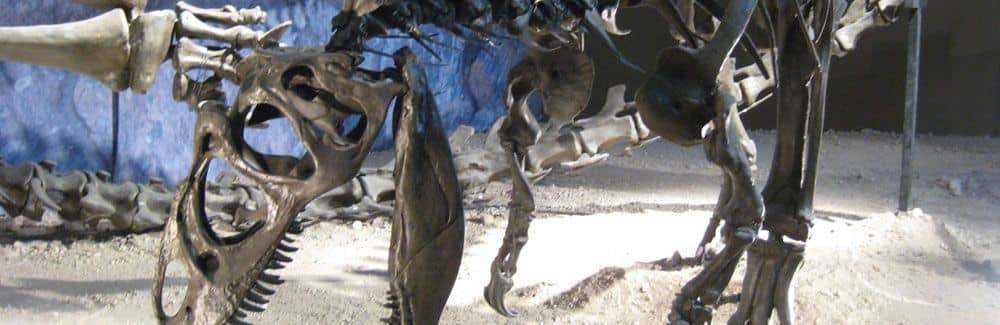
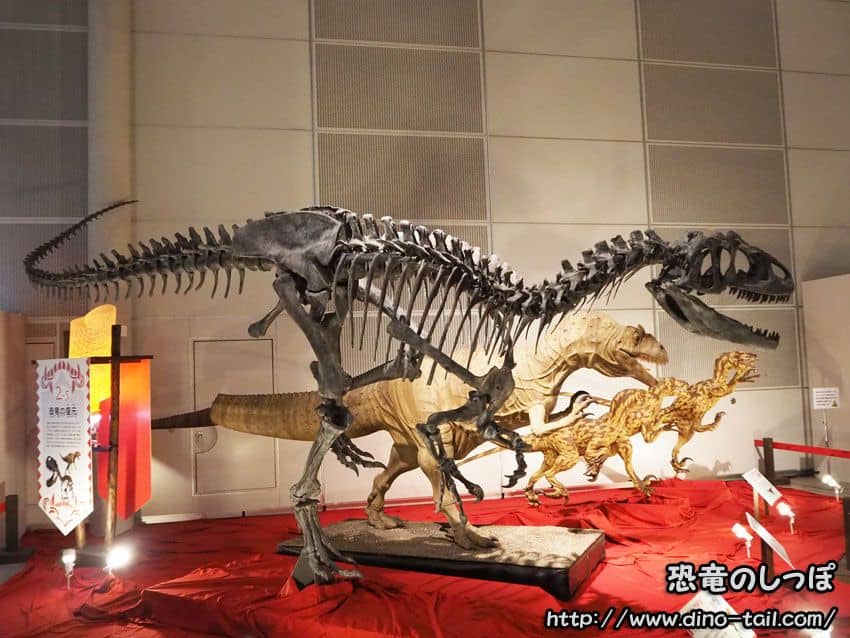
In this gallery, we feature full-skeleton fossils of Allosaurus photographed at Japanese dinosaur exhibitions and museums, ranging from the 2004 exhibition at the Osaka Museum of Natural History to special exhibitions like "Dino Expo 2005" and "The Gigantic Dinosaur Expo 2006", as well as dinosaur stamps from around the world. Allosaurus, which reigned in North America and other regions during the Late Jurassic, was a monumental dinosaur as its actual full skeleton was the first to be permanently exhibited in Japan, making it popular across generations. By comparing the different poses and angles at each exhibition event, you can observe the skeletal beauty of this refined carnivorous theropod in three dimensions.
<Included Events>
Dino Expo 2005, The Gigantic Dinosaur Expo 2006, Dinosaur Expo 2009: The Miracle of the Desert!!, The Largest Dinosaur Kingdom 2012, Giga Dinosaur Exhibition 2017, Dinosaur Museum in Chiba (2018), Osaka Museum of Natural History (2004)
Highlights and Observation Points of the Exhibited Complete Skeleton Fossils
When observing the photos of complete skeletons taken in 2006, 2009, 2012, 2016, and so on, pay attention to the anatomical features unique to Allosaurus that differ from the Late Cretaceous Tyrannosaurus. The first highlight is the head, where you can see a pair of "horns (crests)" just in front of the eyes and knife-like teeth lined up in widely opening jaws. Differences in the shape of the cheekbones and other features serve as important clues for distinguishing between the type species (A. fragilis) and the recently described A. jimmadseni. The second highlight is its well-developed "forelimbs (arms)." In contrast to Tyrannosaurus with its extremely short arms, Allosaurus had three fingers equipped with sharply curved, massive claws that functioned as weapons to pin down prey. Furthermore, in the photos taken in 2012, the herbivorous dinosaur Stegosaurus is exhibited side-by-side on the right. Since actual fossil records show scars of fierce battles between the two, it is recommended to view them while imagining their fateful Jurassic showdown.


Evolution of Allosaurus Reconstructions Traced Through Stamps and Illustrations
Studied for many years since being named in 1877, Allosaurus has been featured on many dinosaur stamps issued around the world. Comparing the stamps featured here reveals the "evolution of reconstructed images" over time. In older stamps and early skeleton exhibits, it was depicted standing with its upper body upright and its tail dragging on the ground, much like Godzilla or a kangaroo. However, subsequent research revised this to an agile running posture with a long tail balancing the weight of the head, keeping the spine parallel to the ground. Enjoy the history of scientific theories condensed into stamps, including the expression of the crests above the eyes and body color.


