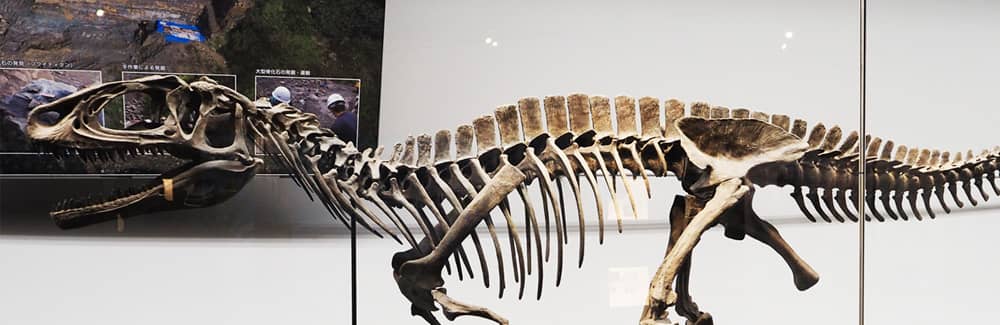
Introduction: The Center of Dinosaur Research in East Asia
Knowledge regarding Mesozoic paleontology in the Japanese archipelago, particularly the evolution and classification of dinosaurs, has made dramatic progress due to intensive excavations and innovations in analytical technology over the past few decades. Playing a central role in this is the ongoing excavation project in the Early Cretaceous strata, the Kitadani Formation of the Tetori Group, spreading across Kitadani-cho, Katsuyama City, Fukui Prefecture in Japan.
From the first dinosaur fossil excavation survey started in 1989 to the fifth survey ongoing as of 2026, new genera and species of dinosaurs have been discovered one after another from this location. Today, it is widely recognized globally as one of the most important fossil sites for reconstructing the Early Cretaceous terrestrial ecosystem in East Asia.
What is the Tetori Group?
It is a group of Mesozoic (Middle Jurassic to Early Cretaceous) strata distributed across Fukui, Ishikawa, Gifu, and Toyama prefectures in Japan. Among them, the strata in Katsuyama City, Fukui Prefecture, where many dinosaur fossils have been found, is specifically called the "Kitadani Formation." It is a stratum from about 120 million years ago.
This huge project led by the Fukui Prefectural Dinosaur Museum has evolved beyond mere "fossil hunting" into comprehensive earth science research that integrates geology, paleoclimatology to investigate past climates, and the latest digital technologies (X-ray CT scanning and 3D modeling).
Furthermore, based on these achievements, Japan's first "Faculty of Dinosaurs (Department of Dinosaur and Geological Sciences)" was newly established at Fukui Prefectural University in April 2025, and full-scale learning at the Katsuyama Campus started in the 2026 academic year. As a result, dinosaur research is now playing a major role in nurturing the next generation of earth scientists in Japan.
Stratigraphic and Paleoenvironmental Background of the Kitadani Formation
Sedimentary Environment and the Fossilization Process
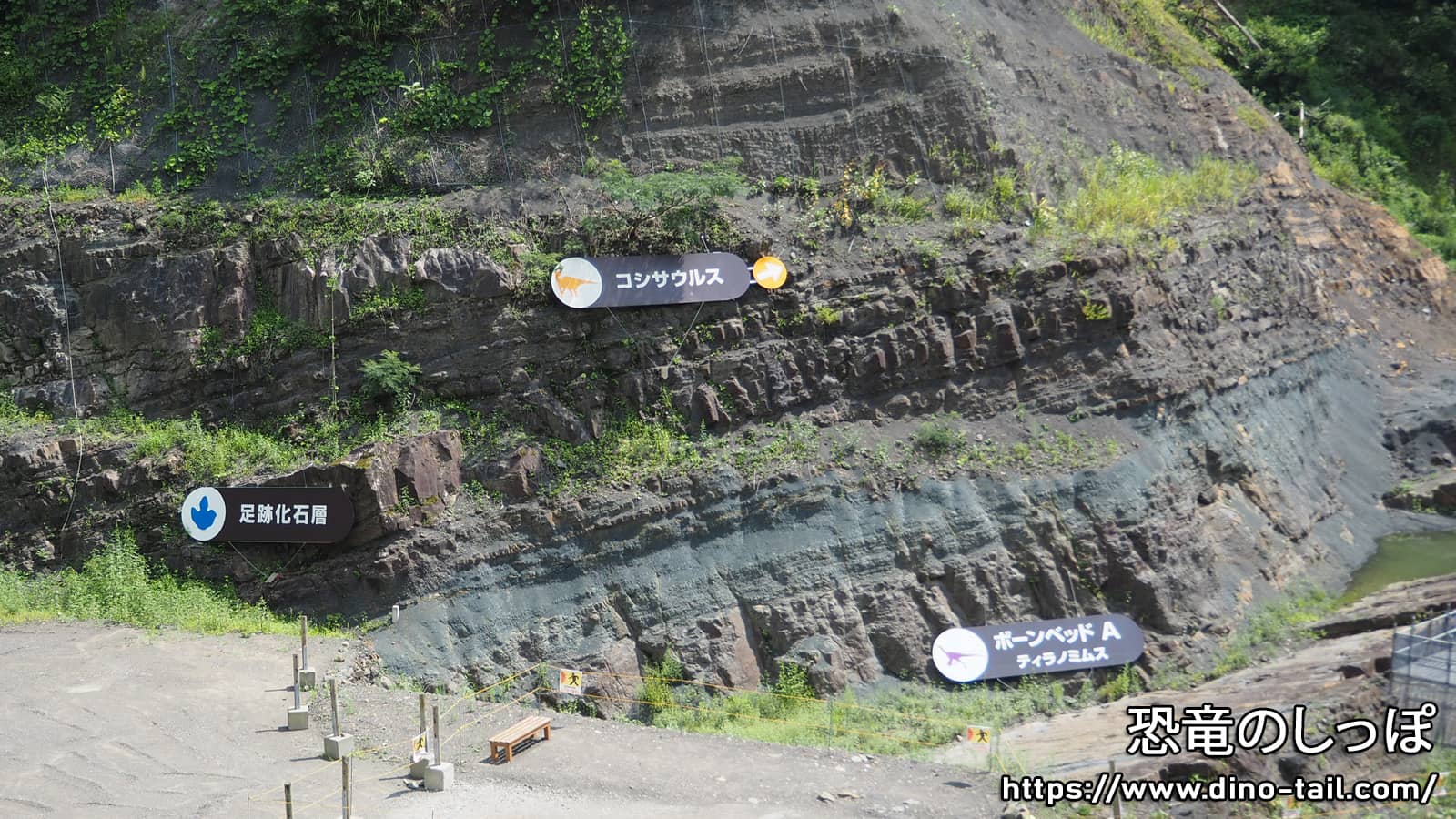
It is a stratum from about 120 million years ago (Early Cretaceous).
The Kitadani Formation exposed in Kitadani, Katsuyama City, Fukui Prefecture, Japan, consists of non-marine (environments other than the sea) sedimentary rocks and is approximately 120 million years old. Geological analysis reveals that the environment at that time was around a vast, meandering river flowing on the eastern side of the Asian continent.
The most significant feature of fossil production in this stratum is that vertebrate remains are concentrated at an unusually high density in specific layers called "bonebeds." This indicates that multiple animals that died upstream or near the river were washed away by violent water currents, such as floods, and gathered and accumulated in specific stagnant pools of the river.
Taphonomy (Fossilization Process)
It is the field of study that investigates what physical and chemical changes organisms underwent from death until they were discovered as fossils. By examining how bones were washed away, buried, and preserved, we can deduce the environment of that time.
Many fossils are found disarticulated and scattered, but this environment also played a role in preventing the skeletons from being excessively crushed. By being sealed in hard calcareous nodules or mudstone, the three-dimensional shapes of the bones are extremely well preserved. Thanks to this, precise structural analysis of the brain and inner ear using micro-CT scanning has become possible.
Paleoclimate and Comparison with China's Jehol Biota
To understand the environment of the Kitadani Formation, a comparison with the Jehol Biota distributed in northeastern China during the same period is very important. The Jehol Biota is world-famous for producing exceptionally well-preserved fossils that even retain soft tissues such as feathers and skin.
While the Jehol Biota in China was mainly composed of deposits from cold lakes accompanied by volcanic ash, the Kitadani Formation in Fukui, Japan, is thought to have been a warm environment with seasonality, alternating between dry and humid climates. Studies of plant fossils also show that plants preferring dry climates and those indicating humid/cold environments were found together, indicating that a rich vegetation was formed.
| Environmental Factor | Kitadani Formation, Tetori Group (Fukui, Japan) | Jehol Biota (Liaoning, Northeast China) |
|---|---|---|
| Main Sedimentary Environment | Meandering rivers, floodplains (braided rivers) | Inland lakes accompanied by volcanic activity |
| Taphonomy | Accumulation of three-dimensional (3D) disarticulated skeletons in bonebeds | Preservation of two-dimensional (2D) articulated skeletons and soft tissues due to volcanic ash deposition |
| Estimated Climate | Warm with seasonal dry/wet alternation | Relatively cold/temperate |
| Vegetation Type | Mixed type (Ryoseki-type + Tetori-type flora) | Transitional period from gymnosperm dominance to early angiosperms |
Dinosaur Taxa from Fukui Prefecture, Japan: Characteristics and Evolutionary Significance
Through continuous excavation surveys, a large number of new genera and species of dinosaurs—the most in Japan—have been discovered and named from the Kitadani Formation. These dinosaurs provide extremely important evidence for understanding the evolution and ecosystems of dinosaurs in Asia.
| Year Described | Scientific Name | Taxon | Diet |
|---|---|---|---|
| 2000 | Fukuiraptor kitadaniensis | Theropoda (Megaraptora / Allosauroidea) | Carnivorous |
| 2003 | Fukuisaurus tetoriensis | Ornithopoda (Iguanodontia / Hadrosauroidea) | Herbivorous |
| 2010 | Fukuititan nipponensis | Sauropodomorpha (Titanosauriformes) | Herbivorous |
| 2015 | Koshisaurus katsuyama | Ornithopoda (Iguanodontia / Hadrosauroidea) | Herbivorous |
| 2016 | Fukuivenator paradoxus | Theropoda (Coelurosauria / Therizinosauria) | Omnivorous/Herbivorous |
| 2019 | Fukuipteryx prima | Paraves (Avialae) | Omnivorous/Insectivorous |
| 2023 | Tyrannomimus fukuiensis | Theropoda (Ornithomimosauria / Deinocheiridae) | Omnivorous/Herbivorous |
Diversity of Carnivorous Dinosaurs (Theropods)
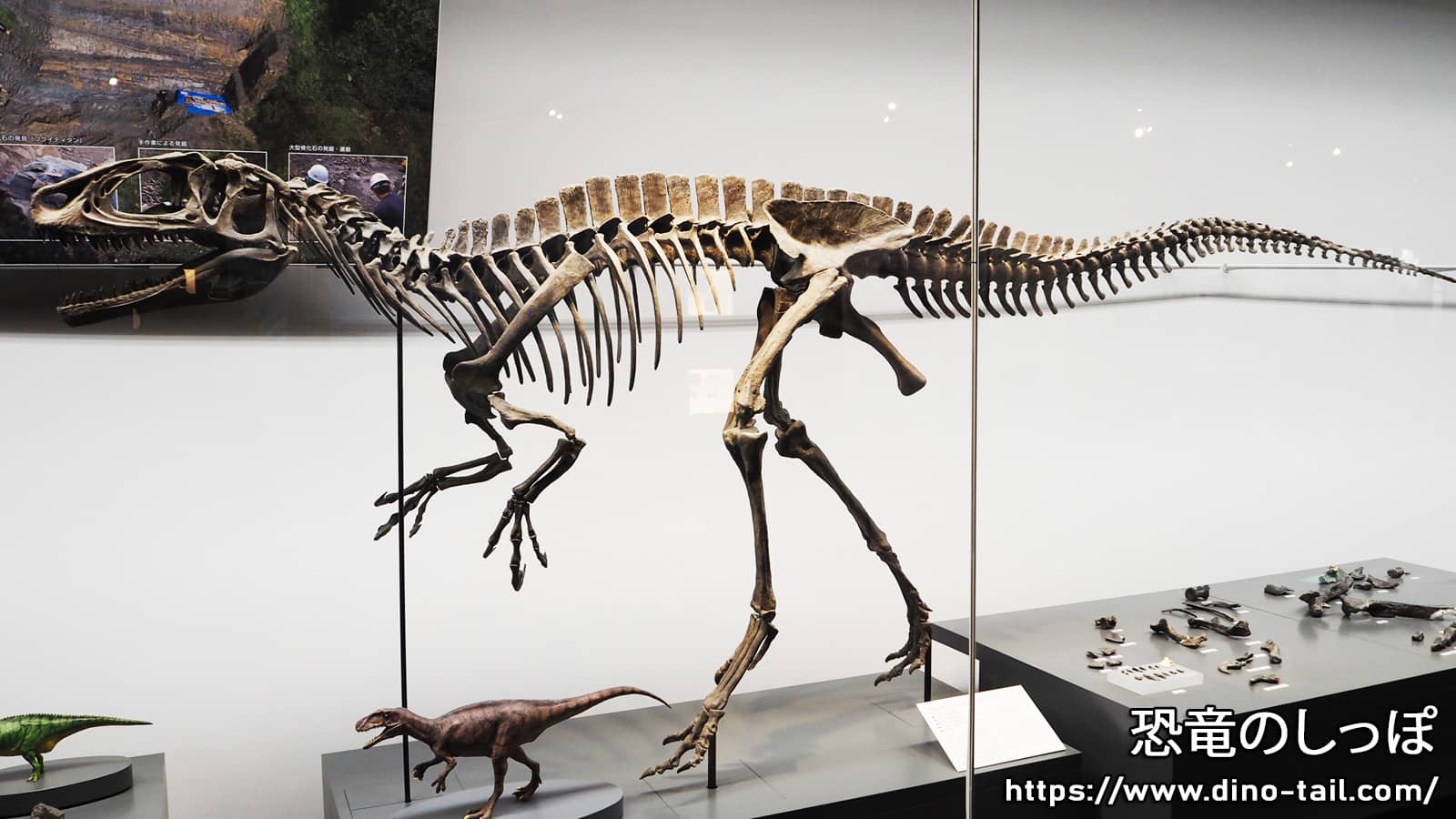
Fukuiraptor kitadaniensis was the first dinosaur in Japan to be named as a new genus and species, symbolizing the dawn of dinosaur research in Japan. A notable feature is that the claws on its hands (unguals) are very large, thin, and sharply structured. This is thought to have been adapted for special hunting behaviors, such as slashing prey.
Fukuivenator paradoxus is a small theropod for which about 70% of the entire skeleton was found in good condition. The most unique point is its conical teeth without the "serrations" typical of meat-eaters. This clearly indicates a transitional period where its diet was shifting from carnivorous to omnivorous or herbivorous. Non-destructive inspection by CT scanning also revealed that it had extremely high spatial awareness and sharp hearing, making it an indispensable specimen globally for exploring the origins of the unique herbivorous group called therizinosaurs.
Ghost Lineage
When drawing an evolutionary family tree, this refers to a blank period where a species should have branched off from an ancestor, but no fossils from that intervening time have been found at all. The discovery of new fossils fills this blank period, allowing us to understand the history of evolution more accurately.
Tyrannomimus fukuiensis, described in 2023, was a groundbreaking discovery that solved the mystery of the early evolution of ornithomimosaurs, also known as ostrich dinosaurs. This dinosaur is the oldest definitive member of the "Deinocheiridae" family and became an important piece to fill a previously unexplained fossil record gap (ghost lineage) of about 20 million years.
Habitat Segregation of Herbivorous Dinosaurs (Ornithopods)
The ecosystem of the Kitadani Formation was supported by two species of ornithopods (relatives of Iguanodon): Fukuisaurus tetoriensis and Koshisaurus katsuyama.
While Fukuisaurus had a robust jaw structure, the later-discovered Koshisaurus had a slender face and a delicate postcranial skeleton. The fact that two closely related species of herbivorous dinosaurs with different characteristics are produced from the same bonebed in the same region at the same time has profound ecological implications. This strongly suggests that "niche partitioning" (segregation of ecological niches) occurred due to differences in the hardness and height of the plants they ate. It is evidence that the Fukui region at that time was a rich forest environment capable of simultaneously supporting multiple species of large herbivorous dinosaurs.
Discovery of Sauropods and Early Birds
Fukuititan nipponensis is a large herbivorous dinosaur (sauropod) that reached around 10 meters in length. This discovery serves as an important indicator of the spread and evolution of sauropods throughout East Asia.
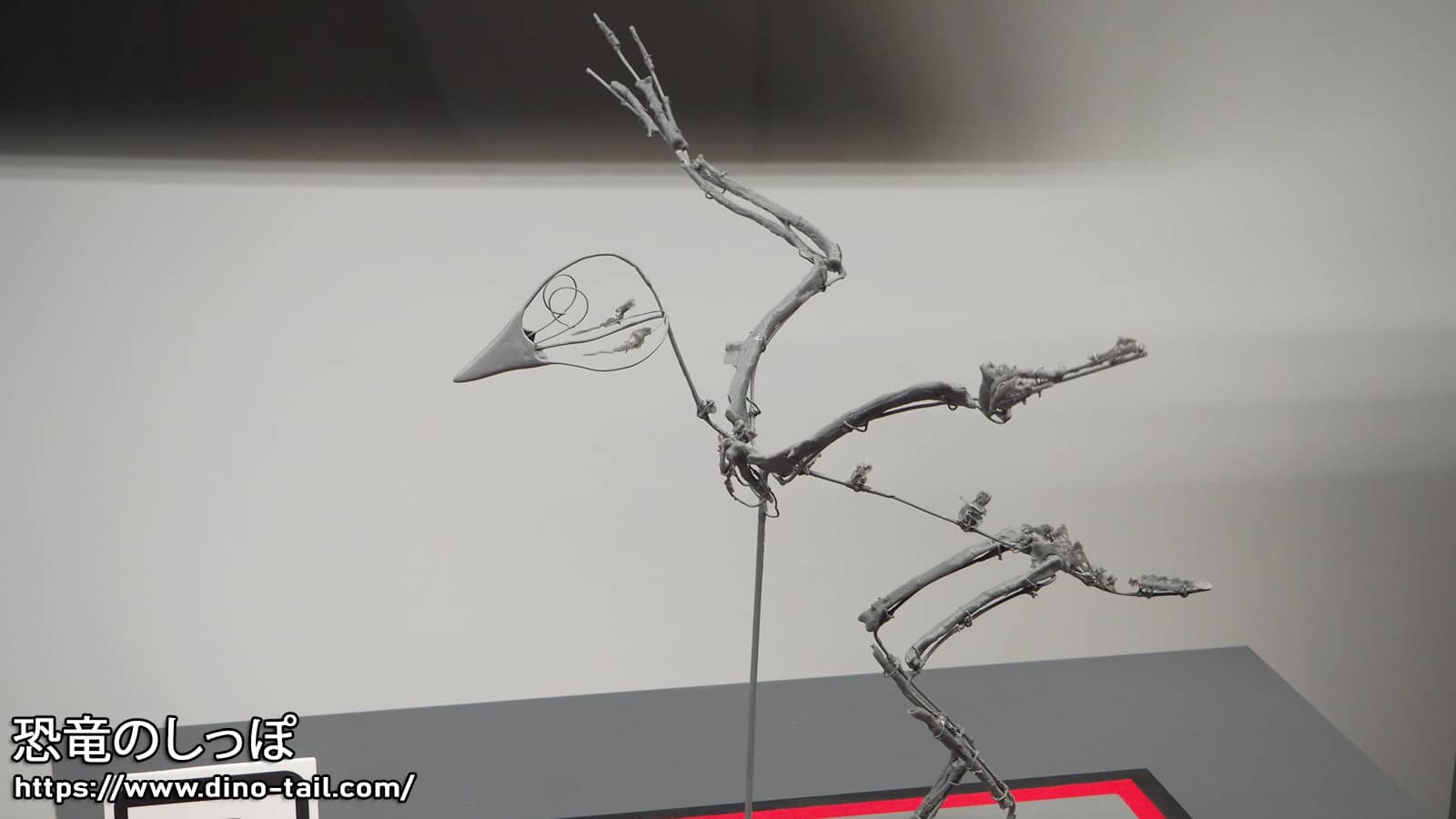
Furthermore, a major global discovery in the evolutionary path leading to modern birds was the early bird Fukuipteryx prima. Despite being extremely primitive for an Early Cretaceous bird, surprisingly, it already fully possessed a "pygostyle" (an organ where the tail bones are fused and shortened) similar to modern birds. The fact that such a primitive bird was found in a warm riverine area rather than a cold lake proves that early birds had adapted to diverse climates and environments at an early stage of evolution.
Overview of the Terrestrial Vertebrate Fauna and Paleoecological Reconstruction using Trace Fossils
The brilliance of the Kitadani Formation lies in its ability to reconstruct not only dinosaurs but the entire Mesozoic terrestrial and freshwater ecosystem.
Diverse Coexisting Fauna and Footprint Fossils
The Kitadani Formation has also yielded Japan's first complete articulated skeleton of a Mesozoic mammal (a small herbivorous mammal called a multituberculate), as well as numerous fossils of turtles, lizards, and crocodyliformes. We can see that they built their own ecosystem at the feet of the dinosaurs.
Moreover, footprint (trace) fossils, which are abundantly produced from the same site, record "dinosaur behavior and sociality" that cannot be unraveled by bone fossils alone. "Continuous footprints (trackways)" of sauropods have been discovered, and by analyzing the size difference between the front and hind feet and the trajectory of their walking, it has become possible to physically calculate and reconstruct the speed and posture at which the giant dinosaurs of that time walked. These serve as important materials for reconstructing glimpses of vivid ecology, such as the hunting behavior of carnivorous dinosaurs and the child-rearing of ornithopods in herds.
| Survey Phase | Implementation Period | Main Excavation/Research Results |
|---|---|---|
| 1st Survey | 1989 - 1993 | Discovery of small carnivorous dinosaur teeth and vertebrate footprint fossils. Start of bedding plane excavation. |
| 2nd Survey | 1995 - 1999 | Restoration of full skeletons of Fukuisaurus and Fukuiraptor, discovery of dinosaur eggshell fossils. |
| 3rd Survey | 2007 - 2010 | Discovery and publication of papers on fossils of Fukuititan, Koshisaurus, and Fukuivenator. |
| 4th Survey | 2013 - 2023 | Discovery of the early bird Fukuipteryx, Tyrannomimus, mammalian skeletons, continuous sauropod trackways, etc. |
| 5th Survey | 2026 - (Ongoing) | Slope excavation and investigation of unexcavated bonebeds. Aiming to elucidate further new genera and species. |
Forefront of International Joint Research and Digital Paleontology
Research institutions in Fukui Prefecture, Japan, are strongly promoting international joint research with Asian countries such as Thailand and China, not limited to domestic surveys. In particular, joint surveys with the Khorat Fossil Museum in Thailand have discovered and described numerous dinosaur fossils, gradually unraveling the processes of dinosaur migration and evolution throughout East Asia during the Early Cretaceous.
In addition, modern paleontology has significantly evolved into "digital paleontology," which utilizes non-destructive inspection and digital data analysis in addition to traditional excavation using hammers and chisels. Fossils are extremely fragile, and tiny specimens, in particular, run the risk of being destroyed if physically carved out. Therefore, by introducing micro X-ray CT scanning, researchers have succeeded in reconstructing the fine bone structures buried inside rocks in three dimensions (3D), even approaching the brain structures and inner ear biological mechanisms of extinct animals.
Deciphering the Early Cretaceous Ecosystem from Fukui, Japan
The excavation surveys in Katsuyama City, Fukui Prefecture, have transformed from simple "fossil hunting" into a comprehensive earth science that precisely reconstructs the turbulent global environment of the Early Cretaceous. The discovery of diverse dinosaurs from Fukuiraptor to Tyrannomimus teaches us just how rich an ecosystem was nurtured by the warm river basins of East Asia at that time.
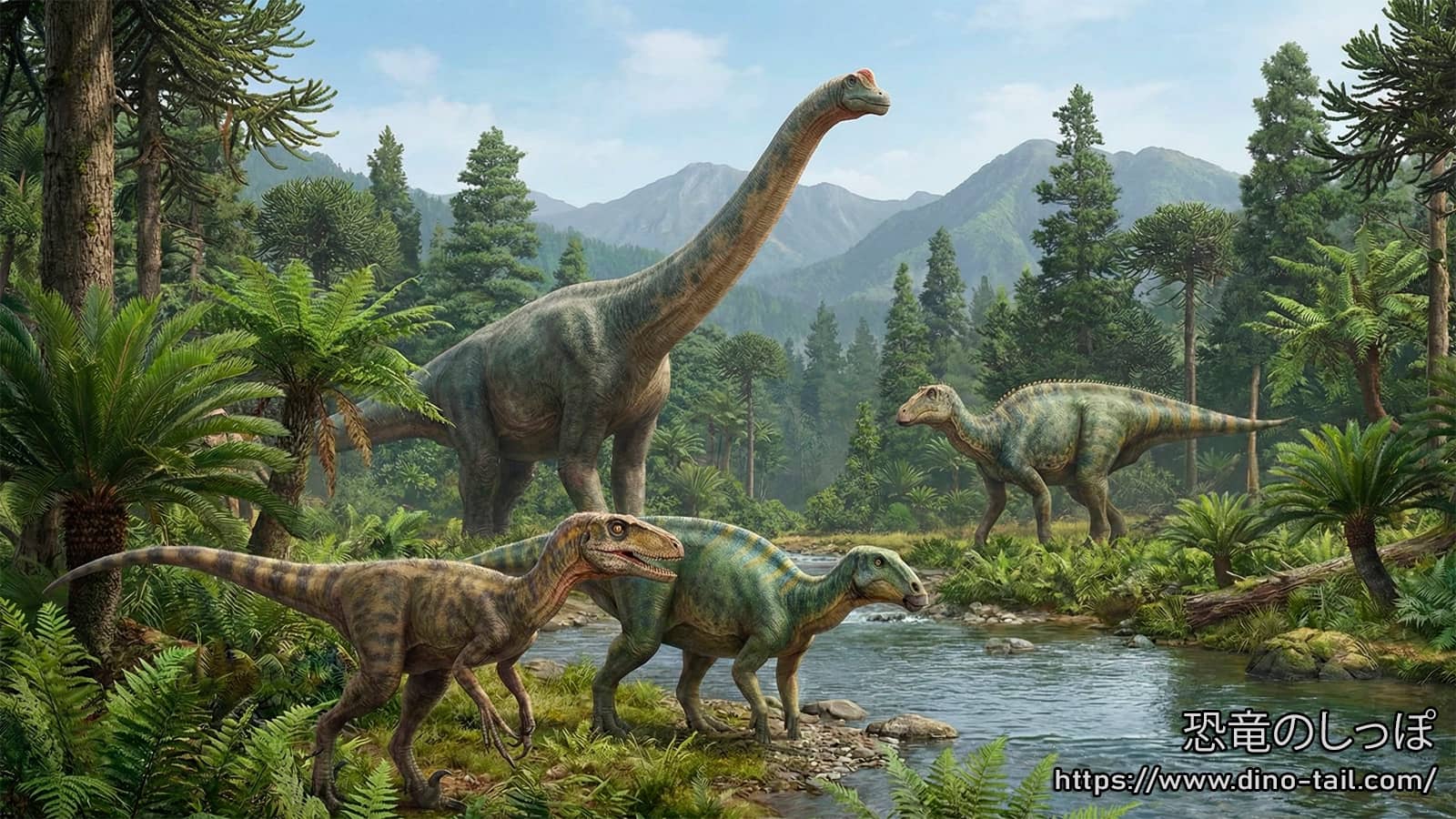
Fukuiraptor, Fukuisaurus, Fukuititan, Koshisaurus