The Origin of Dinosaur Research: The Dawn of Paleontology
The geology of the region centered around the UK (Great Britain) very finely preserves changes in terrestrial and marine ecosystems from the Triassic to the Cretaceous periods.
Because of this, the UK is the "birthplace of dinosaur research," having played a central role in the birth and global development of paleontology.
When discussing the history of fossil discovery in the UK, the woman Mary Anning is indispensable. In the early 19th century, on the coast of Dorset (now the Jurassic Coast), she achieved a series of historic discoveries, including full skeletons of Ichthyosaurus (ichthyosaur) and Plesiosaurus (plesiosaur), and the first pterosaur fossil in the UK.
The numerous fossils brought to light through her careful excavation work played a decisive role in convincing scientists of the time of the concept of "extinction." However, there is a regrettable background in the history of science that, due to strict class and gender barriers of the time, she could not receive proper scientific recognition during her lifetime.
Around the same time as her activities, fossils of giant reptiles living on land were also found one after another. In 1842, scientist Richard Owen noted the common features of three fossils found in the UK—Megalosaurus, Iguanodon, and Hylaeosaurus—and proposed the name "Dinosauria" as a new group to summarize them.
In this way, the word "dinosaur," which is taken for granted today, was born from discoveries in the UK. Today, by using the latest science, such as internal bone structure and mechanical calculations, the true appearance of dinosaurs is being revealed one after another from Mesozoic fossils in the UK.
Triassic: Small Dinosaurs Living on Islands and Super-Giant Marine Reptiles
In the Late Triassic, about 205 million years ago, what is now southwestern England and southern Wales was a "polyarchipelago" environment with small limestone islands floating in a shallow sea. Animals from this period are found in a special stratum called "fissure fillings," which were formed when sand and mud flowed into cracks in the ground.
Adaptation to Island Environments (Insularization)
The 2 to 2.5-meter long small herbivorous dinosaur Thecodontosaurus flourished on these islands. They walked on two legs and had leaf-shaped teeth for eating plants.
Insular Dwarfism (Insularization)
In the limited environment of an island, where food and living space are scarce, animals sometimes evolve to be smaller than their close relatives living on the continent. This is called "insular dwarfism." It has long been debated whether the small Triassic dinosaurs in the UK also became smaller due to this insularization.
The Ancestor of Crocodiles Running on Land: Terrestrisuchus
"Pseudosuchians," the ancestors of modern crocodiles, competed fiercely with dinosaurs for food in early terrestrial ecosystems.
The species Terrestrisuchus was completely different from modern waterside crocodiles; it had slim, long legs extending straight down under its body and could run fast on land like a dinosaur. Recent CT scans of their inner bones have revealed that they were excellent hunters with high metabolism (warm-bloodedness) who moved around actively.
A 25-Meter Monster Lurking in the Sea: Ichthyotitan
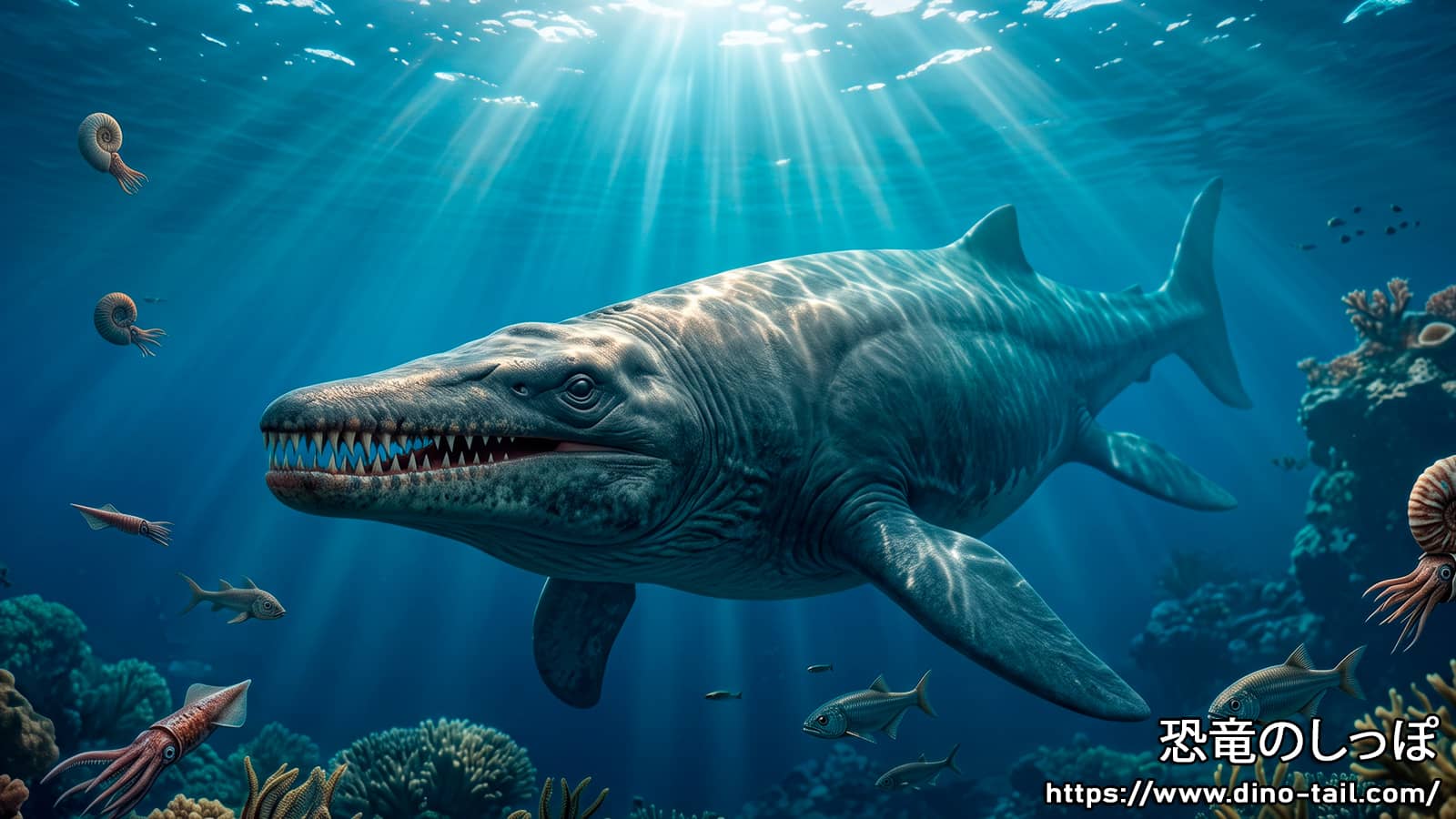
While land animals became smaller and faster, the exact opposite, "extreme gigantism," was occurring in the seas at the same time. The rulers of the seas during this period were ichthyosaurs, which evolved as land reptiles adapted to marine life. They had streamlined bodies similar to modern dolphins and swam quickly through the ocean.
Among them, Ichthyotitan, discovered and announced in the UK in 2024, is a super-giant ichthyosaur with an estimated length of about 25 meters. This is one of the largest marine reptiles in history, comparable to the modern blue whale. It lived in the Late Triassic (about 202 million years ago). Its size was on a completely different scale compared to the famous "Ichthyosaurus" (about 2-3 meters in length), which later thrived in the Jurassic seas and whose fossils were discovered by Mary Anning.
The seas of the time were blessed with enough food to support such giant creatures. However, due to global volcanic activity that caused massive earthquakes and tsunamis, a mass extinction occurred at the end of the Triassic period, and giant ichthyosaurs like Ichthyotitan completely disappeared.
Table: Major Terrestrial and Semi-Terrestrial Reptiles of the Late Triassic (from the UK)
| Species (Genus) | Estimated Ecology and Features |
|---|---|
| Thecodontosaurus | Early herbivorous dinosaur. Bipedal, about 2-2.5m long. |
| Camelotia | Large herbivorous dinosaur. Possibly in the process of evolving into a quadruped. |
| Terrestrisuchus | Crocodile ancestor (Pseudosuchian). Fast terrestrial hunter with long legs. |
| Kuehneosaurus | A reptile close to lizards, capable of gliding by spreading its ribs. |
| Ichthyotitan | Super-giant ichthyosaur. Estimated length of about 25m, the apex predator of the ocean. |
Jurassic: Diversifying Seas and Evolving Armored Dinosaurs
In the Jurassic period, most of the UK was covered by shallow seas, lagoons, and giant river deltas. Dinosaurs further diversified, and marine reptiles evolved to adapt to their respective environments.
Strategies of Marine Reptiles
After the super-giant ichthyosaurs of the Triassic disappeared, new ichthyosaurs with more dolphin-like body shapes began to thrive in the sea. Temnodontosaurus reached a length of about 10 meters and was the apex marine predator with massive jaws measuring 2 meters long.
Ecology Revealed by Taphonomy
The research field that investigates how dead organisms become fossils and their surrounding circumstances is called "taphonomy." Teeth from another individual have been found around Temnodontosaurus fossils, suggesting they may have eaten carcasses or even engaged in cannibalism.
Crocodilians fully adapted to marine life (such as Metriorhynchus) also appeared. To reduce water resistance, they completely lost the bumpy scales (osteoderms) on their backs typical of crocodiles and had tail fins like sharks. Fossilized stomach contents reveal that they not only swam fast to hunt fish but also engaged in "scavenging," eating the carcasses of giant fish.
The Appearance of Stegosaurs Deciphered from Footprints
Turning to the land, many dinosaur footprint fossils remain on the coast of Yorkshire. Among them, footprints called "Deltapodus" belong to some of the world's oldest stegosaurs. Even the impressions of scales on the soles of their feet are preserved, and detailed mechanical analyses have been conducted on how they distributed their weight while walking on muddy deltas.
Armored Dinosaur: Scelidosaurus
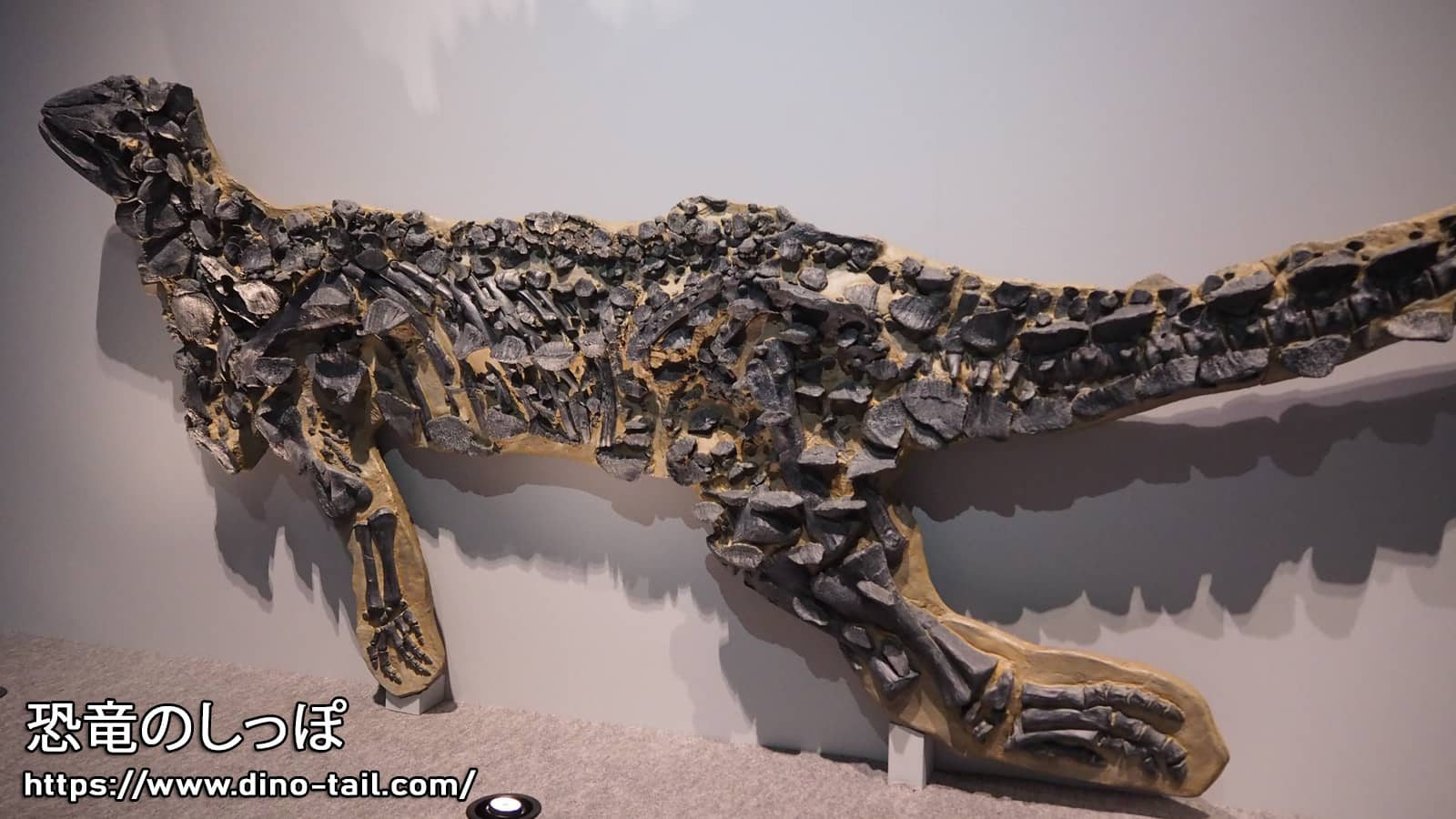
The UK is also an important place for understanding the evolution of "Thyreophora," dinosaurs covered with armor-like bones (osteoderms). Scelidosaurus, found in Early Jurassic strata, is an early thyreophoran about 4 meters long.
Recent studies have revealed the complex armor structure of Scelidosaurus. These armors were highly vascularized, and it is thought they were used not only for protection from carnivorous dinosaurs but also for regulating body temperature and communication among peers. It also preserves the transitional stage of evolving from bipedal to quadrupedal walking to support a body with an enlarged stomach (digestive organs).
Early Cretaceous: Diverse Evolution of Dinosaurs
The "Wealden Group," an Early Cretaceous geological formation spreading across southern England (including the Isle of Wight), was a vast river floodplain with a climate similar to the modern Mediterranean. Here, dinosaurs adapted well to various environments and built a rich ecosystem.
Historic Discovery: The Appearance of Iguanodon
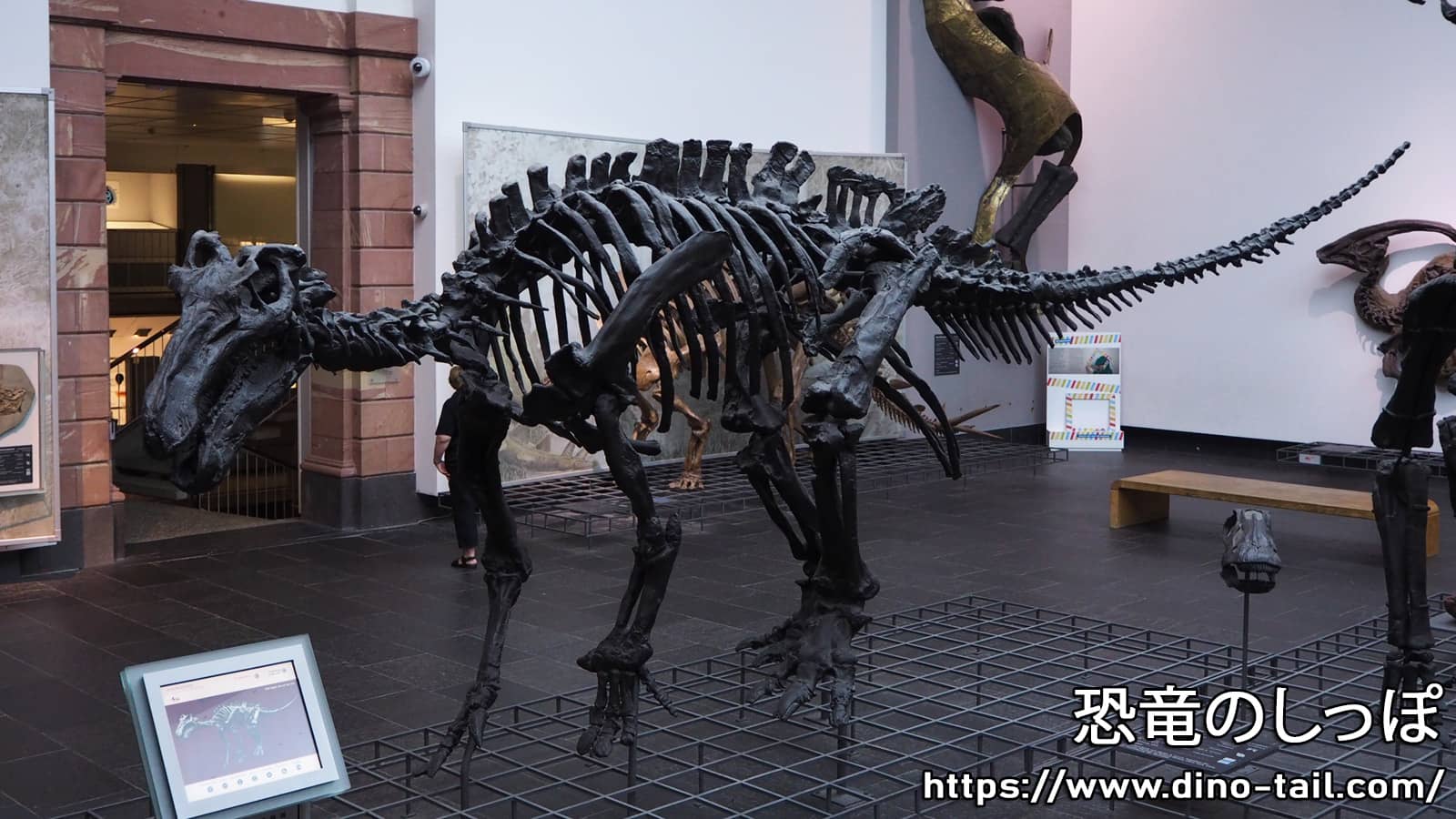
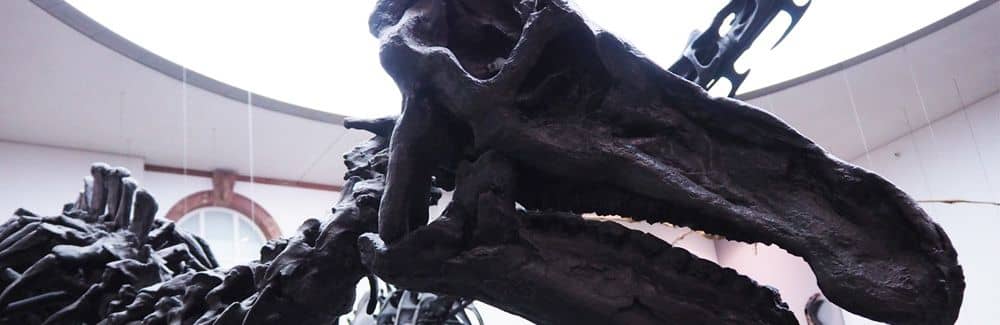
The most representative dinosaur of the UK in the Early Cretaceous is the herbivorous dinosaur Iguanodon. It began with the discovery of fossilized giant teeth by physician Gideon Mantell in 1822, which later became an important foundation for defining the new group "Dinosauria."
The most prominent feature of Iguanodon is the massive first digit (thumb spike) on its forelimb. It had a sturdy, robust skeleton, walked on both two and four legs, and is thought to have used these sharp spikes to defend itself against carnivorous dinosaurs.
Breaking Away from the "Wastebasket Taxon"
What is a Wastebasket Taxon?
In early paleontology, fossils with similar features that were difficult to distinguish were often temporarily grouped under one famous name (genus). This is called a "wastebasket taxon." For a long time, all large herbivorous dinosaurs found in the UK were classified as "Iguanodon."
Because Iguanodon became so famous, a rough and simple classification was once made: "If the discovered fossil is robust, it's Iguanodon; if it's slender, it's Mantellisaurus." However, this huge group is now being re-evaluated by strictly analyzing fine bone differences (unique evolutionary features). In fact, it has been discovered that entirely different species of dinosaurs, such as Barilium, Hypselospinus, and Brighstoneus (described as a new species in 2021), coexisted in the same environment.
Table: Major Ornithopods of the Wealden Group
| Species (Genus) | Features & Differences |
|---|---|
| Iguanodon | Characterized by a robust skeleton and a powerful thumb spike. |
| Mantellisaurus | Lighter and more slender skeleton than Iguanodon. |
| Barilium | Robust physique, characterized by the shape of its pelvis (ilium). |
| Brighstoneus | The nasal area is swollen, and it has more teeth than other species. Described as a new species in 2021. |
Waterside Hunter: The Mystery of the Spinosaurids
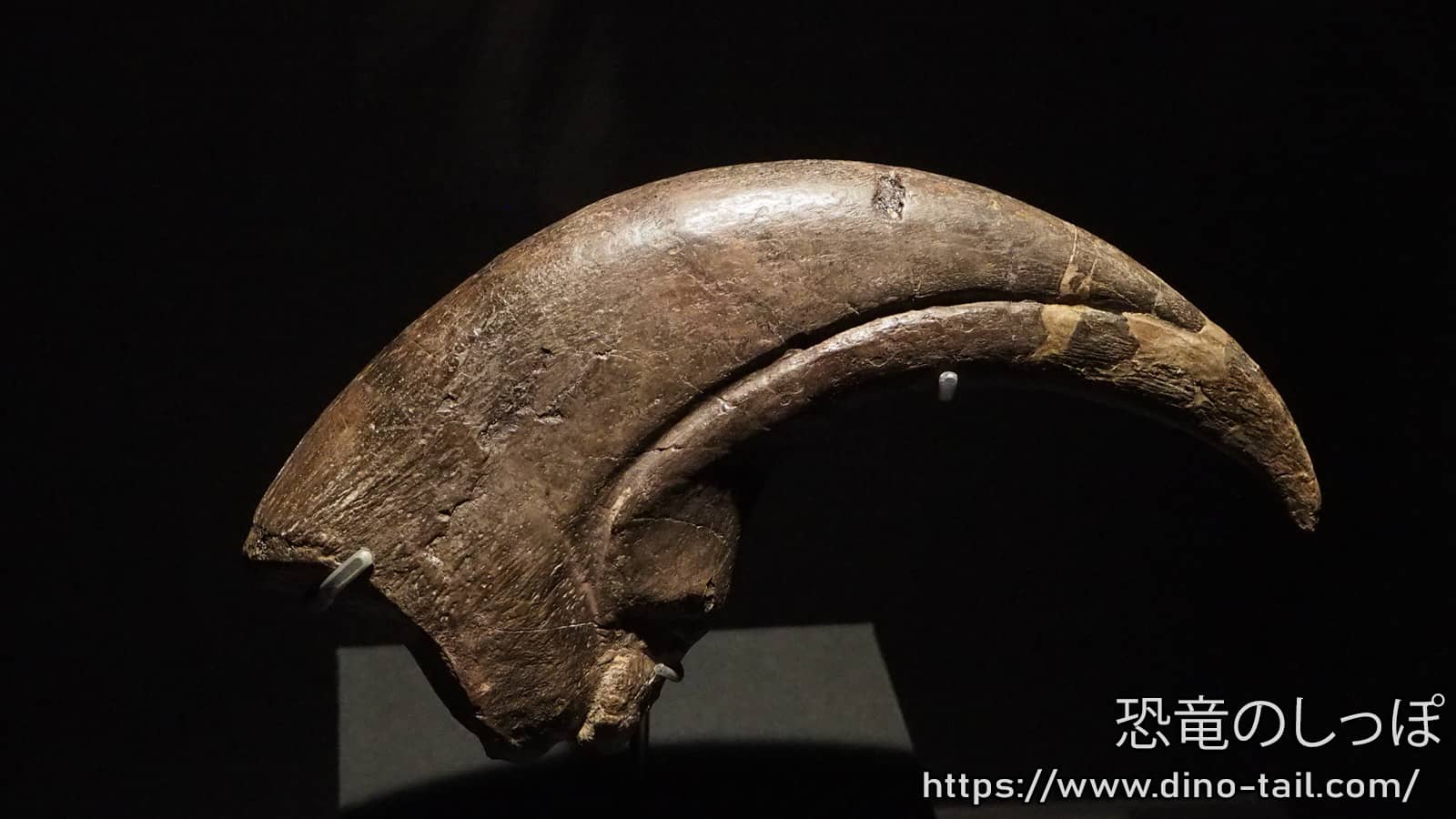
The "heavy claw" fossil from which the genus name is derived.
The most famous carnivorous dinosaurs in the UK are the spinosaurids, such as Baryonyx, which has a long, narrow snout like a crocodile. For a long time, it was thought that only one species of Baryonyx existed in the UK, but in 2021, two new species, Ceratosuchops (meaning "horned crocodile-faced hell heron") and Riparovenator, were discovered on the Isle of Wight.
There is a heated debate among scientists about "how well adapted they were to aquatic life." While some studies examine bone density and claim they "dove completely underwater to hunt," there are counterarguments stating, "Some animals with high bone density, like hippos, do not dive, so they simply waded in the shallows to target prey near the water." The debate continues today.
Carnivorous Dinosaurs with High-Sensitivity Sensors
There were also carnivorous dinosaurs such as Eotyrannus, an early relative of Tyrannosaurus, and Neovenator, a large allosauroid.
In particular, a CT scan of Neovenator's skull revealed a complex network of nerves and blood vessels concentrated at the tip of its snout. This is similar to the sensors of crocodiles that search for prey in muddy water or the temperature-sensing beaks of birds.
This indicates that large carnivorous dinosaurs were not just violent hunters but possessed very delicate senses, allowing them to carefully dismantle prey or rub their faces together.