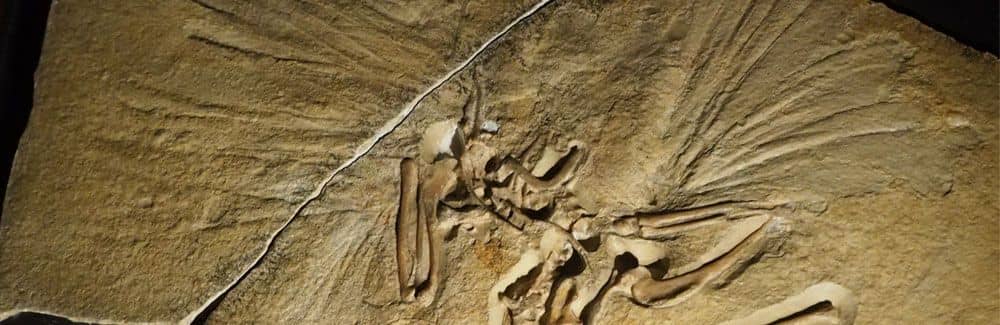
Germany as a "Window" into Evolution
Germany's geological background offers one of the world's most important "windows" for understanding the evolution of vertebrates in the Mesozoic Era.
The environmental changes from the vast Pangean inland basins of the Triassic to the archipelagos of the Tethys Sea in the Jurassic and Cretaceous periods promoted the diversification and unique evolution of dinosaurs.
In particular, "Konservat-Lagerstätten" (conservation Lagerstätten) represented by the Solnhofen Limestone and Posidonia Shale preserve not only skeletons but also soft tissues such as feathers, skin, and internal organs, dramatically improving the quality of information in paleontology.
This page introduces dinosaurs discovered in Germany, their taxonomic significance, and new findings from recent research (2020-2026).
Triassic: Pangea Basin and Early Dinosaurs
In the Late Triassic (about 230 to 201 million years ago), Germany was located in the center of the supercontinent Pangea, where dry inland basins and floodplains extended. Sediments from this period, especially the "Keuper" group, have yielded many important early dinosaur fossils.
Mass Burial and Growth Mysteries: Plateosaurus
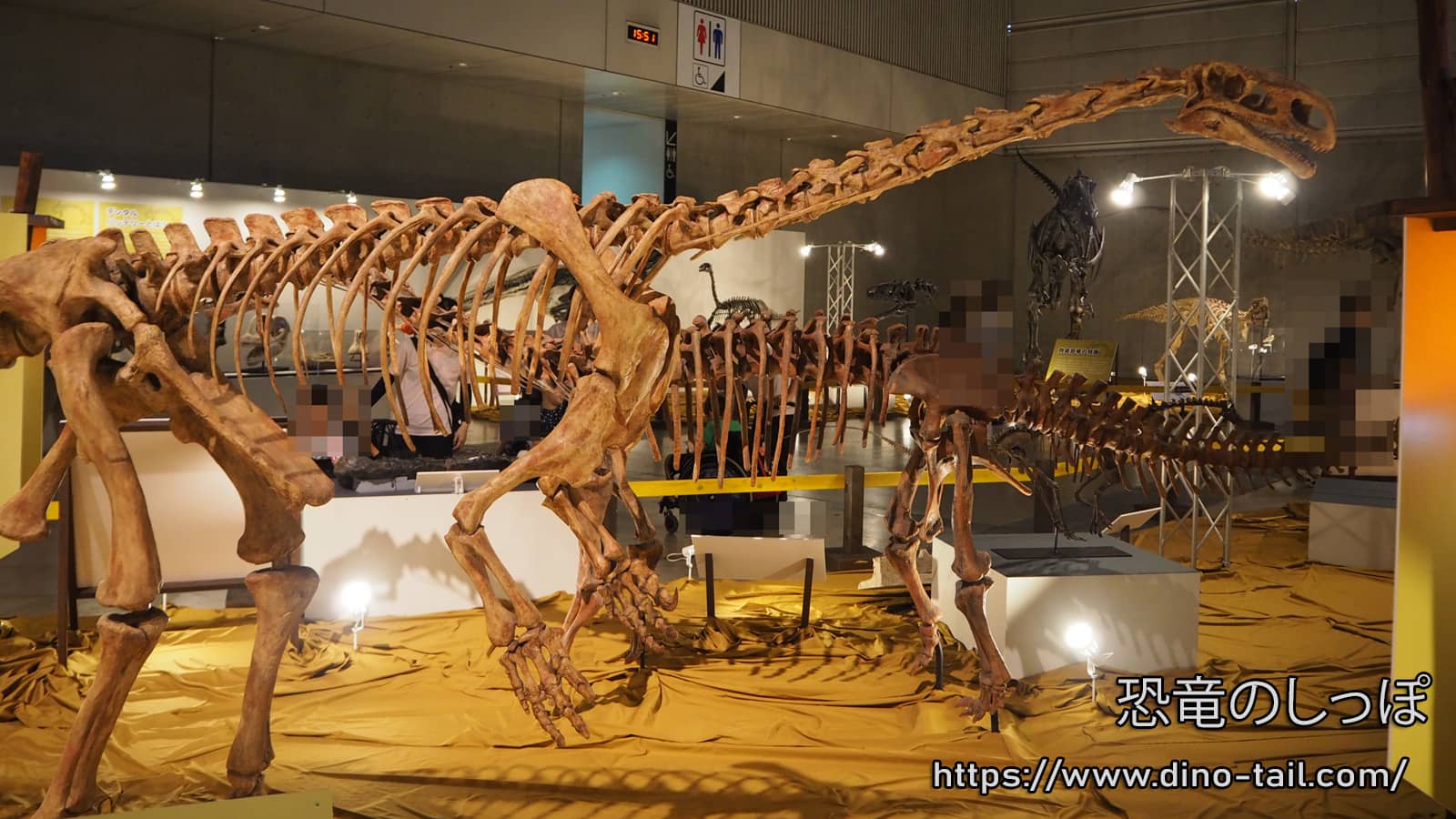
The dinosaur that symbolizes the German Triassic is
Plateosaurus
. Described in 1837, this dinosaur has the fifth oldest history in the world as a dinosaur with a valid name.
Its most notable feature is the mass burial sites (bonebeds) of dozens of individuals found in Trossingen and other places. Once thought to be a mass death due to a catastrophe, the latest analysis suggests it is the result of heavy individuals getting stuck in wet mud seasonally and accumulating over a long period.
Plateosaurus also had a unique property called "developmental plasticity." Histological analysis of bones has revealed that even adults varied greatly in size depending on environmental factors, ranging from 4.8 to 10 meters in length and 600 kg to 4 tons in weight.
Predators of the Triassic
Parallel to herbivorous dinosaurs, powerful theropods also existed.
Liliensternus
was a large predator reaching over 5 meters in length, speculated to have had ornamental crests on its skull.
Also, the smaller
Procompsognathus
is thought to have hunted small reptiles and insects with quick movements like a modern cheetah.
Jurassic: Tethys Archipelago and the Miracle of Solnhofen
In the Late Jurassic, most of present-day Germany was covered by the Tethys Sea, transforming into an archipelago dotted with tropical-style islands. This geographical isolation brought about a unique evolutionary process called "insularization."
Evolutionary Missing Link: Archaeopteryx
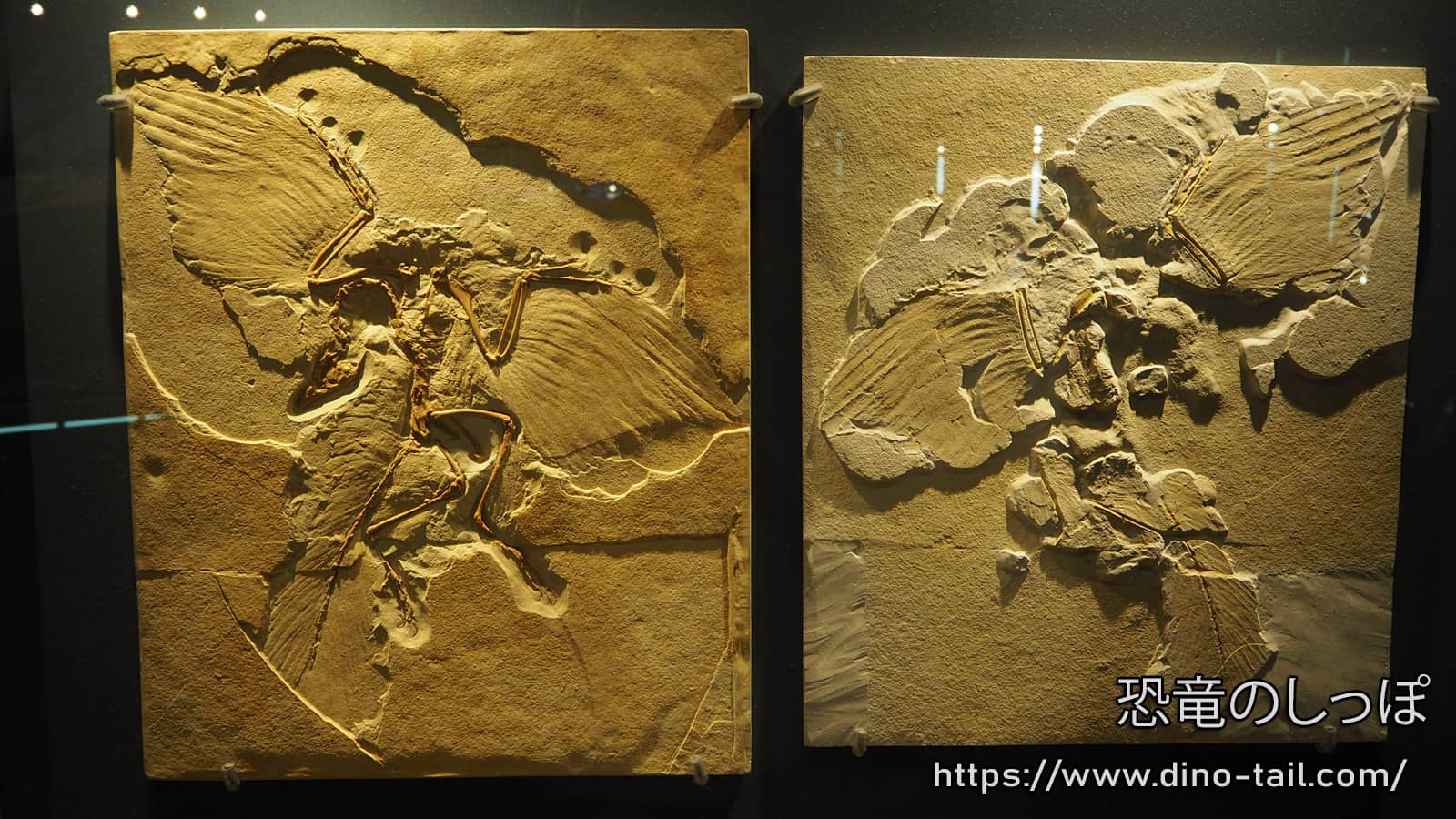
The biggest reason Germany holds an unshakable position in world paleontology lies in the discovery of
Archaeopteryx lithographica
.
Discovered in the limestone of Solnhofen, Bavaria, these fossils possess both dinosaur characteristics (teeth, claws, tail) and avian characteristics (feathers, furcula), serving as important evidence supporting the theory of evolution.
In particular, the "Berlin Specimen" housed in the Museum für Naturkunde Berlin is called the "Mona Lisa of fossils" due to its excellent state of preservation.
Insular Dwarfism: Europasaurus
Europasaurus holgeri
, discovered in 2006, is a remarkable example of "insular dwarfism," where the island environment causes giant organisms to become smaller.
Although originally a member of the giant sauropods, adults of
Europasaurus
were only about 6.2 meters long. It is thought to have evolved to significantly slow down its growth rate to adapt to limited resources.
Feathered Theropods: Juravenator and Sciurumimus
Besides
Archaeopteryx
, important fossils showing the evolution of feathers have been found in Solnhofen.
Juravenator
had a mixture of scales and feather-like filaments on part of its tail, and
Sciurumimus
preserved traces of bushy feathers befitting its name "squirrel mimic." These indicate that feathers may have existed not only in the direct ancestors of birds but also in a broader range of theropods.
Cretaceous: Twilight of Dinosaurs and New Discoveries
Germany in the Cretaceous period (about 145 to 66 million years ago) was also in a dynamic environment affected by the Tethys Sea. Fossil records are fragmentary compared to the Jurassic, but significant discoveries have followed one another in recent years.
The small herbivorous dinosaur Stenopelix has been discovered in Lower Saxony. This dinosaur with a "narrow pelvis" is increasingly likely to be the most basal member of the ceratopsians.
New Discovery in 2026: Presence of Ceratopsians in Europe
For many years, it was believed that ceratopsians like Triceratops did not exist in Europe, but research in 2026 overturned this established theory.
New discoveries in Hungary and re-examination of fossils from Germany and Romania revealed that many fossils previously misidentified as different species were actually ceratopsians. This has made it clear that a diverse dinosaur fauna common to other continents existed in the European archipelago of the Late Cretaceous.
Major Museums in Germany
Museums in Germany are centers for protecting and exhibiting these global fossil heritages.
Table: Guide to Major Natural History Museums in Germany
| Museum Name | Location | Main Exhibits & Features |
|---|---|---|
|
Museum für Naturkunde Berlin
(Berlin Natural History Museum) |
Berlin | World's largest mounted dinosaur skeleton "Giraffatitan", Archaeopteryx Berlin Specimen, T-Rex "Tristan Otto". |
|
Naturmuseum Senckenberg
(Senckenberg Natural History Museum) |
Frankfurt | Original skeleton of Diplodocus, Edmontosaurus mummy with skin, fossils from Messel Pit. |
|
Bavarian State Collection of Paleontology and Geology
(BSPG) |
Munich | Treasure trove of Solnhofen fossils. Archaeopteryx (Munich Specimen), largest Plateosaurus, Ichthyosaur with fetus. |
Latest Research Trends
Paleontology is still progressing, and the latest technology and re-investigation of undisclosed materials are drawing new stories from Germany's strata.
- Archive Rediscovery : In 2025, a new species of large carnivorous dinosaur, Tameryraptor , was identified from the analysis of photos lost during the war. It is a groundbreaking achievement of "excavating" a new species from past records.
- Elucidating the Underwater World : New ichthyosaur species Eurhinosaurus mistelgauensis and the oldest plesiosaur Plesionectes have been reported. New biomechanical analysis is being introduced for body length estimation of ichthyosaurs.
- Footprint Analysis by AI : In 2026, "DinoTracker" technology using AI was put into practical use, and dinosaur migration routes and interactions between individuals are being elucidated in detail from Triassic footprint fossil groups.