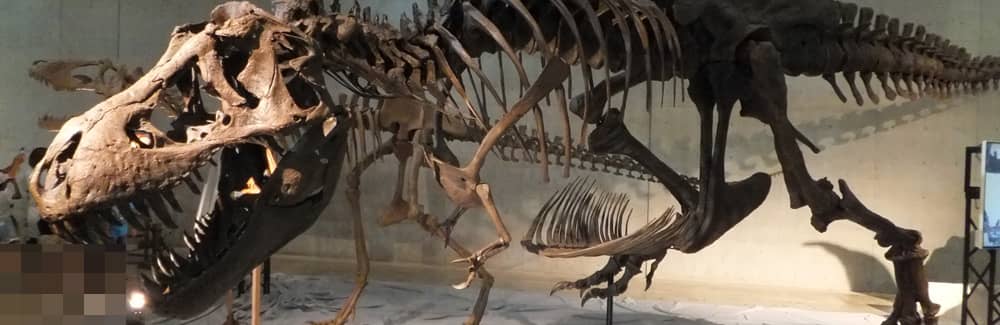
The latest research paper published in January 2026 has significantly overturned the established theory of the past 20 years regarding the growth of Tyrannosaurus rex.
It suggested a shift from the traditional "live fast, die young" growth model to a "late bloomer" predator that continued to grow slowly until 35-40 years of age. The new findings presented by this study are as follows:
- Extended growth period: Adult size was reached at 35-40 years old, greatly extending the previously thought growth period.
- Role as a medium-sized carnivorous dinosaur: It is suggested that immature individuals in their teens and twenties filled the niche of medium-sized predators in the ecosystem.
- Resolution to the Nanotyrannus debate: Growth series such as the small specimen "Jane" do not fit statistically, strongly supporting the possibility that Nanotyrannus is a "separate genus and species."
This page explains the unknown life and ecological role of Tyrannosaurus, rewritten by advanced bone histology analysis using polarized light microscopy and statistical modeling.
Introduction: Biology of the "Tyrant Lizard" at a Turning Point
The paper "Prolonged growth and extended subadult development in the Tyrannosaurus rex species complex revealed by expanded histological sampling and statistical modeling" by Holly N. Woodward, Nathan P. Myhrvold, and John R. Horner, published in the journal PeerJ on January 14, 2026, has overturned the established theory of the past 20 years in dinosaur paleontology, particularly in theropod ontogeny and taxonomy.
We explain the new biological paradigm presented by this paper, the discussions it has sparked in the academic community, and its impact on the long-standing debate over the validity of "Nanotyrannus" (Nanotyrannus).
Using the largest-ever histological sample of 17 individuals, this study went beyond merely revising the growth rate of Tyrannosaurus; it demonstrated with statistical rigor that "certain specimens do not fit the Tyrannosaurus growth curve."
Background of the Study: Departure from the 2004 Paradigm
Re-evaluating "Rapid Growth and Premature Death"
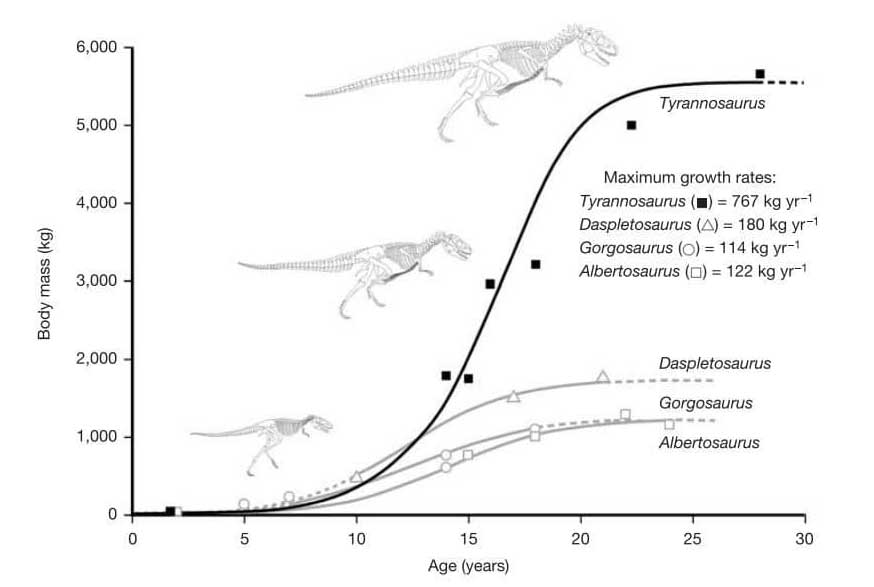
"Gigantism and comparative life-history parameters of tyrannosaurid dinosaurs.", 2004.
by Erickson, Gregory M.; Makovicky, Peter J.; Currie, Philip J.; Norell, Mark A.; Yerby, Scott A.; Brochu, Christopher A. Nature.
Before this study appeared, the understanding of Tyrannosaurus growth dynamics relied primarily on the model established by Erickson et al. (2004). This model depicted Tyrannosaurus undergoing explosive "exponential growth" during its teens, increasing its body mass from a few kilograms to over 8,000 kg in about 20 years.
Described as "Live fast, die young," this life history model was widely accepted as evidence of high metabolic rates in dinosaurs, but early models had methodological limitations (such as mixed-element sampling that did not account for differences in remodeling rates depending on bone type).
Methodological Innovation: Forefront of Bone Histology
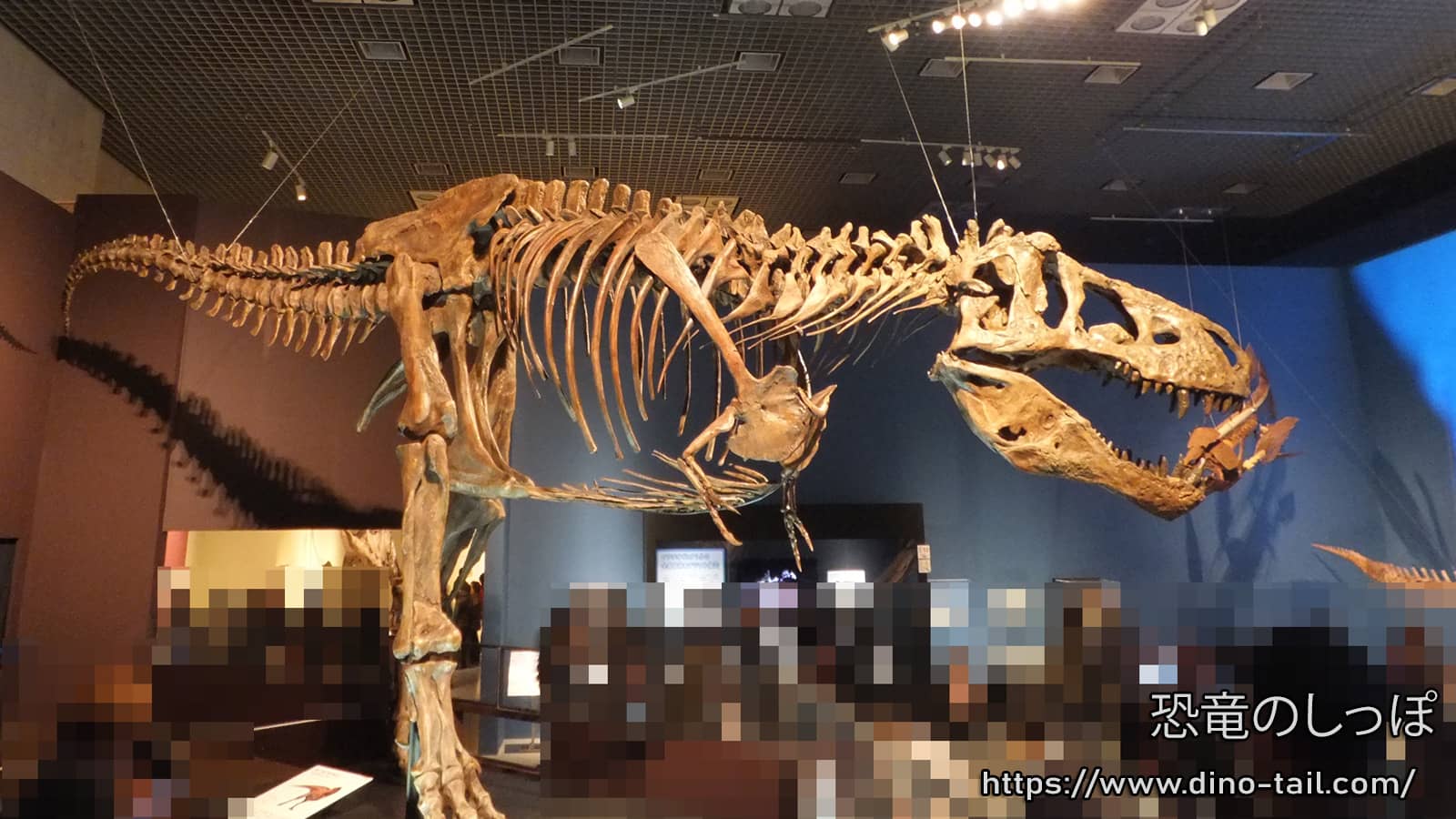
The reliability of the study by Woodward et al. is supported by exhaustive sampling that surpasses conventional methods and the adoption of advanced visualization techniques.
Discovery of "Hidden Time" through Polarized Light Microscopy
The biggest technical breakthrough of this study lies in the identification and verification of growth marks that had been previously overlooked, using Polarized Light observation.
It was demonstrated that layers called "annuli," which were unclear under normal transmitted light, became clearly visible using cross-polarized light (XPL) and circularly polarized light (CPL). As a result, regions previously determined to have "no lines of arrested growth" by conventional methods were revealed to actually record several years of time.
Results: The Rewritten Life of Tyrannosaurus
The Late-Blooming Behemoth: Maturation at 35-40 Years Old
As a result of the analysis, it was found that the T. rex species complex experienced much slower and longer-term growth than previous models. While previous models assumed growth stopped around age 20, new data indicated that they reached adult size at 35-40 years old.
Extended Subadult Stage
Delayed maturation implies a dramatic extension of the "subadult stage." Tyrannosaurus spent most of its time (probably over 20 years) from hatching to becoming a giant adult continuing to grow.
| Features | Erickson et al. (2004) | Woodward et al. (2026) (Model A) |
|---|---|---|
| Sampling method | Mixed elements (ribs, fibulae, gastralia, etc.) | Weight-bearing bones only (femur/tibia) |
| Counting growth lines | Normal transmitted light (PPL) only | PPL + Cross-polarized light (XPL) |
| Age of growth cessation (asymptote) | Around 20 years old | 35-40 years old |
| Sexual maturity | Associated with the inflection point (around 14-16 years old) | Unrelated to the inflection point |
| Treatment of "Jane" | T. rex juvenile | Statistically incompatible (suggests Nanotyrannus) |
Impact on the Nanotyrannus Debate
What is the Nanotyrannus debate:
A long-standing debate over whether "Nanotyrannus," a small tyrannosaurid found in the Hell Creek Formation, is an independent species or a young individual (juvenile) of T. rex.
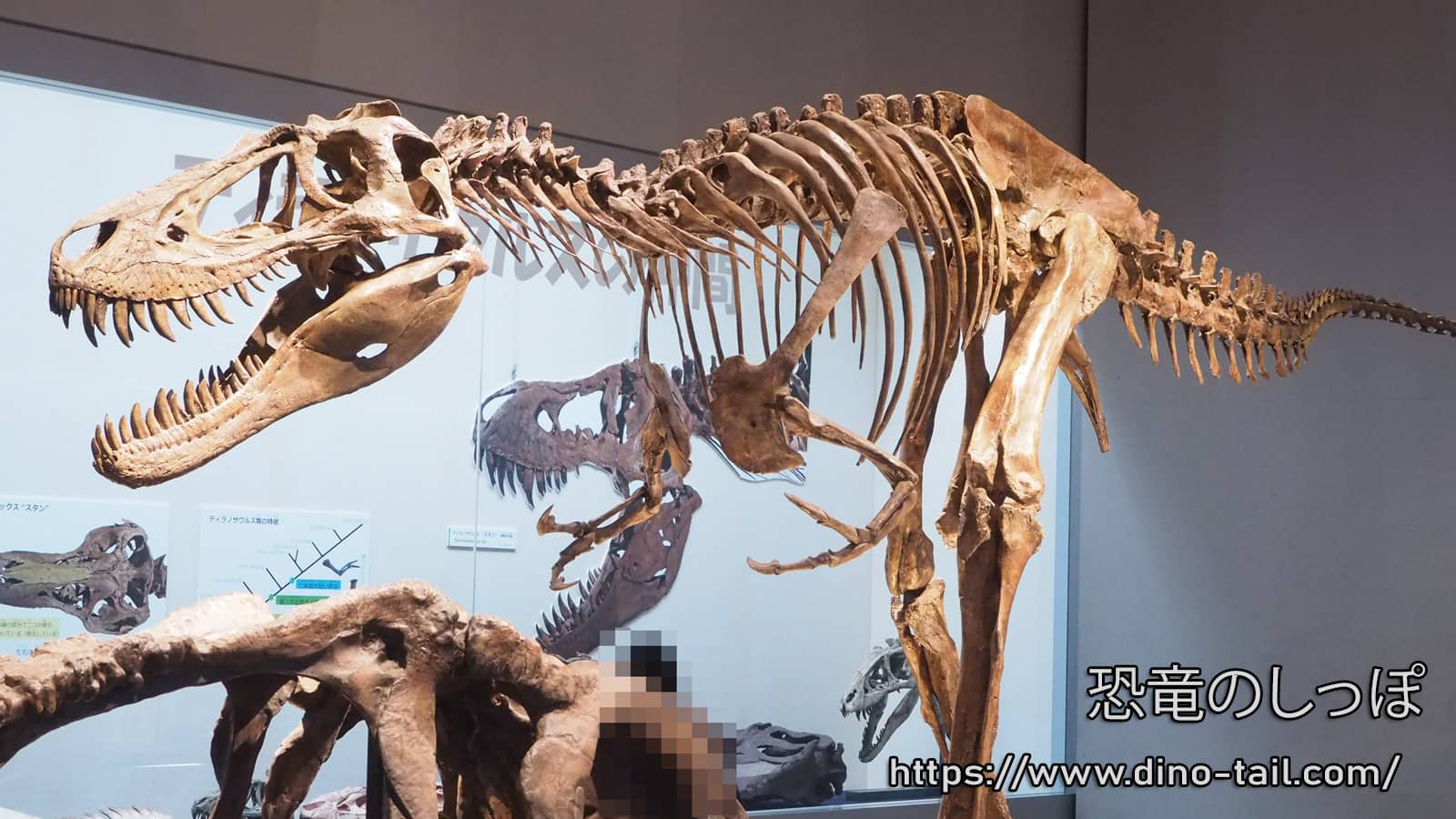
Of the 17 individuals included in the study, the statistical model delivered a shocking verdict for two immature specimens: BMRP 2002.4.1 (commonly known as "Jane") and BMRP 2006.4.4 (commonly known as "Petey"). The growth data of these specimens was deemed "statistically incompatible" with the growth series of other T. rex specimen groups.
Specifically, when these specimens were forced to fit the T. rex growth curve, they emerged as outliers, indicating that they did not follow the same growth rules as other individuals.
This overturned the conclusion of a 2020 paper that stated "Jane and Petey are T. rex juveniles," providing strong support for the possibility that Nanotyrannus is a separate species with different growth rules from T. rex.
| Specimen ID (Common Name) | Features | Compatibility with Growth Model |
|---|---|---|
| BDM 050 (Bertha) | One of the largest individuals | Compatible (Part of T. rex species complex) |
| BMRP 2002.4.1 (Jane) | Small individual from the Hell Creek Formation | Incompatible (Outlier) |
| BMRP 2006.4.4 (Petey) | Small individual similar to Jane | Incompatible (Outlier) |
| MOR 555 (Wankel Rex) | Standard specimen boasting a 49% skeletal preservation rate | Compatible |
Discussion and Conclusion
The Presence Filling the Absence of Medium-Sized Carnivorous Dinosaurs
The "extended growth period" revealed by this study is key to solving an important mystery about the Late Cretaceous North American ecosystem. It is known that there are extremely few medium-sized carnivorous dinosaur species in places like the Hell Creek Formation, but it is highly likely that this niche was filled by "teenage to twentysomething Tyrannosauruses."
Unlike adults, they spent decades as smart, agile predators, suggesting they effectively played a role in "connecting a food chain different from adults" within the ecosystem.
Conclusion: The Late-Blooming King
The study by Woodward et al. (2026) redefined T. rex from a "precocious monster" to a "late-blooming, long-lived predator." Furthermore, using the objective metric of statistical incompatibility, it gave extremely strong support to the "separate species theory" in the Nanotyrannus debate.
This research is an attempt to extract "time" from the silent evidence of fossils using the power of light and statistics, and it may trigger us to understand a more diverse picture of Tyrannosaurus.