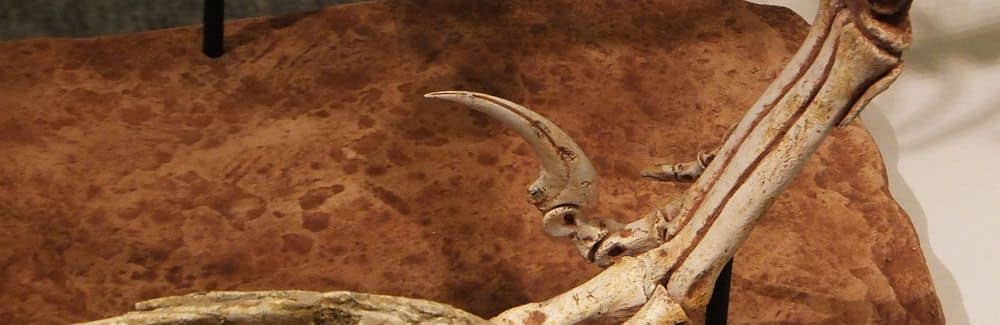
Historical Development of Dinosaur Research in the Gobi Desert
Mongolia, especially the vast Gobi Desert, is positioned as a crucial fossil treasure trove in paleontology. The catalyst for this region receiving global attention was undoubtedly the achievements of the "Central Asiatic Expeditions" dispatched by the American Museum of Natural History in the early 20th century.
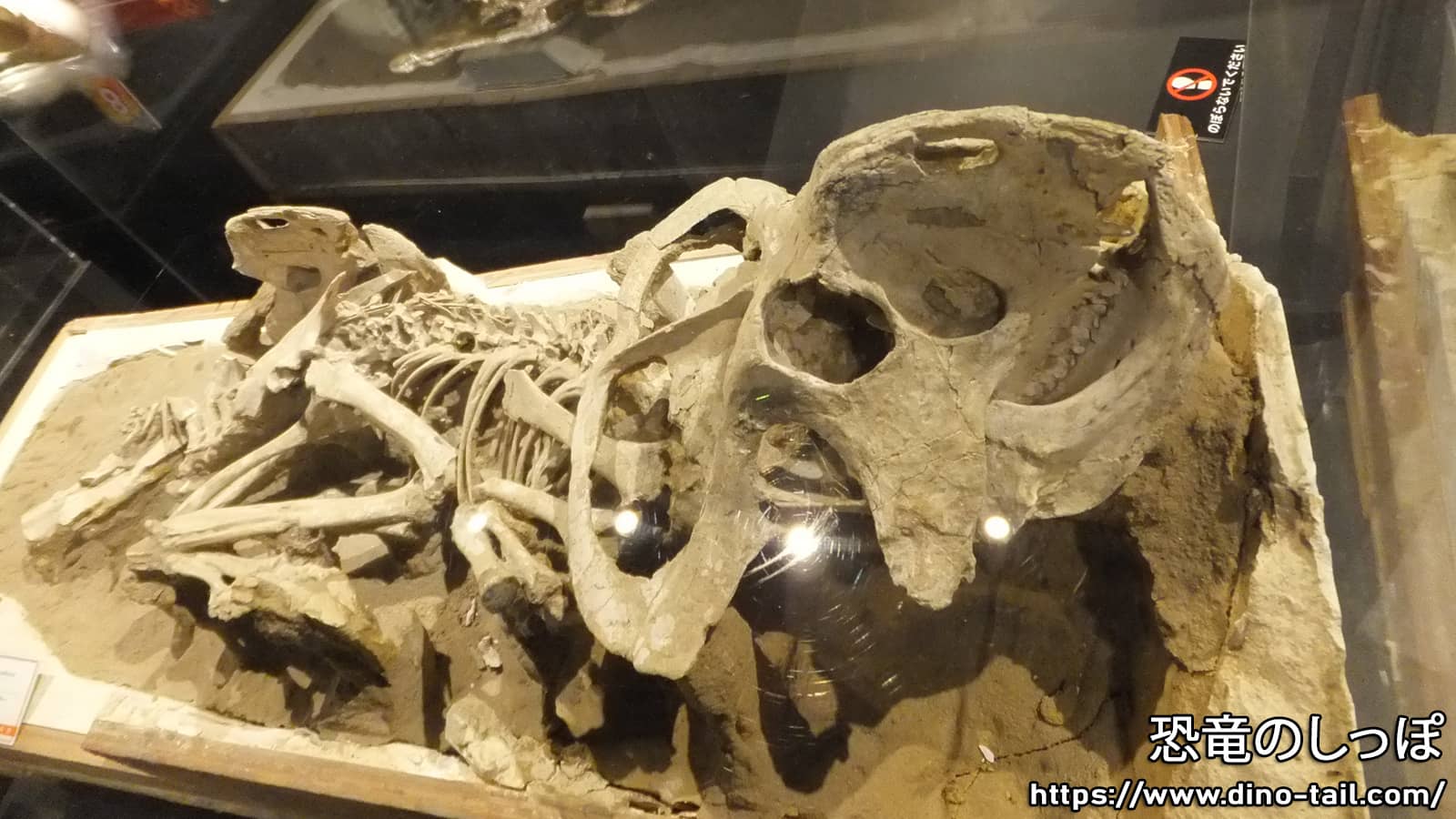
From 1922 to 1930, American zoologist Roy Chapman Andrews led large-scale expeditions into the depths of Mongolia, which was a scientific blank spot at the time. Andrews' initial goal was not to find dinosaurs but to search for early human fossils. However, what they encountered in the process was not human ancestors, but incomparably well-preserved dinosaur fossils that narrate the magnificent ecosystems of the Mesozoic Era.
In 1923, the world's first discovery of dinosaur egg fossils (a clutch of 25) at Bayanzag (commonly known as the Flaming Cliffs) was one of the greatest turning points in the history of paleontology. Until then, how dinosaurs reproduced was mere speculation, but this discovery scientifically proved that dinosaurs were oviparous (egg-laying).
Even after Andrews' expeditions concluded, Soviet and joint Polish-Mongolian expeditions described many new species. In the 1990s, the American Museum of Natural History returned to the Gobi Desert, initiating reinvestigations using the latest analytical techniques alongside the training of Mongolian paleontologists. This history of multinational expeditions has elevated Mongolia from a mere "fossil locality" to an "international research hub" for elucidating dinosaur evolution and ecology.
Geological Background of Mongolia and Major Dinosaur-Bearing Formations
The reason for the exceptionally good preservation of dinosaur fossils in Mongolia lies in its unique depositional environment. During the Late Cretaceous, rivers, lakes, and vast sand dunes existed around the Gobi Desert. Particularly in sand dune deposits like the Djadokhta Formation, dinosaurs were often buried instantly by sandstorms or collapsing dunes, frequently resulting in preservation in dynamic postures with articulated skeletons.
The overlapping or juxtaposition of these distinct environmental strata serves as the geological foundation supporting the diversity of Mongolian dinosaurs.
Comparison of Major Dinosaur-Bearing Formations and Paleoenvironments in the Gobi Desert
| Formation Name | Estimated Age (Cretaceous) | Main Depositional Environment | Characteristic Fossil Yields | Preservation Tendency |
|---|---|---|---|---|
| Nemegt Formation | Late (Maastrichtian) | Fluvial/Lacustrine (Humid) | Tarbosaurus, Saurolophus, Deinocheirus | Abundant large articulated skeletons |
| Djadokhta Formation | Late (Campanian) | Sand dunes/Arid land | Protoceratops, Velociraptor, Dinosaur eggs | Articulated skeletons in situ (e.g., Fighting Dinosaurs) |
| Bayan Shireh Formation | Middle to Late (Cenomanian to Santonian) | Fluvial/Deltaic | Khankhuuluu, Alectrosaurus, Segnosaurus | Medium-sized dinosaurs of primitive lineages |
| Shinekhudag Formation | Early (Aptian to Albian) | Lacustrine/Plains | Fish, Large dinosaur trackways | Trace fossils and aquatic life |
Evolutionary Lineage of Tyrannosauroidea and the New Species Khankhuuluu
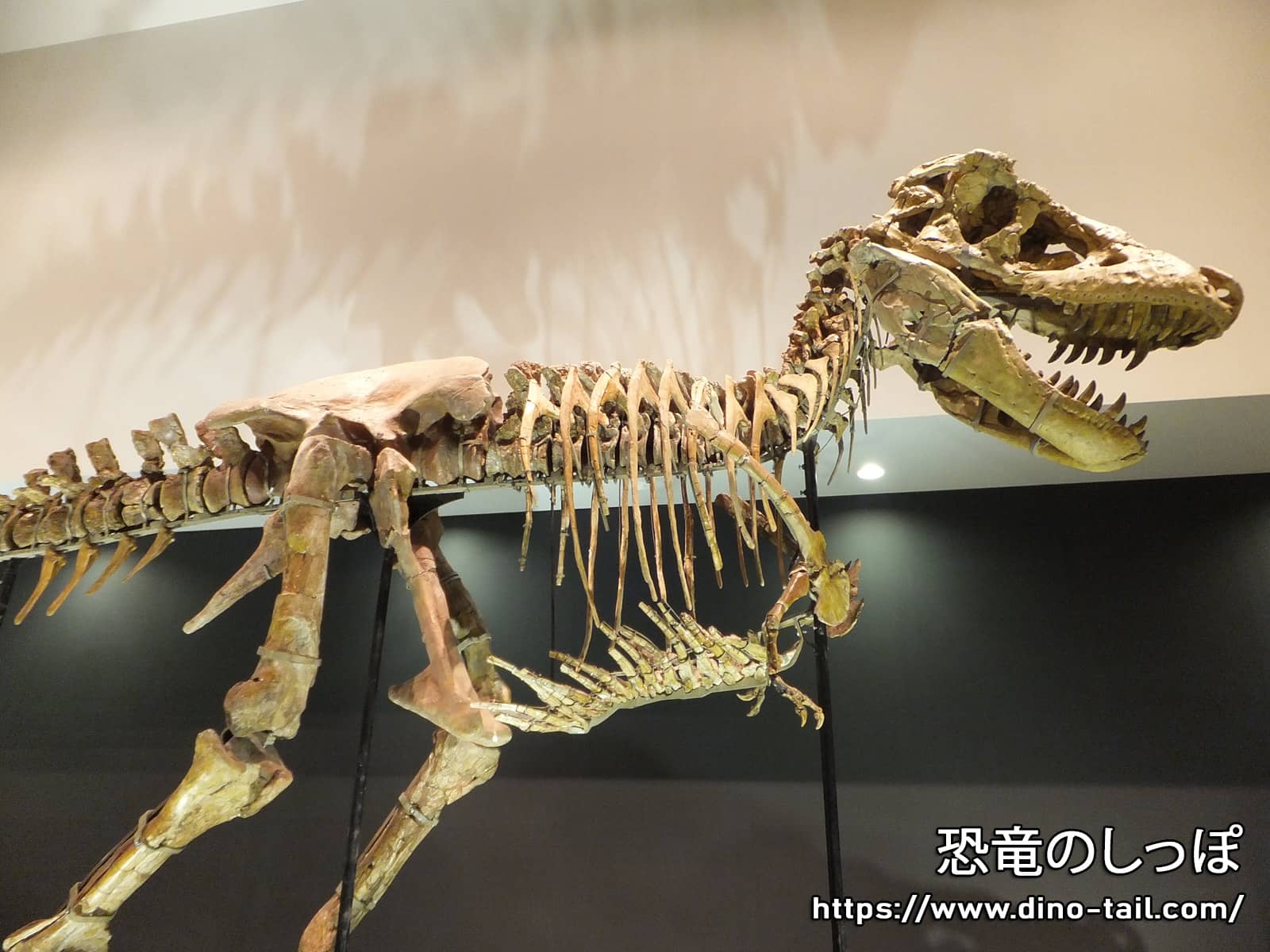
Mongolia is known as the locality of Tarbosaurus (*Tarbosaurus bataar*), an Asian apex predator closely related to North America's *Tyrannosaurus rex*. Recent research from Mongolian strata is successively revealing the evolutionary process of how these tyrannosaurids established their status.
Description and Evolutionary Significance of Khankhuuluu mongoliensis
The new species of tyrannosaurid, *Khankhuuluu mongoliensis*, announced in June 2025, has filled in an important piece of the puzzle in the evolutionary history of this group. This fossil was actually collected from Mongolia's Bayan Shireh Formation about 50 years ago and was misidentified as Alectrosaurus for many years, but recent re-analysis revealed it to be a new genus and species.
Its skeleton exhibits a mix of primitive features seen in early Tyrannosauroidea and advanced features inherited by later Tarbosaurus and *Tyrannosaurus rex*, vividly reflecting a transitional period in evolution.
| Item | Details |
|---|---|
| Meaning of Name | "Prince Dragon of Mongolia" (Khankhuuluu = Prince + Dragon) |
| Estimated Age | Approx. 86 million years ago (Early Late Cretaceous) |
| Estimated Size | Total length: approx. 4m, Weight: approx. 750kg |
| Phylogenetic Position | Immediate outgroup to Eutyrannosauria |
| Ecological Niche | Mesopredator (intermediate predator), agile hunter |
| Characteristic Traits | Shallow skull, nasal ridges, small horn-like projections |
Niche Differentiation via Heterochrony
The most innovative theory derived from the study of Khankhuuluu is that the control of growth rates (heterochrony) generated morphological diversity. The large Tyrannosaurinae acquired their massive bodies through "peramorphosis," extending and accelerating their growth period. In contrast, it is suggested that the Alioramini occupied a different ecological niche utilizing agility through "paedomorphosis," retaining a slender, juvenile-like body even as adults.
Deinocheirus and Therizinosaurus: Unraveling the Ecology of Bizarre Theropods
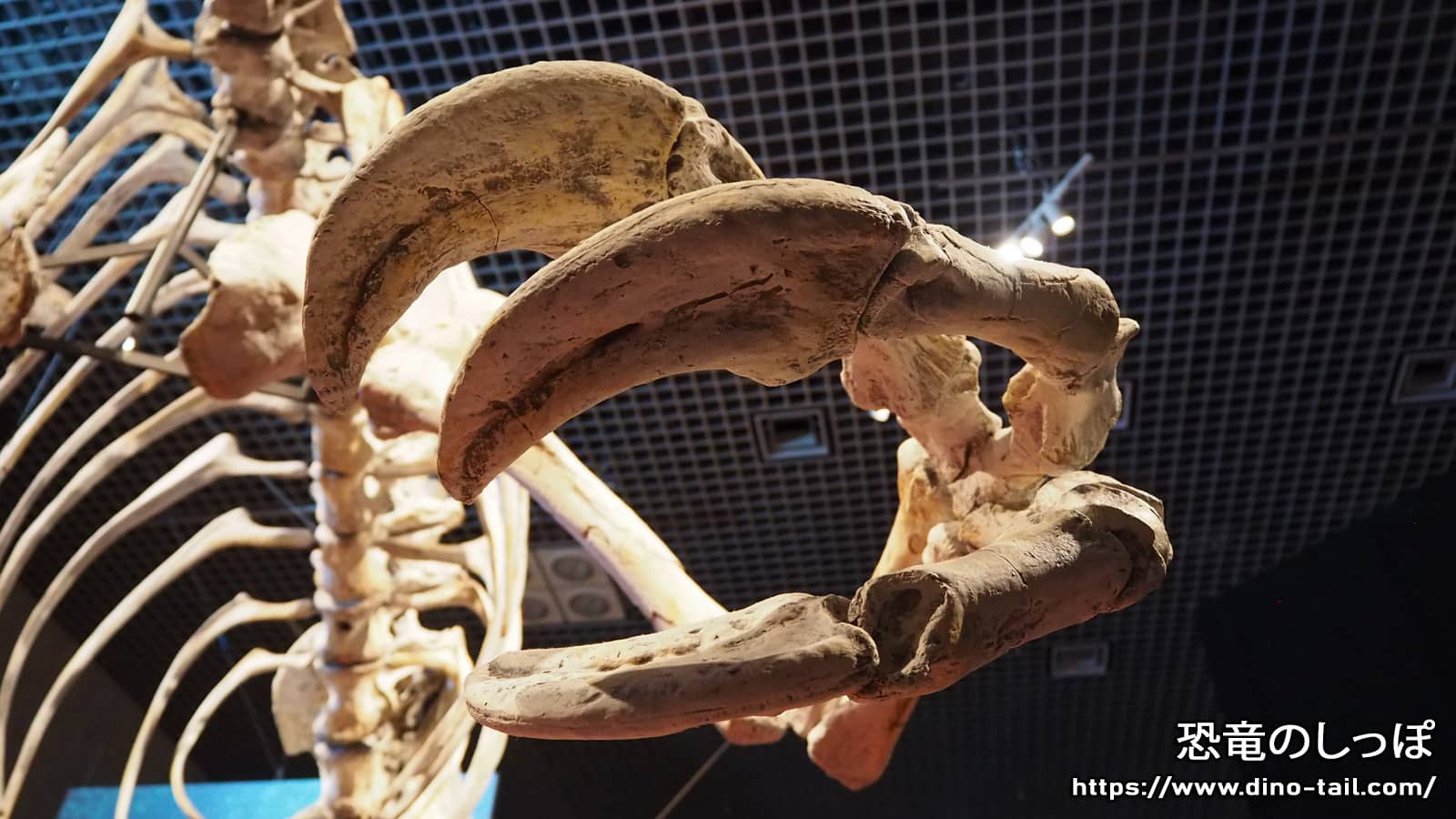
Among the dinosaurs symbolizing Mongolia, *Deinocheirus mirificus*, with its giant forelimbs, has puzzled paleontologists worldwide for over half a century. The 2.4-meter-long forelimb fossils discovered in 1965 were known only as the "terrible hand" until its true identity was revealed.
The Full Picture and Adaptive Strategy of Deinocheirus
With the discovery of a full skeleton in 2014, Deinocheirus was revealed to be a giant ornithomimosaur (ostrich-like dinosaur) that had undergone unique evolution.
- Coexistence of Gigantism and Weight Reduction: By maximizing bone hollowing (pneumatization), it enabled the maintenance of a massive body (total length 11m, weight over 6t) while sacrificing running ability.
- Adaptation to Omnivory: The discovery of a beak-like snout, gastroliths, and fish bones together proved that it was an omnivore that preyed on aquatic fish as well as plants.
- Display Function: A "sail" reminiscent of Spinosaurus existed on its back, believed to have functioned as a display for individual recognition or courtship.
The Peculiarity and Upright Posture of Therizinosaurus
*Therizinosaurus cheloniformis*, possessing giant claws similar to Deinocheirus, is a representative of a theropod group specialized for an herbivorous diet. Its claws reached 1 meter including the keratinous sheath, and were initially misidentified as the ribs of a giant turtle.
Reaching a total length of 10 meters and a weight of 5 tons, it had a massive abdomen (to house a long intestine for fermentation) and an almost upright posture. It is highly likely that it used its long claws to pull down high tree branches or as intimidation against predators.
Behavioral and Stratigraphic Insights from Footprint Fossils
While skeletal fossils teach us the "appearance" of dinosaurs, footprint fossils directly convey their "movements" and "society." In Mongolia, joint surveys by the Okayama University of Science and the Mongolian Academy of Sciences have led to a series of world-class discoveries regarding trace fossils in recent years.
The Oldest Dinosaur Footprints in Northeast Asia
In April 2026, a total of 31 dinosaur footprints were discovered in the Saihndulaan region of northern Mongolia (approx. 120 million years ago, Early Cretaceous). Footprints of titanosaurs estimated to be over 15 meters long and theropod footprints reaching 57 cm in length were confirmed, proving that large dinosaurs had already expanded their habitat to northern Mongolia by the Early Cretaceous.
Giant Footprint Site in the Gobi Desert
In a 2024 survey, approximately 1,000 footprint fossils were discovered at another location in the Gobi Desert. These included footprints of 25-meter-class sauropods and giant herbivorous dinosaurs (relatives of Saurolophus) rivaling North America's Edmontosaurus. Analyzing these trackways is accelerating research on dinosaur walking speeds and the ecosystems of that time.
List of Major Dinosaurs Discovered in Mongolia
Including the dinosaurs introduced so far, here is a list of major dinosaurs representing Mongolia (especially the Gobi Desert). A wide variety of dinosaurs, too many to list here, have been discovered.
| Dinosaur Name | Classification | Main Discovery Formation (Era) | Characteristics |
|---|---|---|---|
| Tarbosaurus (Tarbosaurus) |
Theropod | Nemegt Formation (Late Cretaceous) | The largest tyrannosaurid in Asia and the apex predator of its time. |
| Deinocheirus (Deinocheirus) |
Theropod | Nemegt Formation (Late Cretaceous) | A bizarre omnivorous dinosaur with huge 2.4m forelimbs and a sail on its back. |
| Saurolophus (Saurolophus) |
Ornithopod | Nemegt Formation (Late Cretaceous) | A large herbivorous dinosaur with a backward-pointing crest on its head. |
| Protoceratops (Protoceratops) |
Ceratopsian | Djadokhta Formation (Late Cretaceous) | Famous for "Fighting Dinosaurs" fossils wrestling with Velociraptor and fossils showing growth stages. |
| Velociraptor (Velociraptor) |
Theropod | Djadokhta Formation (Late Cretaceous) | A small, agile carnivorous dinosaur that preyed on Protoceratops in a dune environment. |
| Khankhuuluu (Khankhuuluu) |
Theropod | Bayan Shireh Formation (Early Late Cretaceous) | A dinosaur described as a new species in 2025, indicating a transitional period in tyrannosaurid evolution. |
| Therizinosaurus (Therizinosaurus) |
Theropod | Nemegt Formation etc. (Late Cretaceous) | A bizarre theropod specialized for herbivory, with giant claws reaching 1m in length. |
| Alectrosaurus (Alectrosaurus) |
Theropod | Bayan Shireh Formation (Middle to Late Cretaceous) | A medium-sized tyrannosauroid. |
| Segnosaurus (Segnosaurus) |
Theropod | Bayan Shireh Formation (Middle to Late Cretaceous) | A relative of Therizinosaurus, retaining primitive characteristics. |
In Conclusion
Since Roy Chapman Andrews set foot there in 1922, the land of Mongolia has continued to be a center for dinosaur research. As seen in the discovery of *Khankhuuluu mongoliensis* announced in 2025, even specimens collected in the past can begin to tell new evolutionary stories when analyzed with the latest technology.
The greatest achievement brought by dinosaur excavation surveys in Mongolia is not merely "naming new species," but fostering the soil for independent scientific research within Mongolia. Beneath the sands of the Gobi Desert, bizarre dinosaurs yet unseen await human discovery. Mongolian paleontology is an endless quest.