Gondwana's "Two Windows" to Understanding
South America's Brazil, once a core part of the supercontinent Gondwana, is an essential "treasure trove" for understanding the ecosystems of the dinosaur era. Notably, Brazil possesses two world-renowned fossil sites (Lagerstätten) that record vastly different eras and environments.
One is the Early Cretaceous (approx. 125 to 113 million years ago) "Araripe Basin." At that time, this area was a coastal lagoon where the anoxic conditions at the bottom allowed organisms' remains to fossilize before decaying. As a result, it is known for its "miracle preservation," yielding not just skeletons but also extremely rare soft tissues like muscle fibers, skin, feathers, and pterosaur wing membranes in three dimensions.
The other is the Late Cretaceous (approx. 100 to 66 million years ago) "Bauru Basin." This was a dry, inland environment, and while soft tissue preservation is rare, it abundantly yields fossils of giant titanosaurs (sauropods) and the apex predator abelisaurids (theropods) that characterized the end of Gondwana.
While the Araripe Basin provides details on "how animals lived," the Bauru Basin reveals "what kind of ecosystem existed just before the end of the dinosaur age."
Brazil's Giant Theropods
Brazil has yielded fossils from two contrasting major groups of carnivorous dinosaurs (theropods) that reigned at the top of the Gondwanan food chain.
Irritator
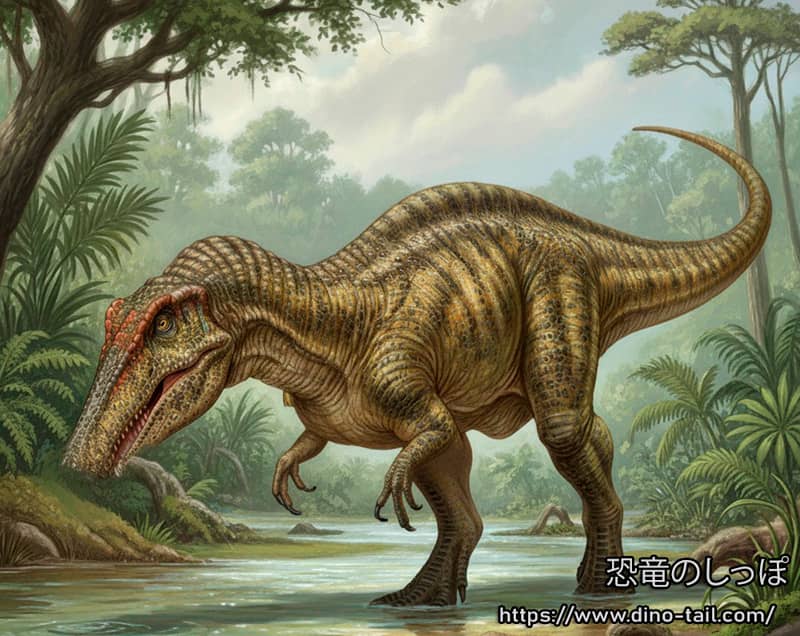
Irritator, discovered in the Araripe Basin, is a spinosaurid dinosaur estimated to be about 6-8 meters long. It lived around 110 million years ago. With a long, crocodile-like snout and conical teeth, it is thought to have been semi-aquatic, primarily feeding on fish.
Its holotype specimen is known as the "most complete skull" of any spinosaurid, contributing significantly to understanding the group's ecology. (Its name comes from the "irritation" researchers felt over a fossil broker's illegal and poor restoration attempts.)
Pycnonemosaurus
In the later Late Cretaceous Bauru Basin, apex predators were replaced by abelisaurids. Pycnonemosaurus is considered one of the "largest" species within the Abelisauridae family.
Initially estimated at 7-8 meters long, recent re-evaluations calculate its length to have reached
8.9 meters
. This size surpasses Argentina's Carnotaurus (approx. 7.8m) and rivals the tyrannosaurids of the northern hemisphere, marking it as the apex predator of Gondwana's inland ecosystem.
The Last Giants of the Cretaceous
The Late Cretaceous Bauru Basin is a treasure trove of fossils from predators like Pycnonemosaurus and their prey, the titanosaurs (sauropods).
Uberabatitan
Uberabatitan was discovered in strata from the absolute final stage of the Cretaceous, the "Maastrichtian." This means it is the "most recent (youngest)" titanosaur species known from the Bauru Basin.
This discovery is powerful evidence that giant sauropods continued to thrive on the South American continent right up to the asteroid impact (K-Pg boundary). It supports the "sudden extinction" theory from a southern hemisphere perspective, countering the idea that dinosaurs were in gradual decline.
Maxakalisaurus
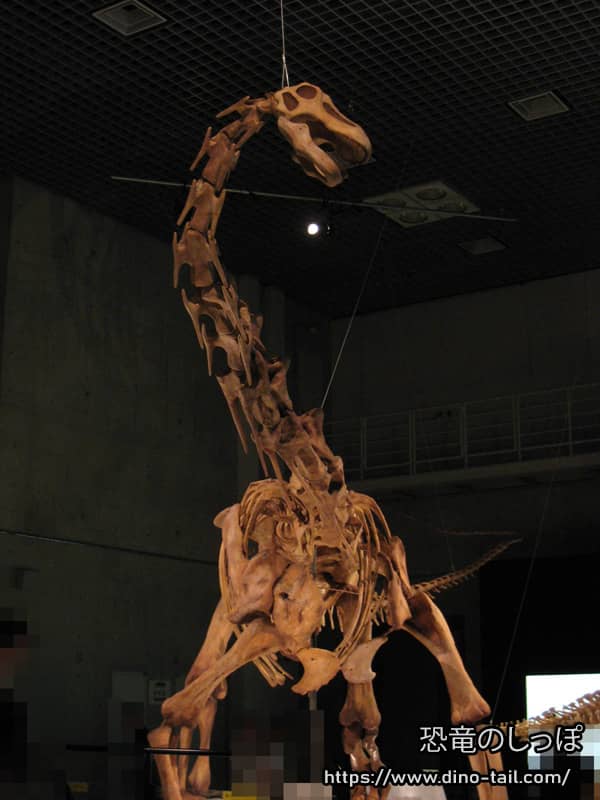
Maxakalisaurus is a medium-sized titanosaur, about 13 meters long. Like Argentinosaurus's Saltasaurus, it is characterized by bony armor (osteoderms) in its skin. This is thought to have been a defensive measure against predators like Pycnonemosaurus.
Strange Sky Dwellers of the Araripe Basin
The Araripe Basin, known for its "miracle preservation," has yielded an astonishing diversity of pterosaurs.
Tapejara
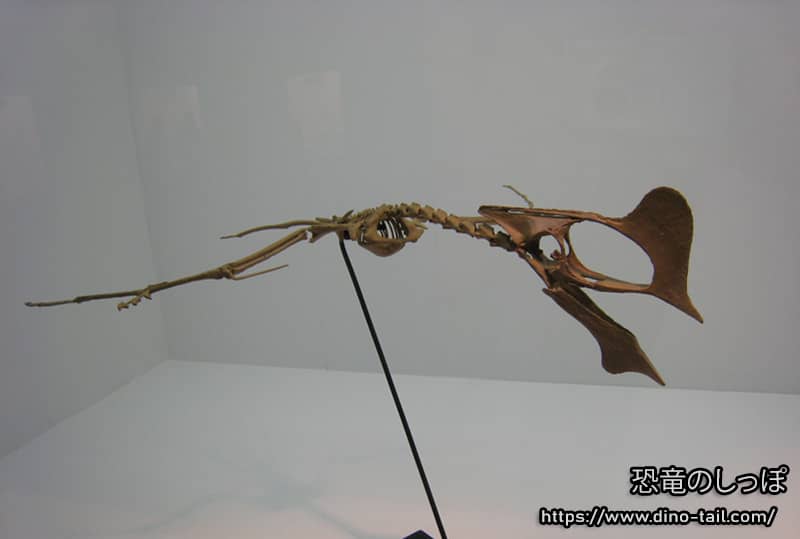
Tapejara is a pterosaur with a giant, elaborate crest on its head. This crest consisted of both bone and soft tissue and is thought to have been a display feature for species recognition.
Its most notable feature is its toothless, parrot-like beak. This morphology has led to the groundbreaking hypothesis that it was "frugivorous" (fruit-eating), rather than a traditional fish-eater.
Tupuxuara
From the same Araripe Basin, the larger pterosaur Tupuxuara was also discovered. With a wingspan reaching up to 5.5 meters, it also possessed a giant crest.
Unlike Tapejara, it had a sharp beak, suggesting it may have preyed on fish or even been a predator active on land. This shows that diverse pterosaurs with different diets and niches coexisted in the same skies.
Anhanguera
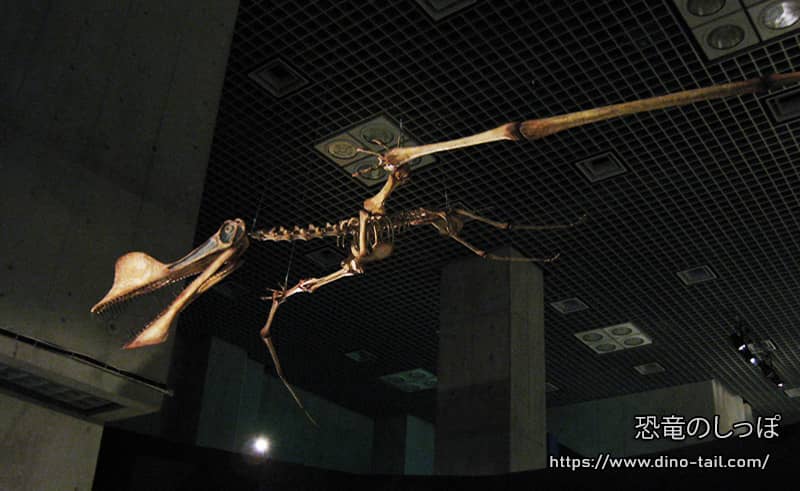
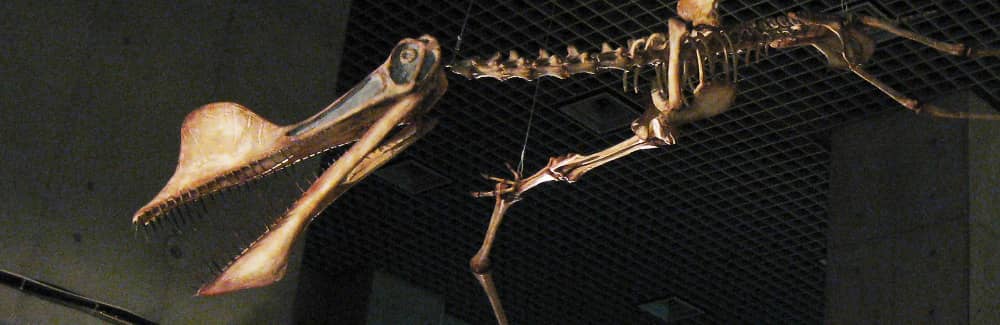
Anhanguera is a representative ornithocheirid pterosaur from the Araripe Basin. Its wingspan reached about 4-5 meters.
Its key features are the semi-circular crests at the tip of its long, crocodile-like snout, and sharp, large teeth for piercing prey. These teeth are thought to have functioned to prevent captured prey (mainly fish) from escaping.
Anhanguera and its relatives were major aerial predators, gliding over the seas and hunting prey from the water's surface during the Early Cretaceous.
The Intersection of Science and Ethics: The Repatriation of Ubirajara
Brazil has also become a focal point in recent paleontological discussions surrounding ethics and heritage protection. The symbol of this debate is "Ubirajara."
In 2020, Ubirajara was reported as a new dinosaur species discovered in the Araripe Basin (Crato Formation). It was a chicken-sized compsognathid dinosaur with an unprecedented feature: long, stiff, ribbon-like structures protruding from its shoulders.
However, the groundbreaking specimen was housed in a German museum, sparking intense criticism from the Brazilian scientific community that it had been "illegally exported" in violation of Brazilian law (which states fossils are state property and require permits for removal).
The incident drew international condemnation as a prime example of "Scientific Colonialism," and the describing paper was ultimately retracted.
As a result of the "UbirajaraBelongsToBrazil" international campaign by the Brazilian government and scientists, the specimen was officially repatriated from Germany to Brazil in June 2023. This event became a landmark case in modern scientific ethics, demonstrating that the legitimacy of scientific findings is heavily dependent on the ethical acquisition process (provenance) of the specimen.