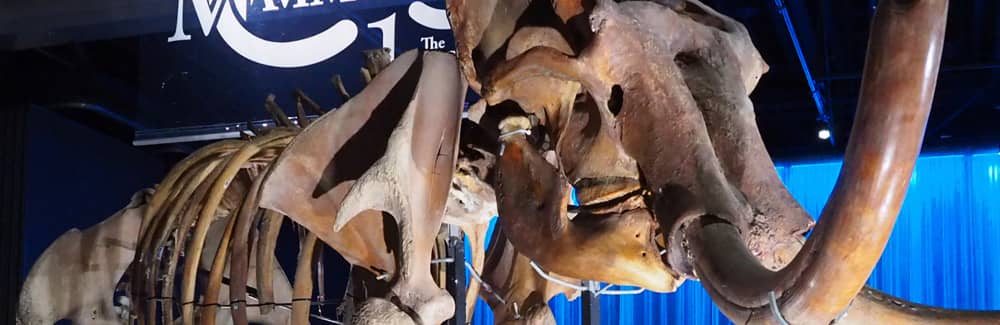
About Mammoths
| Scientific Name (Genus) | Mammuthus |
| Classification | Mammalia, Proboscidea, Elephantidae, Mammuthus |
| Size |
Large male woolly mammoth: shoulder height approx. 3.4 m, body length (excluding trunk) approx. 4.5 m, weight 4–6 tons
*The steppe mammoth reached a shoulder height of approx. 4 m and weighed over 10 tons |
| Diet | Herbivorous (grasses, flowering broad-leaved herbaceous plants [forbs], etc.) |
| Period |
Pliocene to Holocene (approx. 5 million to 4,000 years ago)
*Woolly mammoth: approx. 700,000 to 4,000 years ago |
| Distribution | Africa, Eurasia, North America (also inhabited the Japanese archipelago around Hokkaido) |
| Sub-classification / Species Name |
Mammuthus primigenius (Woolly mammoth / type species)
Mammuthus rumanus (Romanian mammoth) Mammuthus meridionalis (Southern mammoth) Mammuthus trogontherii (Steppe mammoth) Mammuthus columbi (Columbian mammoth) Mammuthus exilis (Pygmy mammoth), etc. |
| Year of Paper Publication | 1828 (the type species, woolly mammoth, was first described as a species in 1799) |
Mammoths: Iconic Ice Age Elephant Relatives and Their Evolution
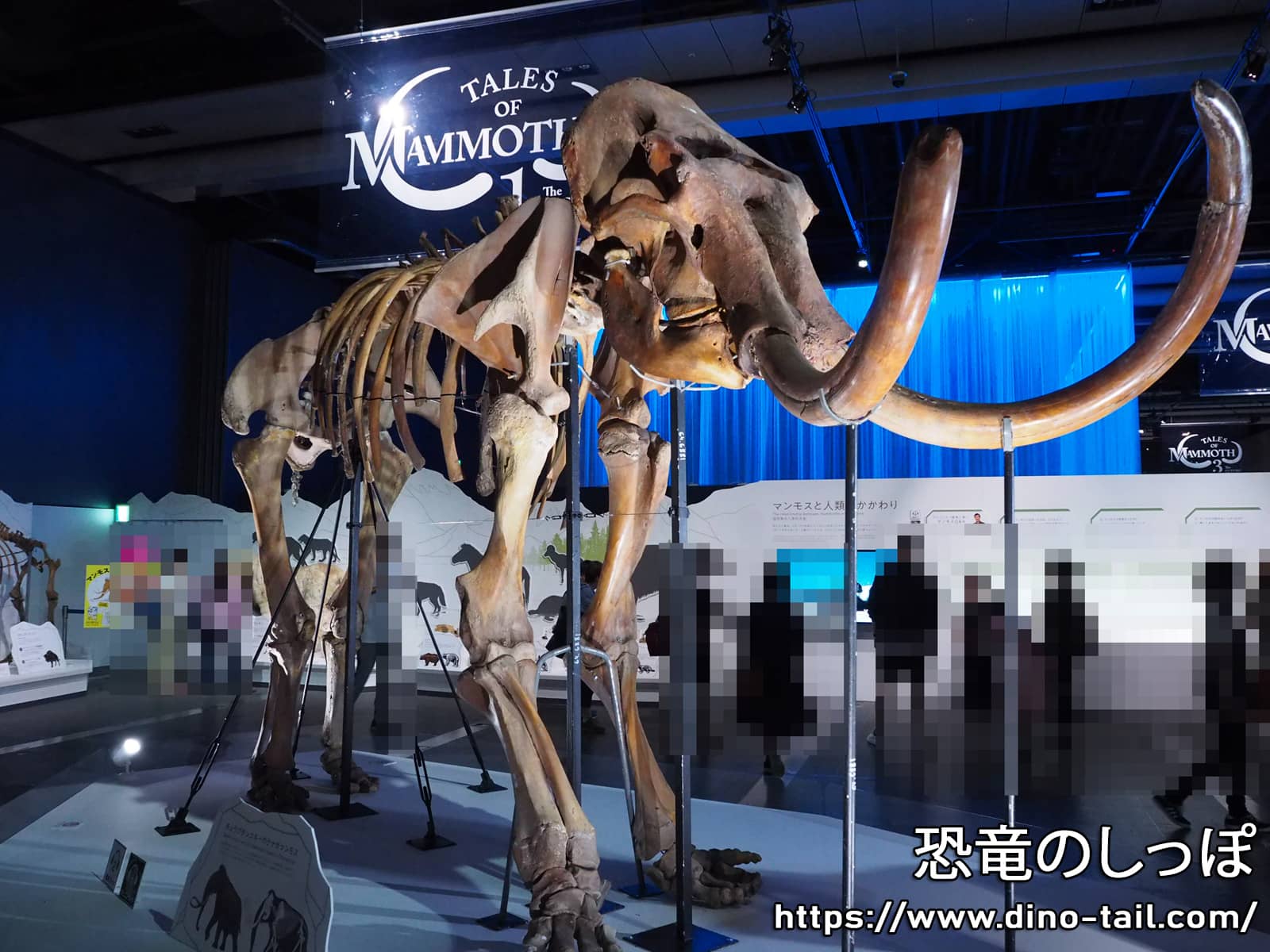
Mammoths (genus Mammuthus) are an extinct group of elephant relatives that once thrived widely across Africa, Eurasia, and North America. The most iconic species, the woolly mammoth (Mammuthus primigenius; also called Manmosu-zō in Japanese paleontology), is known around the world as a symbol of the Ice Age thanks to its long coat of fur and massive curved tusks.
Although the word "mammoth" is often used as a synonym for something gigantic, the woolly mammoth itself was not exceptionally large among elephants. Even a mature large male stood about 3.4 meters tall at the shoulder and weighed around 4 to 6 tons—roughly the same size as modern elephants. Newborn calves weighed around 90 kilograms. Furthermore, genetic studies have shown that among living elephants, mammoths are most closely related to the Asian elephant rather than the African elephant, having diverged from a common ancestor about 5 million years ago.
Early members of the genus Mammuthus originated in Africa and expanded into Eurasia about 3 million years ago. At first, they evolved into forest- and woodland-dwelling forms such as the Romanian mammoth and the southern mammoth. As cold, dry grasslands expanded, the "steppe mammoth"—one of the largest species ever, exceeding 4 meters in shoulder height and 10 tons in weight—emerged. Then, about 700,000 years ago, the even more cold-specialized woolly mammoth evolved in northeastern Siberia, later spreading into Europe and across the Bering Land Bridge, which connected the continents at the time, into North America.
In 2021, DNA sequenced from molars over 1 million years old recovered from Siberian permafrost dramatically overturned previous assumptions. It revealed that an unknown, genetically distinct group (the Krestovka lineage) existed despite looking identical to the steppe mammoth, and that hybridization between this lineage and the woolly mammoth about 420,000 years ago gave rise to the Columbian mammoth, which thrived in the warmer regions of North America. A 2025 study also confirmed that interbreeding between woolly mammoths and Columbian mammoths continued over a long period in North America.
Anatomical Adaptations for Surviving the Frigid Arctic
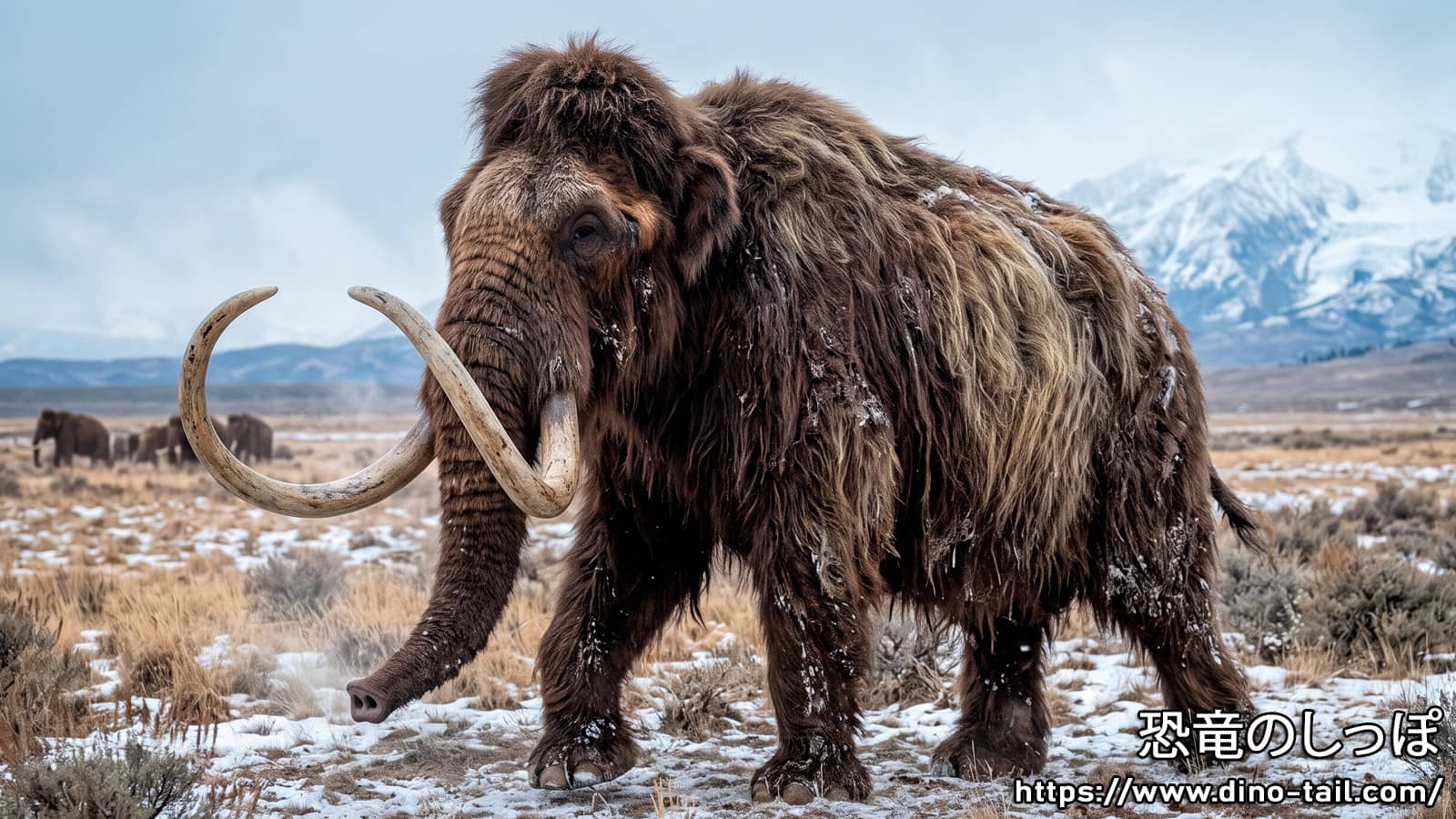
The woolly mammoth had a distinctive body shape, with a high, domed top of the head, a fatty hump over the shoulders, and a back that sloped steeply down from the shoulders to the hips. Like a camel's hump, this shoulder hump served both as an energy reserve to get through harsh winters when food was scarce and as insulation against the cold.
To conserve body heat, prevent frostbite, and graze in harsh sub-zero environments, every part of the woolly mammoth's body was thoroughly adapted to the cold.
As for coat color, hair recovered from permafrost often appears reddish-brown or orange, though this is largely attributed to pigment alteration over tens of thousands of years. Genetic analyses indicate that in life, woolly mammoths exhibited individual color variation, ranging mostly from dark brown and blackish tones to light blonde and mottled coats. Additionally, while female Asian elephants lack tusks, both male and female woolly mammoths grew impressive tusks, although those of males were thicker and longer.
Even more remarkable adaptations existed at the blood and genetic levels. In ordinary mammals, hemoglobin in the blood has difficulty releasing oxygen when the extremities get cold. However, when researchers reconstructed woolly mammoth hemoglobin in a 2010 study, they confirmed that just a few molecular changes allowed it to efficiently deliver oxygen even to freezing feet and trunk tips near sub-zero temperatures. Over 85% of the genes involved in these cold adaptations were acquired gradually over a long period starting more than 1 million years ago during the era of the steppe mammoth.
| Body Part | Characteristics of the Woolly Mammoth | Adaptive Role Against Cold & Environment |
|---|---|---|
| Skin & Subcutaneous Fat | Skin thickness of 1.25–2.5 cm, underlain by a thick 8–10 cm layer of subcutaneous fat. | Acted as powerful insulation to retain body heat and stored energy for overwintering. |
| Fur & Sebaceous Glands | Double- to triple-layered coat with dense underfur (5–15 cm) and long guard hairs draping down the flanks (40–70 cm, up to 1 m). | Trapped air for high thermal insulation. Oils secreted by sebaceous glands coated the hair to prevent wetting and icing. |
| Ears & Tail | Ears were very short, about 38 cm even in adults (under 13 cm in juveniles); the tail was also short at 36–40 cm (21 tail vertebrae). | Prevented heat loss and frostbite at the extremities. A flap of skin at the base of the tail shielded the anus from freezing air. |
| Trunk | Two finger-like projections of different lengths at the tip, plus a pair of skin folds (a "mitten-like" structure) along the middle of the trunk. | Used the two projections to deftly pluck short grasses. In extreme cold, it could curl the tip into the "mitten" to prevent frostbite. |
| Foot Soles | Broad, cushioned footpads, averaging about 13.5% larger in surface area than those of African elephants. | Distributed body weight widely to avoid sinking into deep snow or muddy wetlands in summer. |
| Tusks (Incisors) | Present in both males and females. Grew outward and downward before curving strongly inward in a spiral, reaching over 4 m in length and 121 kg in weight. | Inward curvature brought the center of gravity closer to the head, reducing strain. Used to sweep away snow to find grass and to prop up the head on the ground while resting. |
| Molars | One functional molar per jaw quadrant, replaced six times in a lifetime, featuring up to 26 thin enamel plates (lamellae). | Acted like a grater to efficiently grind tough, dry Ice Age vegetation. |
Breakthrough Discoveries of 2024–2025: Glass-Like Chromosomes and the World's Oldest RNA
Astonishing discoveries continue to emerge from mammoths locked in permafrost. In 2024, scientists discovered that the 3D structure of chromosomes (28 chromosomes) remained intact inside 52,000-year-old skin. Because the body naturally freeze-dried immediately after death in extreme cold, the DNA inside the cells solidified into a glass-like state ("chromoglass"), preserving its shape for tens of thousands of years. In 2025, researchers also succeeded in sequencing the world's oldest ancient RNA from the roughly 39,000-year-old frozen specimen "Yuka," detecting muscle stress responses from just before death and revealing that Yuka—long thought to be female—was actually male. Furthermore, microbial DNA from bacteria that lived inside mammoths has been recovered from 483 specimens, including one dating back 1.1 million years.
Ecology and Guardians of the "Mammoth Steppe"
During the Ice Age, a vast, cold, dry grassland known as the "mammoth steppe" stretched across northern Eurasia and northern North America. Adult woolly mammoths were voracious herbivores, consuming 200 to 300 kilograms of plant matter every day.
For a long time, the mammoth steppe was thought to be dominated almost entirely by grasses. However, analyses of plant DNA preserved in permafrost and mammoth dung revealed that it actually contained an abundance of nutritious flowering herbaceous plants (forbs). Woolly mammoths eagerly ate not only grasses, but also these nutrient-rich flowering herbs.
Moreover, woolly mammoths did more than just graze—they played a crucial role in maintaining their own habitat. By trampling down snow in winter so that freezing cold could penetrate deep into the ground, knocking over encroaching trees and shrubs to keep the grasslands open, and depositing vast amounts of dung to cycle soil nutrients, they shaped the ecosystem. As a result, the open ground reflected more sunlight, even helping prevent the underlying permafrost from thawing.
Examining cross-sections of tusks, which grew continuously throughout a mammoth's life, allows scientists to read its life history much like tree rings. A 2023 study detected annual spikes in the male hormone testosterone within a male mammoth's tusk, demonstrating that, just like modern elephants, male mammoths experienced "musth"—an annual period of heightened aggression and mating readiness.
In addition, the tusk of "Kik," a roughly 17,000-year-old male found in Alaska, revealed that he traveled a total of about 70,000 kilometers over his lifetime—nearly twice the circumference of the Earth. By contrast, "Élmayųujey'eh," a roughly 14,000-year-old female, ranged over a much smaller area throughout her life. This mirrors modern elephants, where females live together in matriarchal family groups while maturing males leave the herd to roam across vast territories.
How Can Migration Routes Be Read from Tusks?
Depending on local geology, the slight ratios (isotope ratios) of elements such as strontium in soil and water vary from region to region. When a mammoth consumed grass and water in an area, that region's distinctive chemical signature was locked into its growing tusk. By analyzing the tusk finely from base to tip and matching the ratios against geological maps, scientists can reconstruct where and when the animal walked throughout its life.
Frozen Permafrost Specimens and Mammoths of the Japanese Archipelago
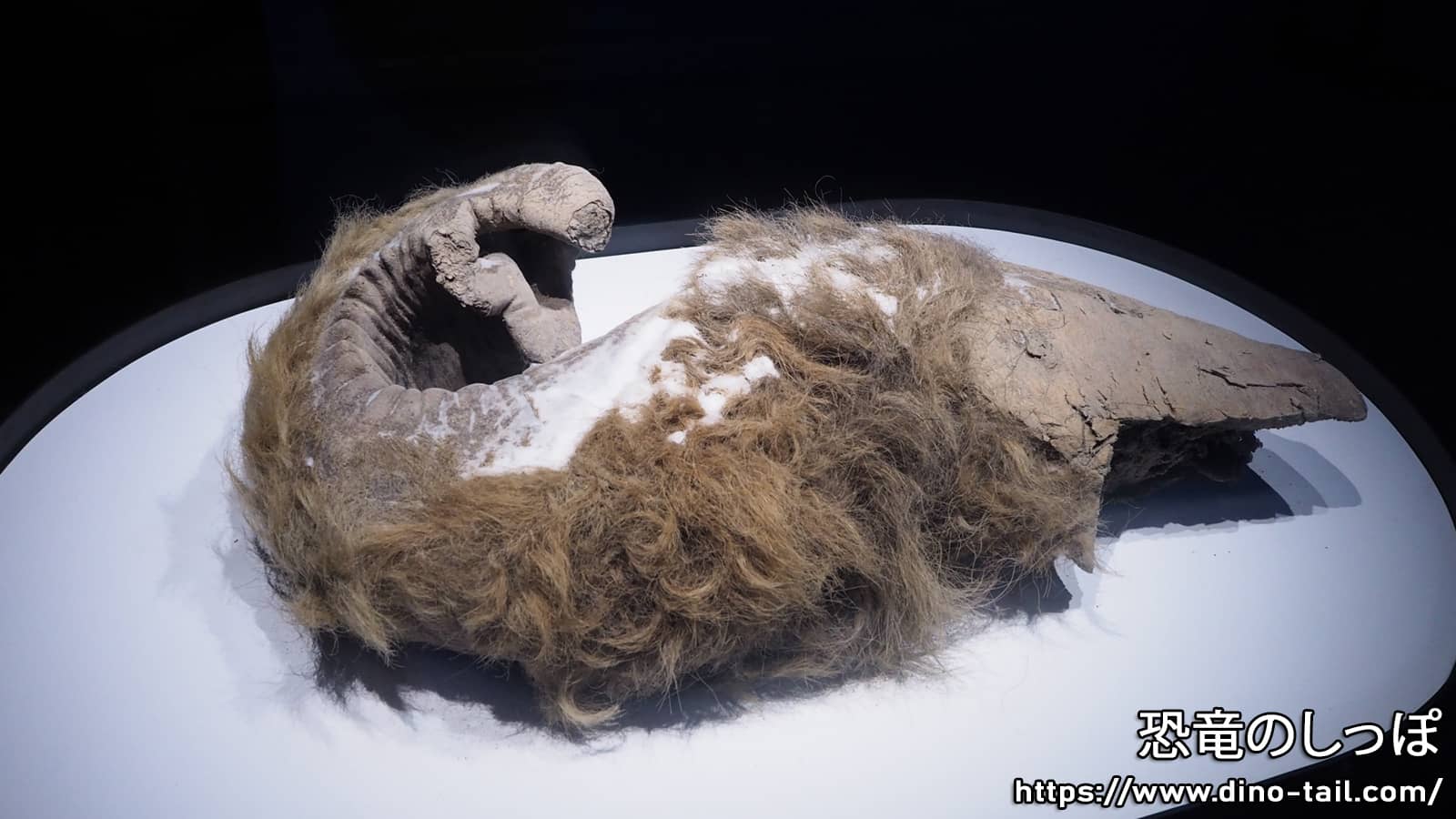
The permafrost of Siberia and northern North America acted like a natural freezer, preserving precious frozen mammoths complete with skin, hair, and internal organs. Nearly complete whole-body frozen carcasses are exceedingly rare; even including "Yana," a roughly 50,000-year-old calf unveiled in Russia in December 2024, only seven such specimens have ever been found worldwide (six in Russia and one in Canada).
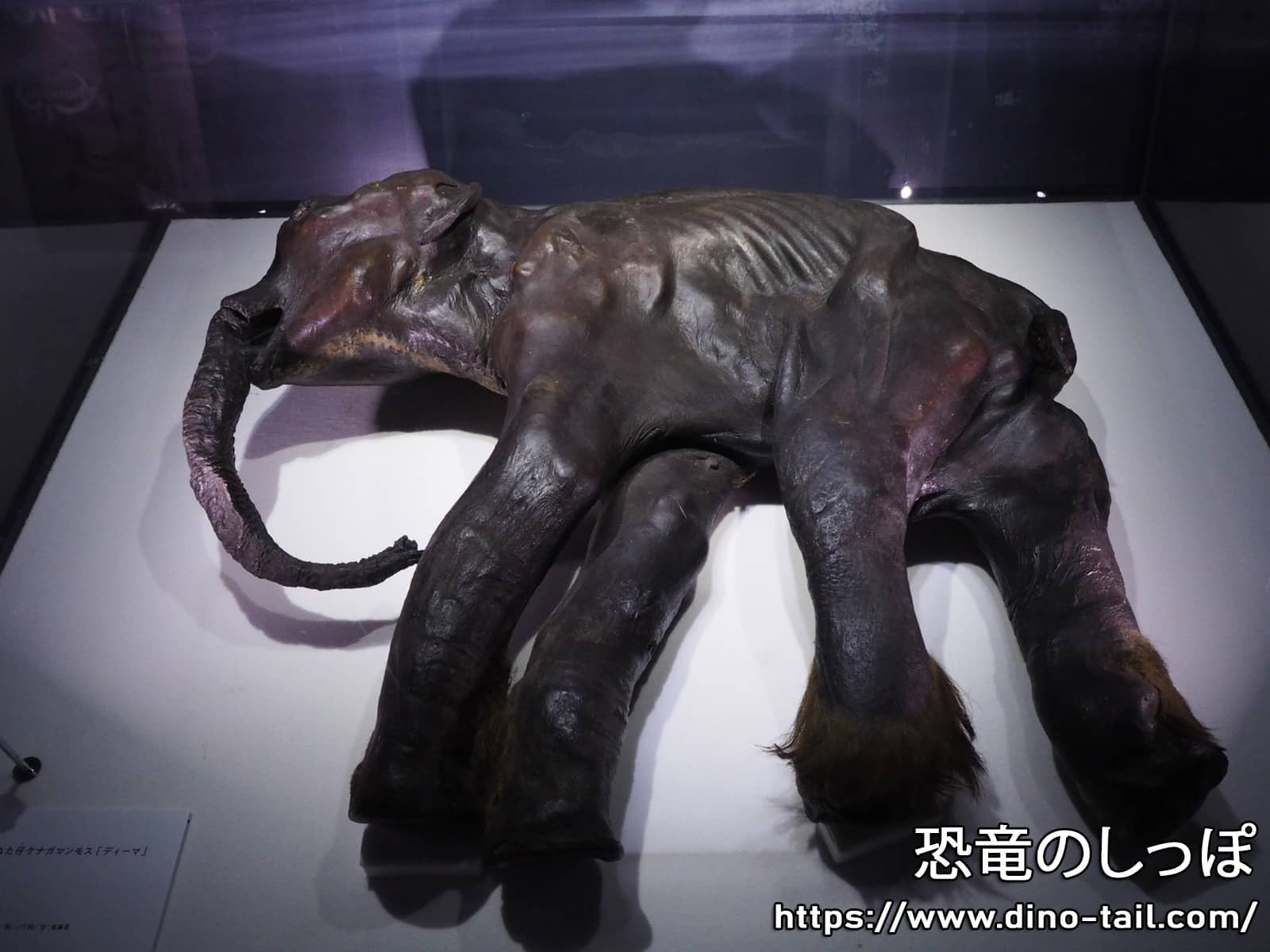
Dima: believed to be a male around 6 to 12 months old
One of the most famous specimens is "Lyuba," a roughly one-month-old female (about 42,000 years old) discovered on Russia's Yamal Peninsula in 2007. After suffocating when mud clogged her windpipe, lactic acid bacteria proliferated inside her body, pickling her tissues and preventing decay. Alongside mother's milk, her intestines contained plant matter chewed by an adult mammoth, showing that calves ate their mothers' dung to acquire gut microbes. In 2022, North America's first nearly complete mummified mammoth calf, "Nun cho ga" (over 30,000 years old), was discovered at a gold mine in Yukon, Canada.
Woolly mammoths also reached the Japanese archipelago during the Ice Age. To date, a total of 14 woolly mammoth fossils have been discovered in Japan, all of which are molars. Except for one specimen retrieved from the Sea of Japan seabed off Shimane Prefecture, all 13 remaining specimens were found in Hokkaido and the nearby Nemuro Strait.
In April 2024, a scallop fishing boat off the Notsuke Peninsula in Betsukai Town, Hokkaido, hauled up Japan's 14th woolly mammoth molar fossil (Notsukezaki Specimen No. 3, dating to about 42,000–41,000 years ago). Mammoths are recorded in Hokkaido from roughly 45,000 to 20,000 years ago (or up to about 16,000 years ago if the Yubari specimen of uncertain provenance is included), yet they did not live there continuously. During a temporary warm spell between about 34,000 and 26,000 years ago, a fossil of the southern-adapted Naumann's elephant (dating to about 30,500 years ago) was found in Yubetsu Town in eastern Hokkaido. In other words, Ice Age Hokkaido witnessed a climatic changing of the guard: woolly mammoths moved south from the north during colder intervals, and Naumann's elephants moved north from the south whenever the climate briefly warmed.
Interactions with Paleolithic Humans
Woolly mammoths coexisted with Neanderthals and our own species, Homo sapiens, for tens of thousands of years. For people of that era, mammoths were not only a source of food, but also provided raw materials for tools, building materials for shelters, and inspiration for art.
At the Yana RHS site in Arctic Siberia (approx. 29,000–27,000 years ago), a mammoth shoulder blade pierced by spear tips made of stone and mammoth ivory was uncovered. Furthermore, throat bones (hyoid bones)—which have no use for toolmaking—were found in residential refuse areas, suggesting hunters cut out and brought back the fresh tongue of slain mammoths to eat. Even so, the residents' staple diet consisted mainly of horses and reindeer, and mammoth hunting was sporadic—perhaps one animal every few years—primarily to obtain ivory. In North America, over a dozen mammoth butchering sites associated with spear points have been found at Clovis culture sites (approx. 13,400–12,700 years ago). Stone-tool cut marks were also identified on the back of the frozen specimen "Yuka," reported in 2024 as solid evidence of human presence in the Arctic around 39,000 years ago.
On the frigid treeless steppe where timber was virtually unavailable, mammoth bones were also used as architectural materials. At the Kostenki 11 site in Russia (approx. 25,000 years ago), researchers uncovered a huge circular structure about 12.5 meters in diameter built from the stacked bones of more than 60 mammoths. Meanwhile, bone structures at the Mezhyrich site in Ukraine were dated in 2025 to about 18,000 years ago and are thought to have been temporary cold-weather shelters draped with animal hides and reused repeatedly to shield against fierce winds and cold.
Additionally, vivid cave paintings of mammoths survive in France's Chauvet and Rouffignac caves. From roughly 40,000-year-old cave sites in the Swabian Jura of southwestern Germany (such as Hohle Fels Cave), archaeologists have excavated some of humanity's oldest human figurines (Venus figurines), flutes, and a tool for making four-ply rope from plant fibers—all carved from mammoth ivory. In July 2026, two new tiny ivory bird carvings, each roughly the size of a thumbnail, were also reported from the region.
The Mystery of Extinction: Mainland Collapse and the Last Island Holdouts
As the Ice Age ended between about 15,000 and 10,000 years ago, global warming and increased precipitation transformed the dry mammoth steppe into wet tundra and forests. With their food base severely diminished and compounded by long-term hunting pressure from Paleolithic humans, woolly mammoths vanished from the Eurasian and North American mainlands by around 13,000 to 10,000 years ago.
In recent years, trace environmental DNA in sediments sparked attention around the idea that mammoths might have survived in parts of the mainland until about 5,000 years ago, though cautious debate continues because older DNA can erode and wash into younger layers. Indeed, in December 2025, two vertebrae from interior Alaska that had been hailed as "North America's youngest mammoth fossils at around 2,000 years old" made headlines when DNA analysis revealed they actually belonged to a right whale and a minke whale.
On the other hand, mammoths genuinely survived for thousands of years longer on Arctic islands cut off from the mainland by rising sea levels. The most notable examples are St. Paul Island in Alaska and Wrangel Island in the Russian Arctic.
Mammoths on St. Paul Island went extinct around 5,600 years ago, even before humans ever arrived there. Studies of lake-bed sediments pinpointed the trigger: as rising seas shrank the island and the climate grew drier, the island's freshwater sources dried up, leaving the mammoths without drinking water.
The very last mammoths on Earth lived on Wrangel Island, which became isolated about 10,000 years ago; they survived until about 4,000 years ago—after the pyramids of Egypt had already been built. It was once thought that Wrangel Island's mammoths had evolved into a shrunken "dwarf mammoth" species and slowly drove themselves to extinction through "genomic meltdown," accumulating harmful mutations due to inbreeding.
However, detailed skeletal comparisons showed that Wrangel Island mammoths stood about 180 to 230 centimeters tall at the shoulder—no different in size from late Ice Age mainland mammoths—proving they were not a dwarf species. Furthermore, a 2024 time-series analysis of 21 whole genomes overturned the slow genomic-meltdown theory as well. Although the isolated founding population numbered only about 8 individuals, it rebounded to 200–300 individuals within roughly 20 generations and remained stable for about 6,000 years. Severely harmful mutations were purged from the population by natural selection, and the herd stayed healthy right up until the end. Scientists now believe they were wiped out abruptly by a sudden, short-term event such as extreme weather, deteriorating water quality, or an unknown infectious disease outbreak.
The Frontier and Challenges of Mammoth De-Extinction Research
With the discovery of well-preserved frozen mammoths in permafrost and the sequencing of their full genome, "de-extinction" research aimed at bringing the mammoth back to life in the modern era has attracted enormous interest.
Initially, hopes centered on cloning directly using intact cell nuclei from frozen mammoths. In 2019, a research team led by Japan's Kindai University transplanted cell nuclei from the frozen specimen "Yuka" into mouse egg cells and observed signs of biological activity in some of the nuclei. However, because the DNA had been heavily fragmented over tens of thousands of years, cell division did not occur, demonstrating that revival via conventional cloning alone is extremely difficult.
Consequently, the mainstream approach today is to edit the genome of the mammoth's closest living relative, the Asian elephant, to create a cold-resistant "mammoth-like elephant." In March 2025, researchers including the U.S. biotechnology company Colossal Biosciences simultaneously edited up to seven genes related to mammoth fur and fat in mice, creating "woolly mice" with long, curly golden-brown coats. Then, in July 2026, a breakthrough was published in the journal Nature Methods: scientists overcame the hurdle posed by elephants' 29 tumor-suppressor genes (TP53)—which make elephants resistant to cancer—and succeeded for the first time in the world in establishing Asian elephant iPS cells (induced pluripotent stem cells).
These cutting-edge stem cell and genome-editing technologies are expected to aid the conservation of endangered Asian elephants and advance basic medical fields such as cancer research. At the same time, scientists have raised cautious views and challenges regarding mammoth revival itself. Because woolly mammoths and Asian elephants differ by more than 1,600 genes, critics note that reproducing selected traits would yield an approximation rather than a "true mammoth." Ongoing ethical debates also question the burden placed on endangered Asian elephants used as surrogate mothers, whether calves could learn how to survive in the wild without living mammoth parents, how dramatically today's Arctic climate has changed, and whether massive research funding should instead be prioritized for protecting endangered species that are still alive today.