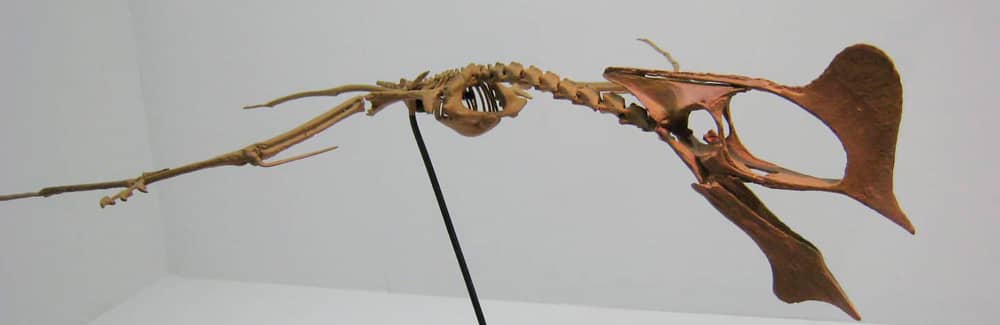
Basic Data of Tapejara
| Scientific Name (Genus) | Tapejara |
| Meaning of Name | The lord of the path, or the old being (Tupi language) |
| Classification | Pterosauria, Pterodactyloidea, Azhdarchoidea, Tapejaridae |
| Period | Early Cretaceous (approx. 127 to 112 million years ago) |
| Discovered in | Brazil (Santana Group, Araripe Basin) |
| Wingspan | Approx. 1.23 - 1.5m |
| Diet | Omnivorous, mainly frugivorous and granivorous |
| Type Species | Tapejara wellnhoferi |
| Year of Paper Publication | 1989 |
Importance in the Araripe Basin
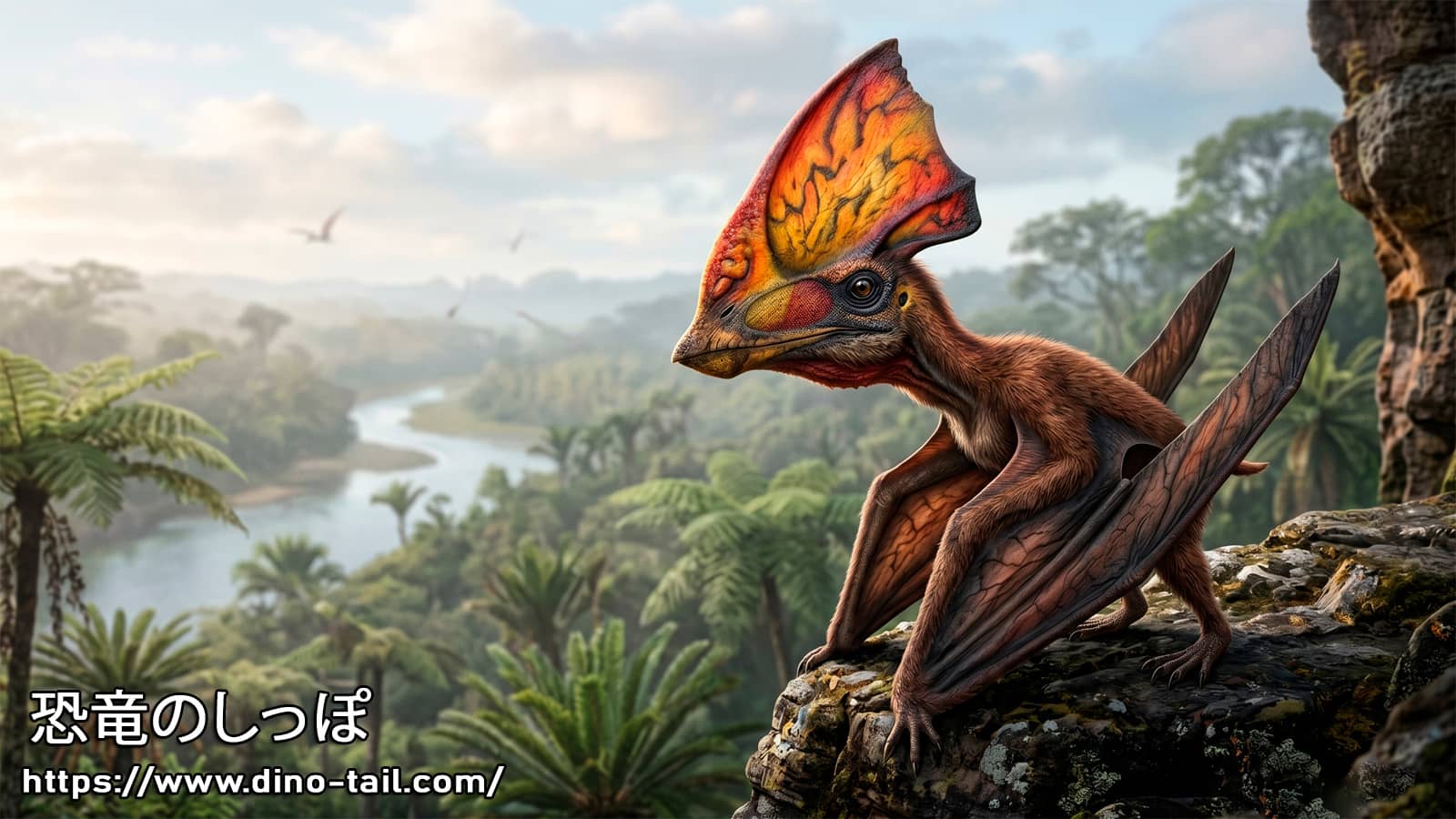
The Araripe Basin, located in northeastern Brazil, is world-renowned as a treasure trove of Early Cretaceous pterosaur fossils. From this region, particularly the Santana Group, a wide variety of exceptionally well-preserved pterosaurs have been discovered. Among them, "Tapejara" has played a central role in paleontological research due to its unique appearance and ecological niche.
The genus name Tapejara means "the lord of the path" or "the old being" in the Tupi language. True to its name, it serves as an important guidepost for understanding the evolutionary lineage in the Cretaceous skies.
The sedimentary environment of the Araripe Basin, once a lagoon or coastal wetland, provided conditions that preserved the fragile skeletons of pterosaurs in astonishing detail, down to soft tissues and stomach contents. These pterosaurs belonging to the Tapejaridae family possess features that overturned the previous image of pterosaurs, such as a giant nasoantorbital fenestra, a toothless beak, and an enormous cranial crest.
Features: Giant Crest and Functional Adaptation
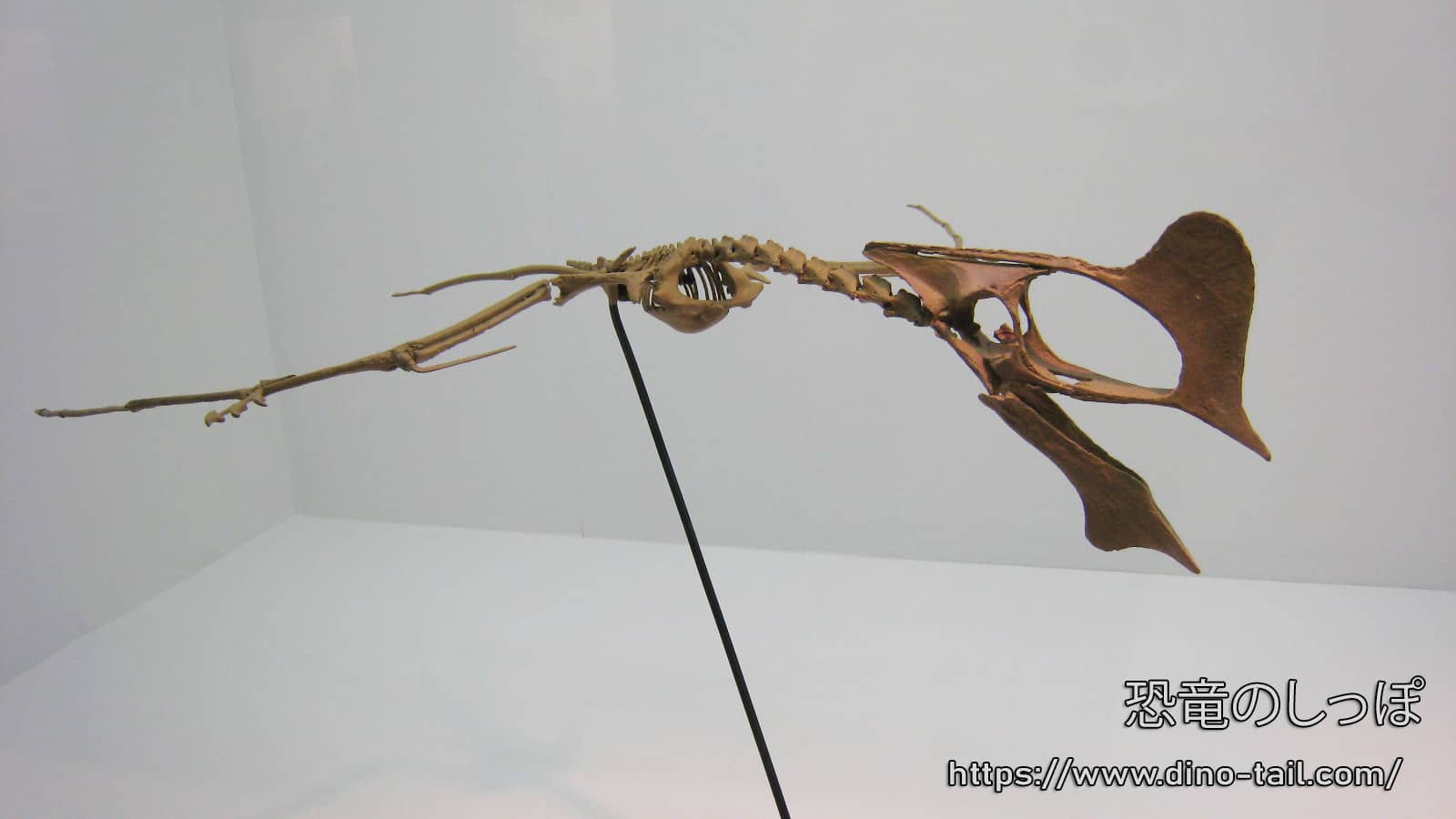
Tapejara's physical characteristics are the result of a high degree of integration between flight capability, foraging strategy, and social display functions. The structure of its skull is extremely unusual even compared to other pterosaur groups, highlighting the uniqueness of the Tapejaridae.
The skull of Tapejara wellnhoferi is characterized by being relatively short and vertically tall compared to other pterosaurs. Its most striking visual features are the semicircular bony crest developed from the premaxilla and the bony projection extending backwards from the back of the head.
- Giant Nasoantorbital fenestra: This opening, a fusion of the nostril and the antorbital fenestra, occupies 50% to 60% of the total skull length. This structure contributed to a dramatic weight reduction of the head, making it possible to maintain weight balance during flight while supporting the massive crest.
- Edentulous beak: Tapejara had no teeth and possessed a slightly downward-curving beak covered by a horny sheath, similar to that of a bird.
Taxonomic Confusion and the Separation of Tupandactylus
When described in 1989, the genus Tapejara began with a single species, Tapejara wellnhoferi. However, subsequently discovered species with much larger and flashier crests, such as T. imperator (Emperor) and T. navigans (Navigator), were also initially assigned to the same genus.
Following a re-evaluation in 2007, these larger species were separated into the genus "Tupandactylus". Because of this, many of the individuals that appeared in popular media as "Tapejara" in the past were actually Tupandactylus, creating a twist in public perception.
Flight Dynamics and Ground Locomotion: An Innovative Control System
At first glance, Tapejara's giant crest seems like an obstacle that would create significant air resistance during flight. However, recent aerodynamic simulations and wind tunnel tests have raised the possibility that this structure had sophisticated aerodynamic control functions beyond a mere display organ.
According to research, Tapejara's crest is thought to have functioned as a "front rudder" during flight. The huge vertical surface located in front of the center of gravity creates instability, but Tapejara turned this instability to its advantage, achieving extremely agile turns with slight movements of its neck. It is speculated that they could fly freely through complex terrain and forests, much like modern aerobatic airplanes.
Regarding takeoff, it is highly likely that they used "quadrupedal vaulting" utilizing powerful forelimb muscles, suggesting an efficient takeoff method to gain altitude rapidly from a stationary state. Furthermore, with their long metacarpals and sharply curved claws, they are thought to have walked quadrupedally in a near-upright posture on the ground, making them capable of climbing steep slopes and trees.
Diet and Ecological Niche: Winged Frugivore
Regarding Tapejara's diet, a major paradigm shift occurred in the history of pterosaur research. While it was once thought to be piscivorous like many other pterosaurs, the current prevailing theory is that it was an omnivore centered on a frugivorous or granivorous diet.
Tapejara's short, deep beak and downward-curving snout are functionally similar to those of modern hornbills and toucans. Like these birds, it is thought to have dexterously used its beak to pluck fruits from trees.
A specimen of Sinopterus from China, closely related to Tapejara and described in 2025, revealed numerous phytoliths and gastroliths as stomach contents. This is direct evidence that tapejarid pterosaurs consumed plant matter, suggesting they digested not only soft fruit pulp but also hard plant fibers and seeds. Highly mobile Tapejara likely consumed fruits and excreted them over a wide area, playing an important role as seed dispersers for angiosperms, which explosively diversified during the Early Cretaceous.
Depictions in Media and Misconceptions
Due to its visual impact, Tapejara frequently appears in documentaries and video games, but there are several discrepancies with the latest scientific knowledge.
| Depiction in works and media | Scientific facts and notes |
|---|---|
| Large-scale breeding on beaches and extremely large size (Documentaries, etc.) | It actually models the appearance of Tupandactylus, reflecting the taxonomic confusion of the time. |
| Super-sized enough for multiple humans to ride, and carnivorous (Games, etc.) | Its actual wingspan was medium-sized, around 1.5m, and the prevailing theory is an omnivorous diet centered on fruits and seeds. |
| Depicted with teeth or as a piscivore | The Tapejaridae family was completely toothless; this is a design error based on the stereotype that "pterosaurs = fish-eaters". |
Tapejara is an iconic existence showing that pterosaurs were not mere "flying lizards," but possessed advanced ecological adaptations and functionality comparable to modern birds. In the skies of the Cretaceous, they occupied a unique and essential niche.