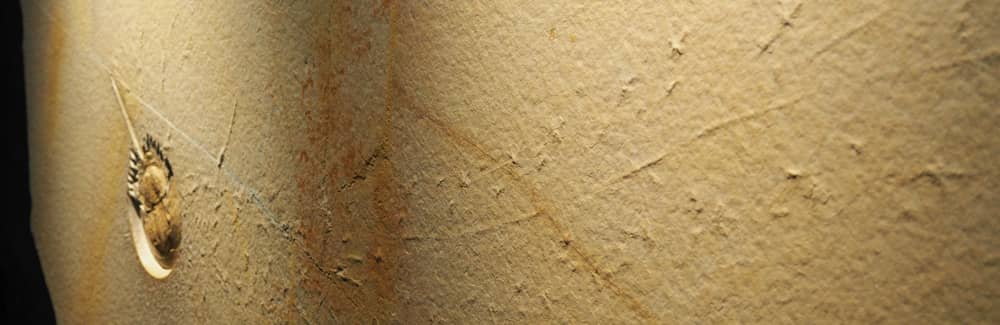
Earth's strata record the history of life's activities over billions of years. The preserved evidence left by past organisms is collectively called "fossils," and its academic definition is "the remains of past organisms (body fossils) or traces of their life activities (trace fossils)."
The concept of fossils was not always correctly understood in the past. There was a dark age when Aristotle of ancient Greece thought fossils were formed by a mysterious force working inside the Earth, and in medieval Europe, they were unscientifically interpreted as "the bones of sinful humans who drowned in Noah's Ark flood." Later, with the proposal of Darwin's theory of evolution, fossils finally established their position as "absolute evidence of evolution and Earth's history."
Differences between Body Fossils and Trace Fossils
In modern paleontology, the information provided by fossils is broadly divided into two categories. One is "body fossils," where the body of the organism itself is preserved, and the other is "trace fossils," where the traces of the organism's activities are preserved.
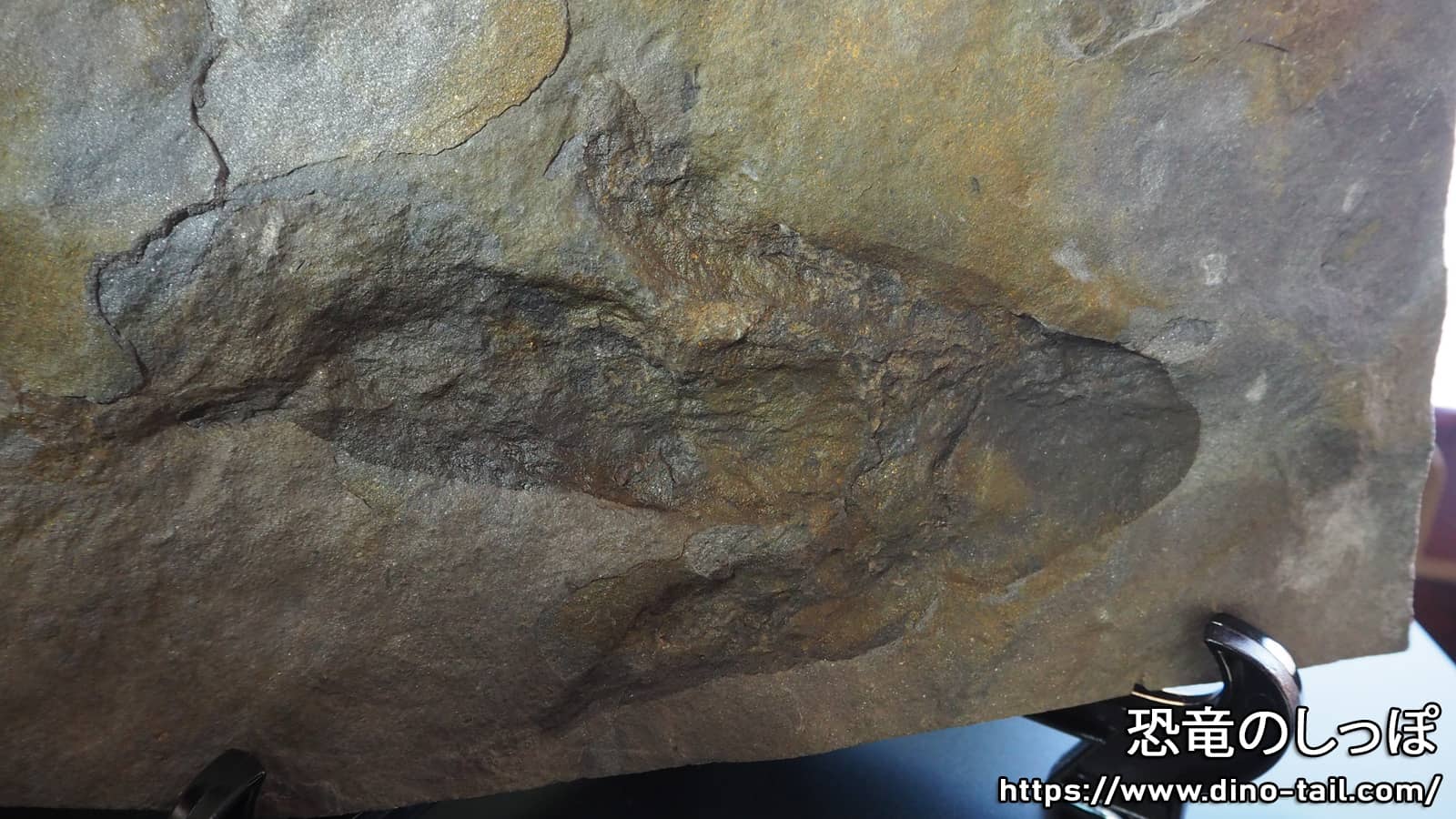
My collection (privately owned)
Body fossils directly tell us about the physical characteristics of organisms, from "hard parts" like bones, teeth, and shells, to "soft parts" like frozen mammoths and insects in amber. However, since body fossils are strictly "appearances after death," it is difficult to completely understand how the organism lived (its dynamic state).
On the other hand, "trace fossils" are "traces of behavior" performed to live, such as footprints, crawl marks, and the shapes of burrows. This is a message that directly conveys the dynamic life and behavior of ancient organisms, which cannot be obtained from body fossils.
| Fossil Category | Definition and Subject | What we can learn (Information provided) |
|---|---|---|
| Body Fossils | Remains of ancient organisms. Bones, shells, insects in amber, etc. | Body structure, classification, construction of evolutionary trees, etc. |
| Trace Fossils | Activity traces of past organisms. Burrows, footprints, coprolites (fossilized feces), etc. | Behavioral patterns, ecology, relationship with the environment, etc. |
The Strength of Trace Fossils: 'Autochthony' that Doesn't Lie
It is the study of all the processes from when an organism dies to when it is buried in strata and finally discovered as a fossil. It investigates the strict conditions required to become a fossil, escaping decomposition by microorganisms or dissolving in water.
When comparing trace fossils and body fossils, the biggest difference lies in "where the fossil was preserved."
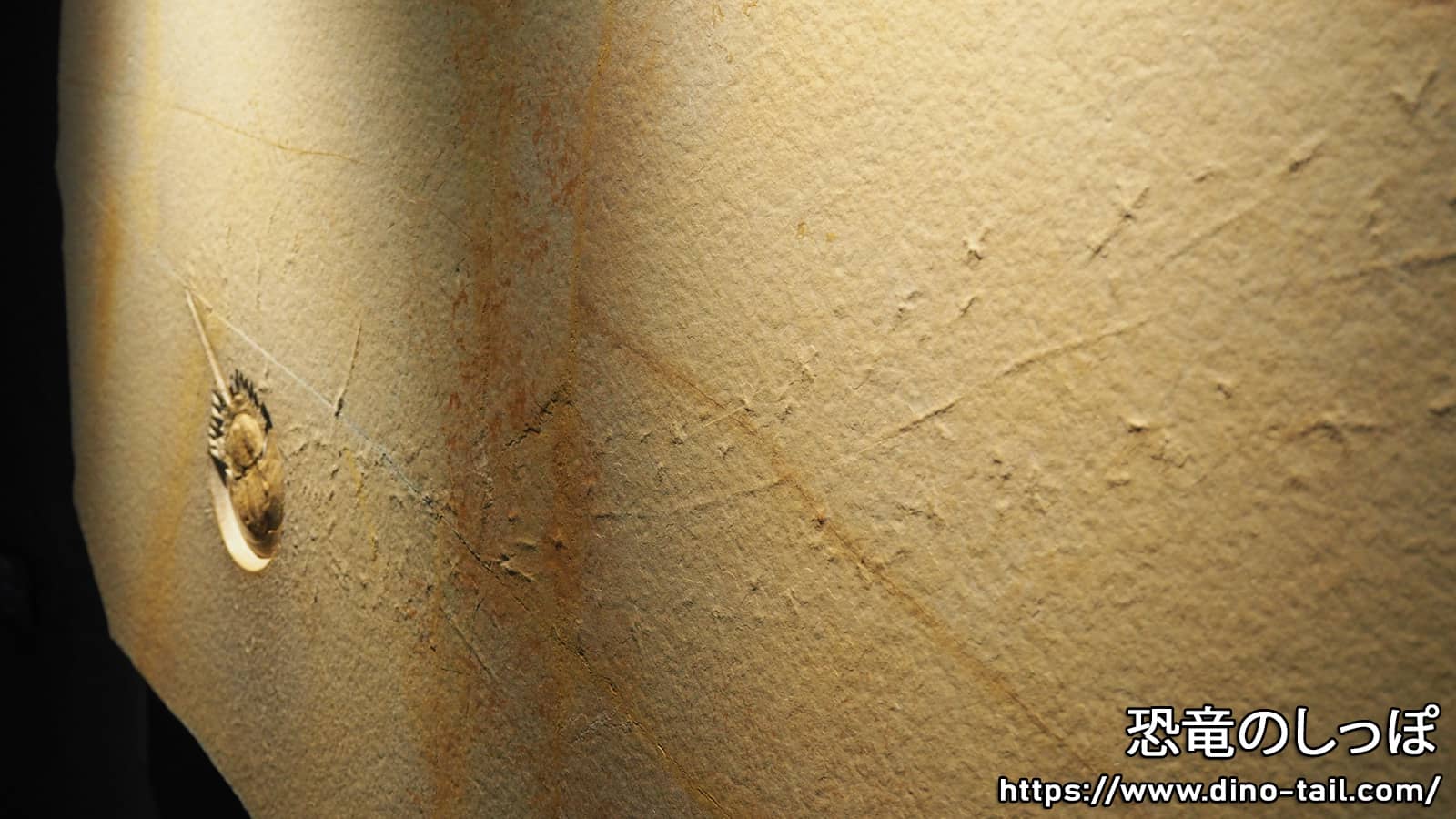
Many body fossils are "allochthonous," meaning they become fossils in a place different from their original habitat, such as being washed away by a river after death. Therefore, while they are useful for identifying the era of that time, they do not necessarily correctly indicate the environment (water depth, climate, etc.) of that location.
In contrast, the decisive strength of trace fossils is that most of them are "autochthonous," meaning they "fossilize exactly where the organism lived." A burrow dug in the sand on the seabed will absolutely not be transported to another location by strong water currents (it would break and disappear if transported). In other words, the presence of a trace fossil is indisputable evidence that "the organism definitely lived and was active in that very place." Due to this characteristic, trace fossils have absolute reliability as "index fossils" for identifying the environment of the time.
Classification of Trace Fossils by Behavior
Trace fossils are classified not by "what organism made them," but from the perspective of animal behavior: "for what purpose they took that action." This is because even completely different creatures will leave similar trace fossils if they take the same action in a similar environment.
| Behavioral Classification | Typical Examples of Trace Fossils | What we can learn |
|---|---|---|
| Traces of Movement | Dinosaur footprints, traces of crawling on the seabed | Movement speed, herd size, oxygen conditions at the bottom of the water |
| Traces of Dwelling | U-shaped burrows, bird nests built in trees | Strength of waves, stability of the dwelling |
| Traces of Excrement | Coprolites (fossilized feces) | Carnivorous or herbivorous, food chain (diet) at the time |
| Traces of Predation | Bite marks left on ammonites, holes in shells | Power dynamic between the eater and the eaten |
| Other Traces | Mating insects in amber, signs of bone disease | Moments of reproductive behavior, diseases and injuries of ancient organisms |
Key to Solving the Mystery of Life's Evolution: The Cambrian Explosion
It is a mysterious event in which most of the animal groups (phyla) currently on Earth simultaneously appeared in the fossil record at the beginning of the Cambrian period of the Paleozoic Era, about 540 million years ago.
Trace fossils also play a role in unraveling the history of the evolution of life on a global scale.
In the study of the Cambrian explosion, it has been found that prior to the appearance of "animals with hard shells (body fossils)" like trilobites, a "diversification of behavior (trace fossils)" among soft-bodied animals without shells had occurred.
Animals that previously only crawled on the surface of the seabed began to burrow deep "inside" the sand and mud. This behavior of digging up the seabed (bioturbation) sent oxygen into the mud, dramatically changing the environment (this is called the "substrate revolution"). It is thought that this environmental change further prompted the evolution of new organisms. Trace fossils tell us that the Cambrian explosion was not just a change in body shape, but an event where "animal behavior rewrote the Earth's environment."
Trace Fossils Remaining in Japanese Strata
In various places in Japan, we can also decipher past environments from trace fossils.
For example, at the Choshi Geopark in Chiba Prefecture, strata of a shallow sea from the Cretaceous period can be observed. Evidence that a "huge typhoon (storm)" came and churned up the seabed sand (hummocky cross-stratification) remains here. And in that stratum, countless beautiful burrow fossils can be found, reinforced by crabs and mud shrimp lining the walls with mud so that the burrows wouldn't collapse in violent storms.
Also, around Kurashiki City in Okayama Prefecture, fossils called "sand pipes" are found, which look like pillars where sand later filled the burrows dug by crabs and shellfish. These deeply and vertically dug burrows tell us that it was a "harsh environment where waves were strong, sand moved frequently, and creatures were easily buried alive."
In the Jizodo Formation on the Boso Peninsula in Chiba Prefecture, a fossil called "Macaronichnus", a dense cluster of thin tubes like macaroni, can be seen. This is a trace of marine worms crawling around while eating nutrients in the sand, indicating that it was a nutrient-rich sea.
Latest Research: A 'Time Capsule' Protecting Microfossils
In the latest geological research, it has been found that trace fossils play an even more surprising role. It is the fact that they function as "invincible time capsules" that perfectly protect within themselves very delicate microfossils (such as radiolarians and diatoms) that would otherwise be destroyed in the surrounding rocks.
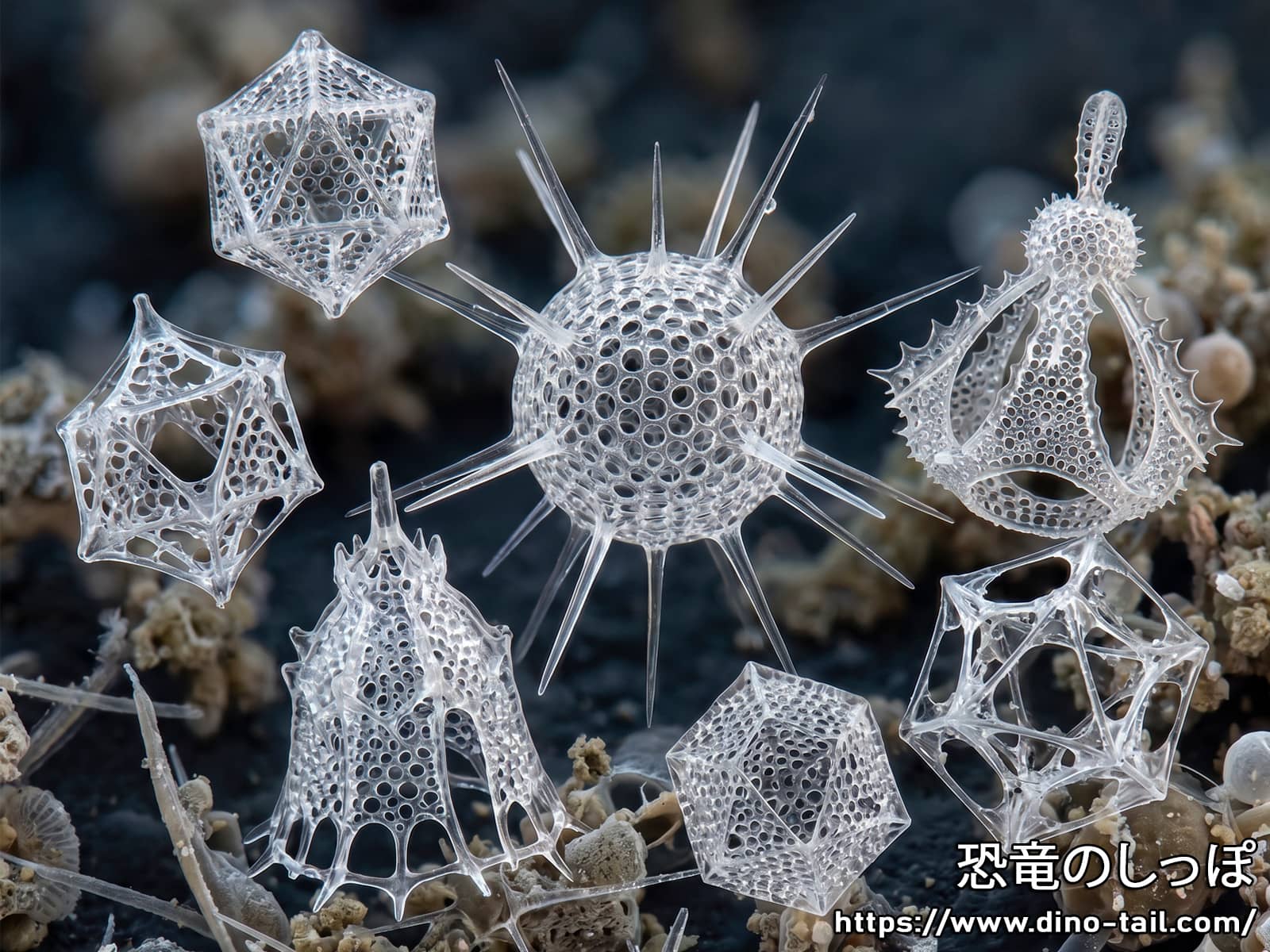
Over a long period of time as strata are deeply buried, microfossils with glassy shells melt or break due to massive pressure and heat (this is called burial diagenesis).
However, when the inside of trace fossils was examined in a study on Tanegashima, Kagoshima Prefecture, countless microfossils were found in dramatically beautiful condition. When organic matter such as feces and mucus left by organisms is decomposed by bacteria, a chemical reaction occurs, and only the inside of the burrow quickly turns into a "hard block of carbonate (concretion)," creating a powerful barrier.
| Comparison Item | Inside the Trace Fossil (Time Capsule) | Ordinary Mudstone on the Outside |
|---|---|---|
| Number of radiolarian species found | 29 species (very diverse) | 15 species (melted and disappeared) |
| Preservation of fine structures | Even the long, thin parts for identifying species remained in perfect shape. | All delicate structures were broken or melted and lost. |
With this discovery, it is expected that even in places where researchers had given up thinking, "The fossils have melted and we don't know what era the strata are from," opening up the inside of trace fossils will reveal the exact era.
Trace fossils, which look like mere patterns left in mud and sand, are very powerful messages that not only tell us about past Earth environments but also deliver information to the future as time capsules.